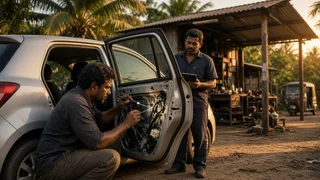
Car door lock repair in Cape Town

If one of your car's door locks has stopped working properly, you will usually need one of three kinds of repairer: an auto locksmith, a dealership workshop or an independent workshop or auto electrician. Which one fits depends on where the fault is. A worn or damaged key cylinder, the part you put the key into, is locksmith work. A failed central-locking actuator or a wiring fault is often handled by workshops and auto electricians. Some faults sit between the two. Narrow down the likely cause first, then confirm your exact make, model, year and trim with the repairer, because lock parts vary between versions of the same car. No verified information about specific Cape Town providers, prices, turnaround times or warranties was available for this guide. Treat any figures you are given as quotes to compare, not benchmarks.
How a car door lock is put together
A door lock is several linked parts, and a fault in any one of them can look like a "broken lock". The cylinder turns when the correct key is inserted. A rod, cable or clip carries that movement to the latch, which is the mechanism that grips the striker on the door frame and holds the door shut. On cars with central locking, an electric actuator moves the latch when you press the remote or the interior button. In many modern cars, the actuator is built into the latch assembly, so the two are replaced as one unit. The engine immobiliser, which reads a chip in the key, is a separate system. A mechanical door lock fault does not usually involve it, but replacement keys or cylinders can.
What could explain the symptom, and what to check next
The table below lists plausible causes for common symptoms. None of these is a confirmed diagnosis. They help you describe the fault clearly and make some simple checks before you book a repair.
Symptom | Plausible causes | Discriminating check; Key will not go in or will not turn | Worn key, worn or dirty cylinder, damage from an attempted break-in | Try the spare key. Try the same key in another door. Look for scratches or a pried cylinder face. Key turns freely but nothing locks or unlocks | Detached or broken rod, cable or clip between cylinder and latch, or a broken cylinder tailpiece | Check whether the remote still locks that door. If it does, the latch is likely fine and the linkage is suspect. Remote fails on one door only | Actuator or latch assembly, or a wire broken where the loom passes through the door hinge area | Listen at that door when you press the remote. Silence, a buzz or a weak click all point to different faults. Remote fails on every door | Flat key fob battery, blown fuse, or a fault in the car's control electronics rather than the door | Use the spare fob. Check the fuse listed in the owner's manual for central locking. Door will not open from the handle | Handle cable or rod, or a latch stuck in the locked position | Try both the inside and outside handles. Check the child lock on rear doors. Door will not stay shut | Latch not engaging, or a misaligned or damaged striker | Look at the striker on the door frame for damage or movement. Do not drive the car until this is fixed.
If a workshop reads diagnostic trouble codes, the fault codes stored by the car's computers, first confirm that the code relates to the door locking or body electronics system. A code shows that a circuit or signal is out of range. It does not prove that a particular part needs replacing. Wiring, connectors or a fuse can produce the same code as a failed actuator, so ask what testing was done before a part was condemned.
When to stop using the door or the car
Stop driving if a door will not latch securely. A door that can open while the car is moving is a safety risk. If a door will not open from the inside, make sure passengers do not sit next to it until it is repaired, because it could block an emergency exit. Stop forcing a key that will not turn. Extra force can snap the key inside the cylinder and make the repair more involved. If the cylinder or door shows signs of a break-in attempt, record the damage and contact your insurer, and the police if required, before work begins. Some claims need the damage documented first. If you lubricate a stiff cylinder, use a product meant for locks and follow the vehicle or lock maker's guidance. If that does not free it, stop rather than repeating it.
Choosing a repairer in Cape Town
Auto locksmiths usually focus on cylinders, keys and lock mechanisms, and some offer mobile callouts. Dealerships have model-specific parts and information but may cost more. Independent workshops and auto electricians often handle actuators, latches and wiring. If the door skin or frame is damaged, a panel beater (body shop) may also be needed. Before you book, ask these questions:
Will you repair or rekey the existing cylinder so my current key still works, or supply a new cylinder with a different key? A new cylinder can mean carrying separate keys for the doors and the ignition. Are the parts original equipment or aftermarket, and are they confirmed to fit my exact model year, trim and locking type? Keyless-entry and standard versions often use different parts. Can I have a written quote that separates parts from labour, and what happens if more faults are found once the door panel is off? What warranty covers the parts and the labour? Do you need proof of ownership? Reputable locksmiths normally ask for it before working on a vehicle's locks. If this is an insurance claim, can you provide the documents my insurer needs?
Have your vehicle identification number (VIN), registration documents and all your keys ready when you call. The VIN helps the repairer identify the correct parts. A clear description of the symptom and of the checks you have already done helps them judge whether the job needs a locksmith, a workshop or both.
Gaps to fill before you decide
This guide could not confirm prices, typical repair times, part availability for particular models, or the reputation of individual Cape Town businesses. Get at least two written quotes, check the warranty terms, and confirm part compatibility for your specific vehicle before you approve the work.