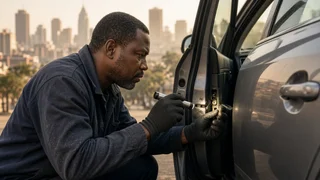
Car door lock repair in Sri Lanka
The short answer
Most car door lock faults can be repaired without replacing the whole door lock system, but the right fix depends on which part has failed. That could be the key cylinder (the part your key turns), the latch inside the door (the mechanism that holds the door shut), the linkage that connects them, or, on cars with central locking, the electric actuator, wiring or remote. Pin down which part is at fault before you agree to a repair. If the door will not latch shut securely, stop driving the car until it is fixed, because that is a safety problem rather than only a security one.
Two conditions change the advice. If the car was imported, including reconditioned units built for another market, replacement parts must match that car's exact model code, year and market version, not just its model name. And if the repair involves a new lock cylinder or new keys, a car with a transponder immobilizer may also need its keys programmed, which not every lock repairer can do.
This guide could not draw on verified information about repair prices, typical turnaround times or specific repairers in Sri Lanka. It does not name costs or businesses. Get written quotes locally and compare them.
What could be causing the problem
The causes below are possibilities to test, not diagnoses. Several faults produce similar symptoms. A simple check that separates one cause from another is worth more than a guess.
Symptom | Plausible causes | Check that helps tell them apart; Key will not turn, or turns stiffly, in one door | Worn or dirty key cylinder, worn key, disconnected cylinder linkage | Try a spare key. If the spare works, suspect the key. If both fail, suspect the cylinder or its linkage. Key turns freely but the door does not lock or unlock | Broken or detached rod or cable between the cylinder and the latch, failed latch | Try the interior lock button on the same door. If it works, the latch is probably fine and the cylinder linkage is the likelier fault. Remote or central locking works on all doors except one | Failed actuator in that door, broken wire in that door, latch fault | Listen at that door while locking. A buzz or click with no movement points to the actuator or a jammed latch. Silence points to the actuator or wiring. No door responds to the remote, but the key works | Weak remote battery, remote fault, fuse or central locking control fault | Try the spare remote. If it also fails, check the relevant fuse using the owner's manual before suspecting control modules. Door will not stay shut, or springs open | Failed or misaligned latch, worn striker (the fixed loop on the door frame the latch grips) | Look for damage or misalignment at the striker and latch. Do not drive with the door in this state. Door will not open from inside or outside | Detached handle rod or cable, jammed latch, child lock engaged (rear doors) | Check the child lock first on rear doors. Then compare the inside handle with the outside handle.
Dust, moisture and lack of lubrication can make cylinders and latches stiff over time. A lock that has become gradually harder to use often responds to cleaning and the right lubricant. A lock that failed suddenly is more likely to have a broken or detached internal part.
What to check next, in order
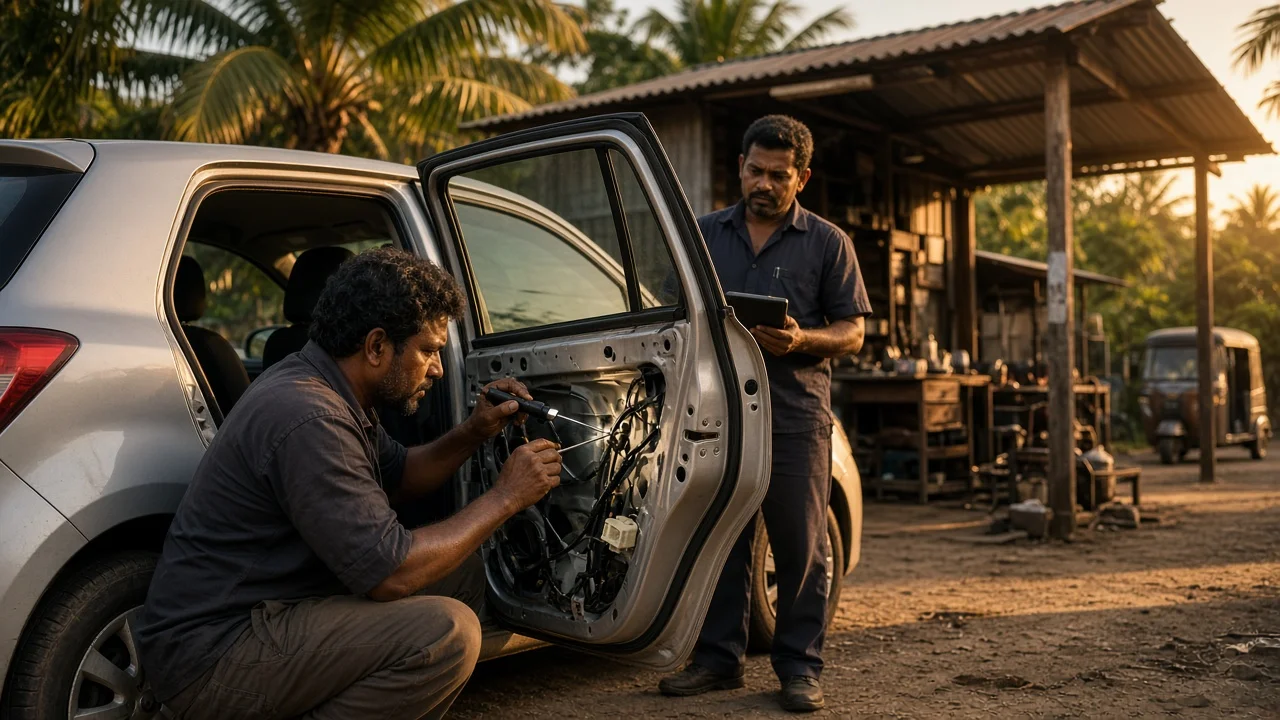
1) Note exactly which doors are affected and which methods fail: key, remote, interior button or handles. This single observation narrows the cause more than anything else. 2) Try the spare key and spare remote. This separates key or remote faults from lock faults. 3) Check the child lock if the problem is a rear door that will not open from inside. 4) On cars with central locking, listen at the problem door while locking and unlocking. 5) Check the central locking fuse if several doors stopped working at once. The owner's manual shows its location. 6) Look at the rubber boot between the door and the body on the affected side. Wires that run through it can break from repeated door opening, which is a common point of failure for single-door electrical faults.
Some cars store fault codes in a body or central locking control module, and a workshop scan tool may read them. A code shows which circuit or component the module flagged. It does not prove a part has failed, because wiring faults, poor connections and low battery voltage can trigger the same code. Make sure any code a workshop quotes actually belongs to the door lock system, and ask them to confirm the fault by testing before replacing parts.
When to stop and get help
Stop driving if the door does not latch securely or opens on its own. Stop forcing the key if it binds. Forcing it can snap the key inside the cylinder and make the repair harder. Avoid prying at the latch or window frame to open a jammed door. That can damage the door seal, paint or window mechanism. Get the car seen promptly if it cannot be locked at all, since it is unprotected while parked. Leave internal door work to a repairer if the door has side airbags or airbag sensors and you are not familiar with the safe procedure.
Choosing a repairer and comparing quotes
Door lock work in Sri Lanka may be handled by general workshops, auto electricians, automotive locksmiths or franchised dealers. The right choice depends on the fault. Mechanical cylinder and key problems suit a locksmith. Actuator and wiring faults suit an auto electrician or workshop. Immobilizer key programming needs someone with the right equipment for your make. These questions help you compare them:
Will they diagnose the fault before quoting for parts, and will they explain what they found? Can the existing cylinder be repaired or recoded to your current key, or are they proposing a full lock set with new keys? A full set can leave you carrying separate keys for the doors and ignition unless everything is matched. Will they check part compatibility using the chassis or model code rather than the model name alone? This matters especially for imported and reconditioned cars. What type of part are they quoting: genuine, aftermarket, or used or reconditioned? How does each affect price and fit? If new keys are involved, can they program them to the immobilizer, and is that included in the quote? Is the quote written and itemized, separating parts from labour? Do they offer any warranty on parts and workmanship? Do they ask for proof of ownership before cutting keys or opening locks? A careful repairer should, and that is a sign of a legitimate business, not an inconvenience.
Information gaps to close locally
This guide could not verify Sri Lankan repair prices, parts availability for particular models, typical waiting times or the reputation of individual repairers. For an imported vehicle, confirm parts fit against that car's own model code and market version. Get at least two written quotes based on a confirmed diagnosis. If you have them, share the symptom checks above with the repairer. They can shorten diagnosis and make quotes easier to compare.