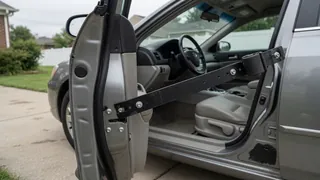
Car Door Check Strap
A check strap car door component is the small but heavily stressed link that controls how far a door swings open. When this part works correctly, you rarely notice it, yet it performs a demanding job every time the latch releases. The strap bridges the hinge attachment and the inner door structure, managing travel while protecting surrounding sheet metal. Door alignment, latch engagement, mounting fasteners, operating clearance and striker adjustment all rely on that controlled arc. Understanding the door check strap car design helps owners recognize sudden changes in resistance, popping or limited opening before secondary damage occurs.
Essential answer
A check strap on a car door limits the opening arc and often defines intermediate hold positions. It is mounted between the body pillar and door frame, generally separate from the hinges. As the door swings, an arm passes through a spring or detent mechanism that creates resistance and holds the panel partially open. The design prevents the outer skin from striking a fender, mirror or adjacent panel. A failing unit may allow the door to swing too far, altering door alignment and stressing the hinge attachment.
The component differs from a simple stop because it actively manages movement rather than just ending travel. Its detents give predictable resistance at selected points, which supports consistent latch engagement. Symptoms such as a snap, pop or a door that no longer stays open usually point to wear inside the strap housing. Because mounting fasteners connect the strap to thin sheet metal, looseness at either end can change the entire door arc. Striker adjustment should be checked only after confirming the strap is not bending the door shell or pulling at its mounts.