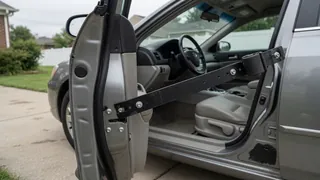
Car door check strap replacement
A failing door check strap changes the way a vehicle feels before you ever see a broken part. The door may swing too far, snap through detents, or make a sharp metallic pop as the arm folds. When that happens, the question shifts from diagnosing a noise to planning a car door check strap replacement or less invasive car door check strap repair. The strap itself is a simple hinge-mounted arm with a formed profile that holds the door at intermediate positions. It works alongside door alignment, hinge attachment, latch engagement, and striker adjustment, so a worn strap can mimic or mask other door problems. Understanding that mechanical relationship helps you decide whether to replace, repair, or adjust first.
Essential answer
A car door check strap is the stamped, roller-equipped arm between a door shell and its hinge mounting point. Its shaped profile creates detents that hold the door partly open and stops the door before it over-travels against a fender or body panel. When the metal wears, the roller no longer follows the profile cleanly, and the door can slam shut, lunge past normal positions, or produce cracking noises. Replacement involves removing the mounting fasteners at both ends, transferring the arm through the door jamb, and installing a service part. A narrower car door check strap repair may temporarily address a loose bushing or separated roller, but the core spring and detent wear must still be evaluated.
In many cases the part is removed from its hinge attachment and the interior door trim may need to be loosened for access. Operating clearance around the door edge influences how easily the arm feeds out of the jamb. Before replacing it, confirm the striker and latch engagement are not causing the same symptom, because a misaligned striker can let the door move in ways that overload the check strap. After a new or repaired strap is installed, watch door alignment through the full arc and listen for changes at each detent. If the noise returns immediately, the problem is likely interaction with the hinge or striker rather than the strap alone.