Choosing Camshaft Break-In Oil: What Your Cam Type Requires
The short answer
If you are installing a new flat-tappet camshaft, use an oil with elevated zinc and phosphorus anti-wear additives for the initial break-in. A dedicated break-in oil is the simplest way to get this, or you can use a suitable conventional oil with a zinc additive if the cam maker allows it. Ordinary modern passenger-car oil is generally not recommended for this job. The camshaft manufacturer's instructions take priority over any general advice, including this article, because they set the conditions for any warranty.
The main condition that changes this answer is cam type. A roller camshaft, where the lifters ride on small wheels instead of sliding across the lobes, does not face the same break-in wear risk. Roller cams can usually run on a quality oil that matches the engine's normal specification, though you should still follow the cam supplier's guidance.
Why flat-tappet cams need special oil
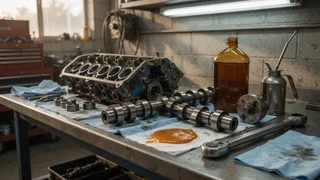
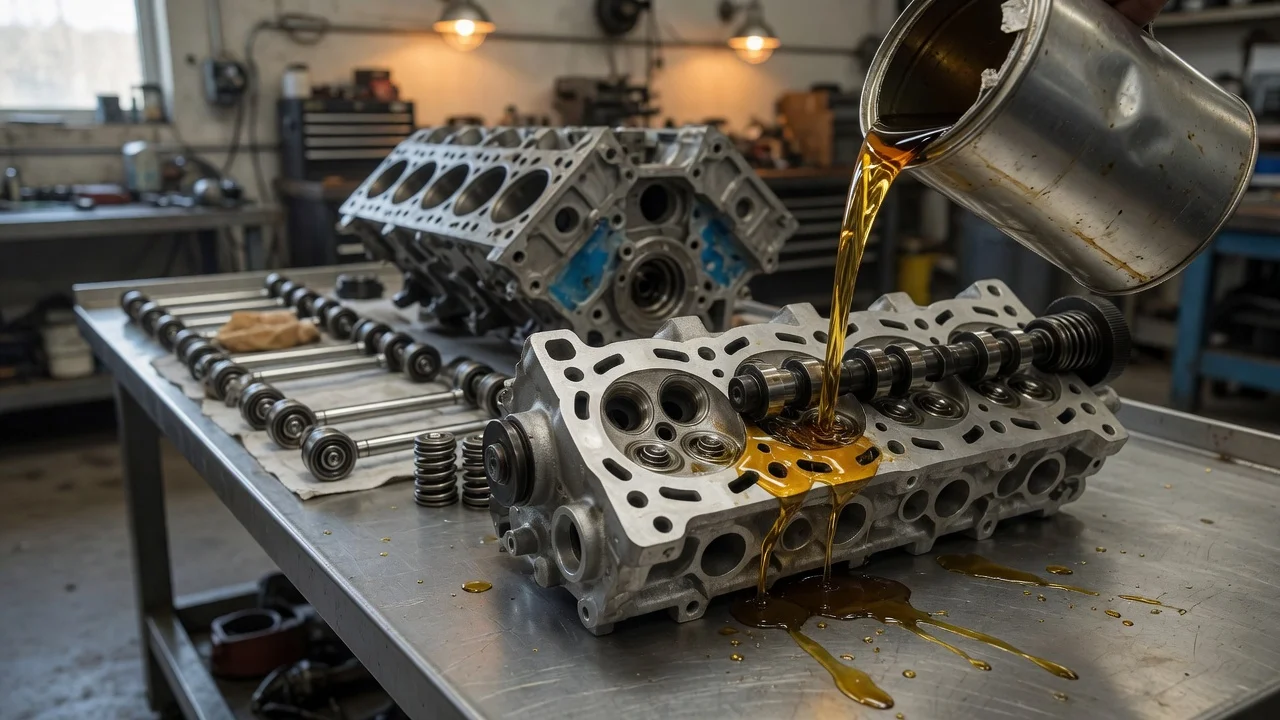
In a flat-tappet engine, each lifter face slides across its cam lobe under valve-spring pressure. During the first minutes of running, the lobe and lifter wear into a matched contact pattern. If they are not protected, the lobe can wear down quickly and the cam can fail within a short time.
The protection comes mainly from ZDDP (zinc dialkyldithiophosphate). This anti-wear additive forms a protective film on metal surfaces under high contact pressure. Many current passenger-car oils limit phosphorus because it can harm catalytic converters over time. That makes them well suited to modern roller-cam engines but less suitable for flat-tappet break-in.
What to check before buying
Cam type: Confirm whether the new cam is flat-tappet (hydraulic or solid) or roller. This decides whether you need special oil at all. Cam maker's instructions: Check which oil type, additive and break-in procedure the cam supplier specifies, and whether the warranty depends on following them. Anti-wear additive content: Look for published zinc and phosphorus figures on the product's technical data sheet, not just marketing wording such as "high zinc" or "classic car". Viscosity: Choose a grade suitable for the engine's bearing clearances, build and climate. A specialist break-in oil may only come in a few grades. Intended duration: Some break-in oils are meant only for the initial run and first short period, not for long-term use. Confirm what the product is intended for. Additive compatibility: If you are adding a zinc supplement to a regular oil, check that the base oil and additive are approved by the cam or additive maker for that use. Emissions equipment: If the vehicle has a catalytic converter, keep high-phosphorus oil to the break-in period recommended, since long-term use may affect the converter. Quantity: Buy enough for the engine's full oil capacity, plus the change after break-in, and a filter for each fill.
On cost, budget for at least two oil fills and two filters: one for break-in and one shortly afterward. Changing early removes assembly lube, metal particles and break-in debris. No price data was supplied for this article. If you compare products, note the retailer, date, currency, container size and whether shipping is included. Then work out the cost per fill rather than per bottle.
Comparing the main oil options
The choice usually comes down to three routes. The comparison below is general. It does not rank specific brands, because no comparable test data was supplied, and additive levels vary between products and formulation updates.
Option | Strengths | Trade-offs | Best fit; Dedicated break-in oil | Formulated for break-in; additive level stated by the maker; no mixing needed | Often intended only for short-term use; limited viscosity choices; may cost more per fill | Flat-tappet builds where you want the least guesswork; Conventional oil plus zinc additive | Flexible viscosity choice; additive may also suit later top-ups | Results depend on correct dosing and compatibility; check that the cam maker accepts this method | Builders who already use a specific oil and have the cam maker's approval; High-zinc performance or classic-car oil | Can serve for break-in and ongoing use in older flat-tappet engines | Additive levels vary by product; confirm figures and break-in suitability on the data sheet | Owners who want one oil for break-in and regular use, where the maker permits it
Heavy-duty diesel oils are sometimes suggested as a substitute because older formulations carried higher zinc levels. Current diesel specifications have also changed. Do not assume a diesel oil is suitable without checking its published additive content and the cam maker's position.
Some cam makers prefer conventional (mineral) oil for break-in, while others permit synthetics. Follow the cam maker's preference rather than a general rule.
Oil is only part of a successful break-in
Even the right oil cannot save a cam if the rest of the procedure is skipped. Cam suppliers typically specify several other steps.
Coat the lobes and lifter faces with the supplied or recommended assembly lube. Use new lifters with a new flat-tappet cam. Do not reuse old lifters on a new cam. Prime the oiling system before first start so oil pressure is present immediately. Make sure the engine will start quickly, with ignition timing and fuel delivery set, so it does not crank for long. Run at the elevated engine speed and for the duration the cam maker specifies, avoiding extended idling during break-in. Where the maker advises it for stiff valve springs, use lighter springs or remove inner springs during break-in. Change the oil and filter after break-in, at the interval the cam maker recommends.
Information gaps to resolve
This guidance does not include specific zinc or phosphorus thresholds, recommended break-in speeds or durations, product names, or prices, because no verified figures were supplied. These details vary by cam manufacturer, engine and oil formulation. Take them from the cam supplier's instructions and the oil maker's current technical data sheet before you buy.