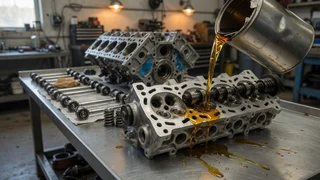
Choose Comp Cams break-in oil additive

The short answer
COMP Cams break-in oil additive is a sensible buy if you are about to fire a freshly built or re-cammed engine with a flat tappet camshaft. Flat tappet means lifters with a flat or slightly crowned face that slide against the cam lobe. That sliding contact is most vulnerable in the first minutes of running, and the additive's job is to protect it. If your engine uses roller lifters, the case for the additive is much weaker. In that case, buying it is a matter of preference or of following your engine builder's instructions, not a requirement.
Three conditions can change this answer: what lifter type the engine actually has, what oil you plan to mix the additive into, and what your cam and engine builder's instructions specify. Where the builder's or cam maker's instruction sheet conflicts with general advice, follow the instruction sheet.
Why flat tappet cams need extra protection
Break-in additives of this type rely mainly on ZDDP (zinc dialkyldithiophosphate). ZDDP is an anti-wear chemistry that forms a protective film on metal surfaces under high contact pressure. Many current passenger-car motor oils limit their phosphorus content to protect catalytic converters. That leaves less of this protection than older flat tappet designs were developed around. The additive is meant to restore that protection while the lobes and lifters wear in together.
Roller lifters roll rather than slide across the lobe, so contact stress at break-in is far less of a concern. That is why the lifter type matters more than any other factor in deciding whether to buy.
What to check before you buy
• Lifter type: confirm whether the camshaft is a flat tappet or a roller design. Check the cam card, the part listing or the engine build sheet rather than assuming from the engine family, because the same engine family may have been built either way across model years and rebuilds. • Builder or cam instructions: some cam kits and engine builders specify a particular break-in oil, additive or procedure. Following an alternative can matter if a warranty or the builder's support depends on it. • Base oil: check what oil type the additive is meant to be mixed with. Cam makers commonly advise against synthetic oil during break-in, so confirm the recommended oil type on the product label or instruction sheet. • Treat ratio: confirm how much oil one container treats, and compare that with your engine's oil capacity including the filter. That tells you how many containers you need. • Catalytic converter: if the vehicle has a catalytic converter, high-phosphorus oil is intended for the break-in period rather than long-term use. Check the label's guidance on how long to keep the treated oil in and when to change it. • Format: COMP and other suppliers also sell ready-blended break-in oils. Decide whether you want an additive to mix into oil you already have, or a single pre-mixed product.
Cost and what it covers
No current prices were supplied for this article, so none are quoted here. When you compare listings, note the retailer's market, currency and date, and whether shipping is included. Also check whether the listing is a single container or a multi-pack. The relevant cost is the total for your engine's oil capacity, plus the base oil, the filter and the oil change that follows break-in. The additive alone is not the full cost.
Using it as part of break-in
The additive is only one part of a successful flat tappet break-in. Correct valve spring pressure, assembly lube on the lobes and lifter faces, and a quick first start all matter too. Cam makers' instruction sheets typically call for a period of sustained, varied engine speed immediately after the first start, rather than idling, followed by an oil and filter change. Use the exact speed, duration and oil-change interval printed in your cam's instructions.
Information gaps to resolve
The supplied material did not include the following details. Confirm them from the current product label or the seller before buying: • the additive's exact zinc and phosphorus content; • the treat ratio per container; • current part numbers and package sizes; • current pricing; • any compatibility statements for specific engines or oil types