Buy and Replace Hydraulic Brake Lines: A Practical Guide to 3/16 Brake Line
The short answer
3/16-inch tubing is the most common hard brake line size on passenger cars and light trucks, so it is usually the right starting point when you replace a corroded or damaged line. Tube diameter alone does not make a line compatible, though. Before you buy, confirm three things for your exact vehicle: the tube's outside diameter, the thread on the fitting (the tube nut), and the flare type at the tube end. If any of the three differs from the original, the line will not seal correctly. Some vehicles use other tube sizes, such as 1/4 inch, on certain circuits, so check each line you plan to replace rather than assuming the whole system is the same.
This guide is general. No vehicle-specific data was available for it, so use your vehicle's service information or the original parts to confirm sizes for your model year, market, trim and brake package.
Why 3/16 and 3/8 get confused
Searches for a 3/8 brake line often refer to the fitting rather than the tube. On many US-market vehicles, 3/16-inch tubing is joined with tube nuts that have a 3/8-24 thread. In that case, "3/8" describes the nut's thread, not the line. Actual 3/8-inch tubing is much larger and rarely used for brake hydraulic lines. Before ordering, check whether a part description refers to tube diameter or thread size.
Metric equivalents add another layer. Tubing sold as 4.75 mm is essentially the same diameter as 3/16 inch, but vehicles built with metric systems often use metric threads, commonly M10 x 1.0, and a different flare. Tubing that fits physically may still need different nuts.
Fittings and flare types for 3/16 line
The flare is the shaped end of the tube that seals against the mating port. Brake systems commonly use one of two styles, and they are not interchangeable:
Double flare (also called SAE or inverted flare): the tube end is folded back on itself and formed to a 45-degree cone. It is common on domestic and many older vehicles. Bubble flare (also called ISO flare): the tube end is formed into a rounded bulge. It is common on many European and Asian vehicles.
When buying 3/16 brake line fittings, match the flare type, the thread size and pitch, and the nut length where clearance is tight. Single flares are not suitable for brake pressure. Compression fittings are generally not considered acceptable for brake lines either. If you are unsure, take the old tube nut to the counter and compare it directly.
Choosing tubing material
Coated steel: closest to many original-equipment lines and widely available. It is stiff, so bending it neatly needs a proper tube bender. Copper-nickel alloy: easier to bend and flare by hand and resists corrosion well. It is a popular choice for DIY replacement where it meets local requirements. Stainless steel: highly corrosion resistant but hard to flare cleanly. Double flaring it often needs a better-quality tool.
Whichever material you choose, the diameter, fittings and flare must still match the vehicle. No comparative test results or prices were supplied for this guide, so check product specifications and current pricing yourself.
Brake line kit or bulk tubing?
A brake line kit usually takes one of two forms. Pre-bent kits are made for a specific vehicle and arrive shaped and flared, which saves fabrication time but only fits if it matches your exact model, wheelbase, cab or bed configuration, and brake setup. Universal kits supply straight or coiled tubing with assorted fittings for you to cut, flare and bend. They are more flexible but require tools and care to get leak-free flares. For a single damaged section, bulk 3/16 tubing and the correct nuts may be all you need. For full replacement on a heavily rusted vehicle, a pre-bent kit can be worth checking if one exists for your application.
When a brake line adapter makes sense
An adapter joins two different thread sizes or flare styles, for example when a replacement component uses a different port than the original line. Adapters are useful but add a joint that could leak, so use one only when direct matching parts are not practical. Both ends must match their mating parts in thread and flare type. An adapter cannot correct a mismatched flare at the tube itself.
What brake line plugs are for
Brake line plugs and caps seal open lines and ports while the system is apart. They limit fluid loss, keep dirt and moisture out, and reduce how much air enters the system. Choose plugs that match the thread and flare of the opening. They are temporary service aids only and must not be left in a working brake system.
Brake line replacement: the main steps
Replacing hydraulic brake lines directly affects braking. If you are not confident making leak-free flares and bleeding the system, have a qualified technician do the work. The general sequence is:
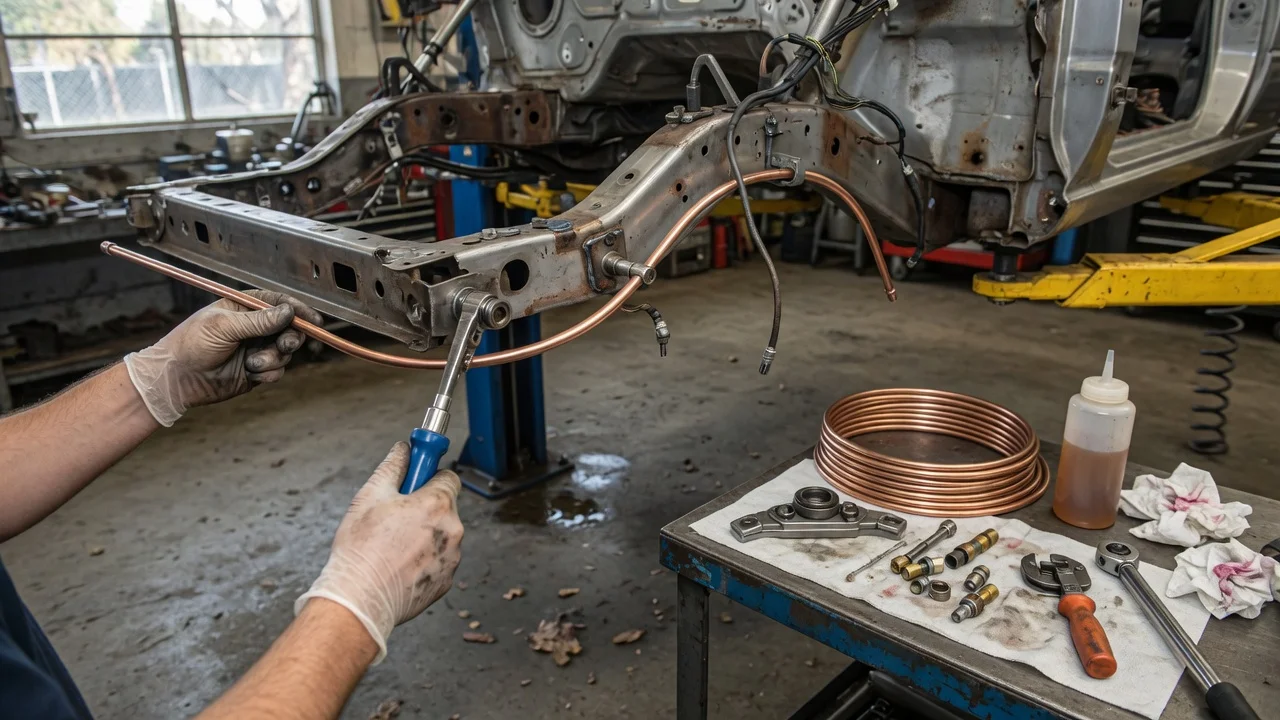
Identify the damaged line and confirm its tube size, thread and flare type. Support the vehicle safely and apply penetrating oil to the old fittings. Loosen the tube nuts with a flare-nut (line) wrench to avoid rounding them, and plug the openings. Cut new tubing to length, slide the tube nuts on before flaring, then form the correct flare with a suitable tool. Bend the line to follow the original route and secure it in the original clips, away from heat, moving parts and sharp edges. Tighten the fittings to the specification in the service information, without over-tightening. Bleed the brakes using the procedure for your vehicle. Some systems with ABS have specific bleeding requirements. Check for leaks under pressure and confirm a firm pedal before road testing at low speed.
What to confirm before you buy
Collect your vehicle's model year, market, trim and brake configuration, then confirm the tube diameter, fitting thread and flare type for each line you will replace. These details can vary between models and even within one vehicle, and they were not supplied for this guide, so verify them against service information or the original parts. With those confirmed, choose the tubing material, decide between a kit and bulk tubing, and plan for plugs and any adapters you need.