Buy 3/16 brake line
The short answer
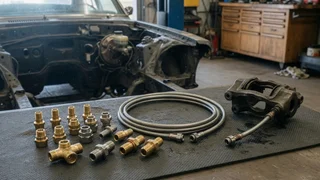
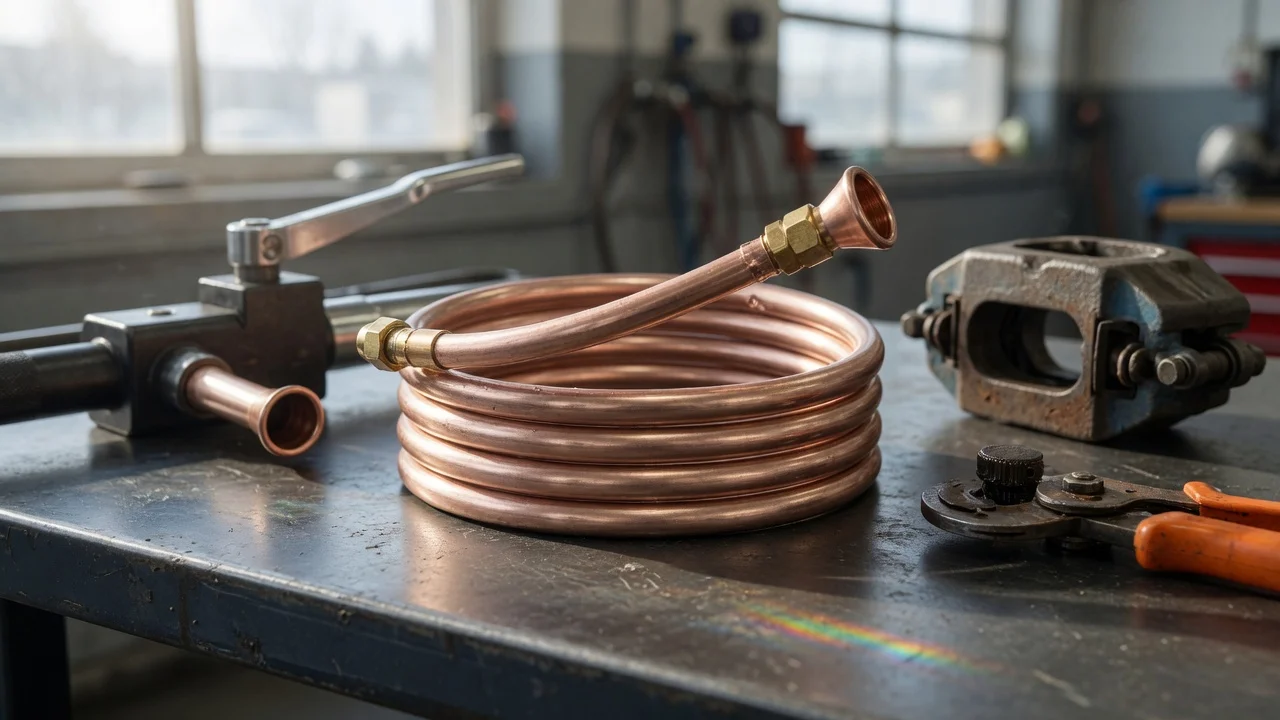
You can buy 3/16-inch brake line on Amazon as bulk coils, pre-cut lengths with fittings already installed, or kits that include fittings. Before you order, confirm three things for your specific vehicle: that 3/16 inch is the correct tubing size, which flare type the existing fittings use, and which fitting thread size is needed. If any of these doesn't match, the line won't seal properly, even if the tubing diameter is right. A wrong match on a brake system is a safety problem, not just an inconvenience.
Confirm 3/16 inch is the right size for your vehicle
The 3/16-inch figure refers to the outside diameter of the tubing. It is a common brake line size, but it is not universal. Some vehicles use other diameters on certain circuits, and line sizes can differ by model year, market, trim and brake configuration. The most reliable checks are the vehicle's service information, a parts catalog lookup by exact vehicle, or measuring the outside diameter of the existing line. If those sources disagree, resolve the difference before you buy.
What to check in a listing
Outside diameter: the listing should state 3/16 inch explicitly. Don't infer it from photos. Material: usually zinc-coated steel, copper-nickel alloy or stainless steel. See the comparison below. Length: bulk coils need cutting and flaring. Pre-made lines come in fixed lengths, so measure your route first, including bends. Flare type: double inverted flare and bubble (ISO) flare are not interchangeable. Match what your vehicle uses. Fitting thread: the tube nut thread must match the component it screws into, such as the master cylinder, a junction block or a brake hose. Listings should state the thread size and pitch. Included fittings: some coils ship without tube nuts. Check whether fittings are included and whether they match your thread and flare type. Intended use: the listing should identify the tubing as made for hydraulic brake systems, ideally stating that it meets a recognized brake-tubing standard.
Choosing a material
Material | Ease of bending and flaring | Corrosion resistance | Notes; Zinc-coated steel | Moderate; usually needs a tube bender for clean bends | Lower than the alternatives | Similar to many original-equipment lines; Copper-nickel alloy | Easy; can often be shaped by hand and flares readily | Good | Popular for DIY replacement because it is easier to work with; Stainless steel | Difficult; harder to bend and flare, and may need a heavier-duty flaring tool | Good | Flare quality depends heavily on the tool and technique
Pre-made lines or bulk coil
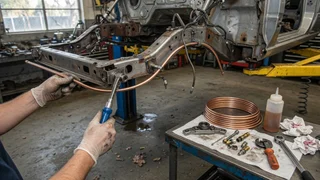
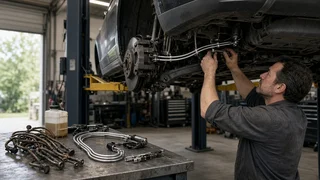
Pre-made lines with fittings already flared save you from flaring the tubing yourself. They only work if a stock length and fitting combination suits your routing, and extra length usually has to be coiled or bent in neatly. Bulk coil lets you cut each run to length, but you'll need a tubing cutter, a flaring tool for the correct flare type, and ideally a bender. A poorly made flare is a common cause of leaks, so if you don't have the right flaring tool, a pre-made line or professional installation may be the better choice.
After installation
Any time you open the hydraulic system, it needs to be bled to remove air. Check every new connection for leaks and confirm a firm pedal before driving. If you're not confident about flaring, routing or bleeding, have the work done or inspected by a qualified technician.
What this guide does not cover
No specific Amazon listings, prices, ratings, stock levels or test results were available for this guide, so it does not recommend particular products or sellers. It also does not confirm the brake line size, flare type or fitting thread for any particular vehicle. Verify those against your vehicle's model year, market, trim and brake configuration before purchasing.