Brake Fluid Replacement: How a Fluid Change Is Performed
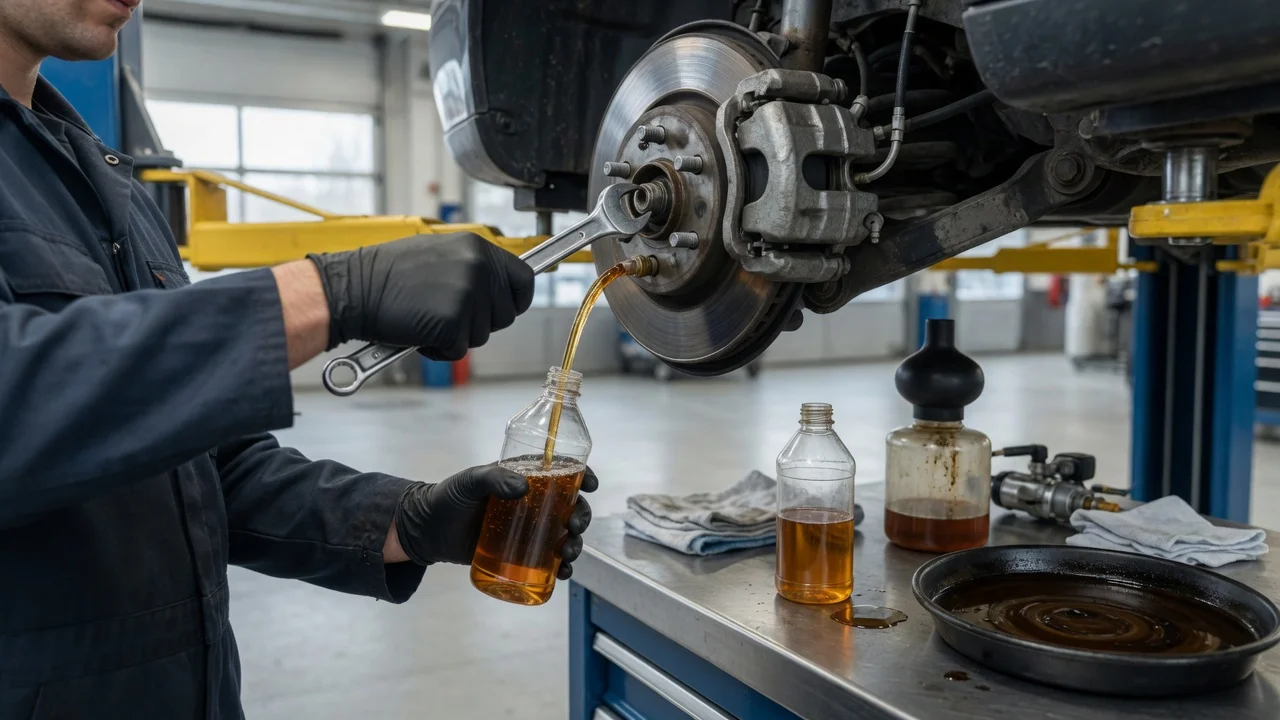
What a brake fluid change actually is
A brake fluid change replaces the hydraulic fluid in the brake system with fresh fluid of the type specified for that vehicle. The job is also called brake fluid replacement or a brake bleed when old fluid is flushed out while air is kept out of the lines. The essential result is a system filled with new fluid, free of trapped air, using the correct specification from the reservoir cap or owner’s manual.
Scope is the master cylinder reservoir, brake lines, hoses, calipers or wheel cylinders, and, on many later vehicles, the ABS or stability-control hydraulic unit. A fluid change is not a pad, rotor, or caliper overhaul, though leaking or seized hardware found during the service must be repaired before the system can be closed. Interval, fluid grade, bleed order, and whether a scan tool is required all depend on model year, generation, powertrain layout, and market specification.
How the fluid change is performed
The workshop procedure follows a consistent sequence, with manufacturer service information overriding generic steps when they conflict.
Confirm the specified fluid (typically a DOT glycol type such as DOT 3, DOT 4, or DOT 5.1, or, on a smaller set of vehicles, silicone DOT 5) and obtain enough unused fluid from a sealed container. Raise and support the vehicle if needed so every bleed screw is reachable, then clean the master-cylinder cap area so dirt does not enter the reservoir. Remove as much old fluid from the reservoir as practical and refill with new fluid so the reservoir cannot run dry during bleeding. Open each bleed screw in the prescribed order, usually starting at the wheel farthest from the master cylinder, and push or draw fluid until the discharge runs clear and free of bubbles. Keep the reservoir topped up throughout so air is not drawn into the master cylinder. Torque bleed screws to the specified value, refit dust caps, set the reservoir to the marked level, and check pedal feel and for leaks with the engine running if the vehicle uses a vacuum or hydraulic booster.
Shops use several methods to move fluid: a two-person pedal bleed, a pressure bleeder on the reservoir, a vacuum bleeder at the caliper, or gravity bleeding. Pressure or vacuum equipment does not change the requirement to use the correct fluid and to prevent the reservoir from emptying. On many ABS and electronic-stability systems, valves inside the hydraulic unit will not pass fluid unless a diagnostic tool commands a bleed routine; skipping that step can leave old fluid and air in the modulator.
Qualifications that change the answer
Glycol-based fluids (DOT 3, DOT 4, DOT 5.1) are not interchangeable with silicone DOT 5. Mixing those families contaminates seals and the hydraulic unit. Within the glycol family, a higher DOT grade is sometimes allowed as a substitute only when the vehicle maker says so; that permission is model-specific and is not a general rule.
Bleed sequence is not universal. Diagonal-split, front-rear split, and some electronic parking-brake or dual-caliper layouts use a different order. Vehicles with clutch hydraulics that share a reservoir may need the clutch bled as well. After collision repair, master-cylinder replacement, or work that opened the lines, a full flush plus an ABS service bleed is often required rather than a simple top-up.
Replacement interval is set by the manufacturer and can be time-based, mileage-based, or condition-based (for example a fluid-test strip or boiling-point check). No single mileage or year figure applies across makes. Moisture absorption, boiling-point drop, and internal corrosion are the usual reasons for scheduled replacement; those effects vary with climate, duty cycle, and whether the cap seal has been disturbed.
What this service does not settle
A fluid change does not restore a low pedal caused by worn pads, a leaking caliper, a failing master cylinder, or air that re-enters after a leak. Soft pedal, warning lamps, or a reservoir that keeps dropping after the job point to hardware faults that need diagnosis. Exact boiling points, water-content limits, and torque values are published in the vehicle’s service data and on the fluid container; those figures are not interchangeable across brands or DOT grades and are not restated here.
Practical next step
Use the owner’s manual or under-hood cap to identify the required fluid, then follow that vehicle’s bleed procedure, including any ABS tool step. If the work is done outside a shop, treat used fluid as hazardous waste and never reuse fluid that has been opened to air for a long period. When pedal feel, leaks, or electronic brake warnings are present, have the hydraulic system inspected before or during the fluid change rather than treating replacement as a complete repair.