Brake Hose Replacement: What the Job Involves
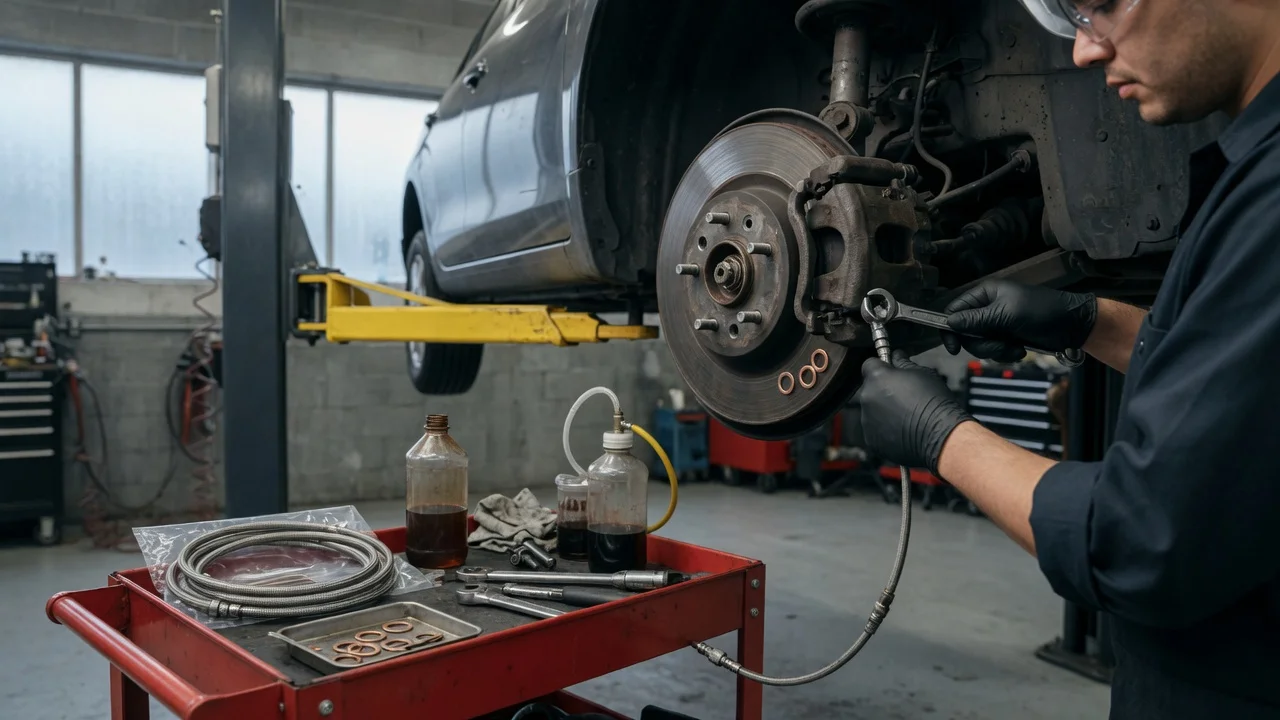
Direct Answer: What Brake Hose Replacement Actually Involves
Brake hose replacement means removing one or more flexible hydraulic lines that connect the vehicle's rigid brake piping to the brake calipers or wheel cylinders, and installing new hoses. The job normally also includes renewing the sealing washers, bleeding air from the affected brake circuit, topping up brake fluid, and checking for leaks and a firm pedal. It can be done on one wheel or as a complete set; brake hoses are commonly replaced in axle pairs.
How a Brake Hose Works and Why It Matters
A brake hose is a flexible, reinforced hydraulic line designed to carry brake fluid under pressure. It allows the wheel and suspension to move while the rigid metal brake line stays fixed to the body or chassis. Inside, the hose has a fluid-resistant inner liner, a braided or textile reinforcement layer, and an outer cover that resists abrasion and weather.
When the driver presses the brake pedal, brake fluid is pushed through the hose into the caliper or wheel cylinder. Hydraulic pressure then forces the brake pads or shoes against the rotor or drum. A healthy hose transmits this pressure with minimal expansion, which keeps the pedal feel consistent and helps ensure predictable braking.
The practical effect is that a failing hose may swell internally, crack externally, leak fluid, or delaminate. An internally swollen hose can restrict fluid return and cause a caliper to drag. Any leak reduces hydraulic pressure and increases the risk of partial or complete braking loss at that circuit.
When Replacement Is Needed
Visible cracks, cuts, bulges, or fraying on the outer cover; Wetness or fluid staining at the hose fittings or along the hose; A soft, low, or slowly sinking brake pedal after the fluid level is confirmed; A pull to one side during braking; Uneven brake wear or a wheel that overheats because a caliper is not releasing; Hoses more than about six years old on vehicles used in harsh conditions
Age and environment matter more than mileage in many cases. Heat, road salt, moisture, and repeated suspension movement can degrade hoses even when the vehicle has not covered high distances. Because the inner condition is not always visible, a change in pedal behavior combined with any external damage is a reason to inspect carefully.
Strengths and Limitations of Replacing Only the Hoses
Replacing a brake hose is a clearly targeted repair. It is generally less expensive than replacing a caliper, master cylinder, or ABS modulator, and it addresses one of the most common age-related causes of brake fluid loss or a weak pedal. When the hose is the source of a leak, a new hose restores the hydraulic circuit without changing the vehicle's existing braking calibration.
The main limitation is that replacing a hose does not repair other worn components. If the caliper piston seals are leaking, the slide pins are seized, or the master cylinder is failing, a new hose will not resolve those problems. For this reason, the area should be inspected before the parts are ordered. A brake hose replacement is also not a substitute for a full brake fluid flush, although it often leads to a bleed of the affected circuit.
Step-by-Step Brake Hose Replacement Procedure
The following steps are a general order of work for a typical disc-brake vehicle. Exact hose routing, torque values, and bleed sequence vary by make, model, and year, so use the applicable service information for the vehicle before beginning.
Secure the vehicle on level ground, chock the wheels, and lift it safely with a jack rated for the load, then support it on stands; Remove the wheel for access; Clean the hose and fittings so dirt cannot enter the hydraulic system; Place a drain tray under the work area and, if possible, cap or plug the open line end after disconnecting it to reduce fluid loss; Crack the banjo bolt or flare fitting at the caliper and the other fitting at the rigid line; use a proper flare-nut or line wrench where needed; Remove the retaining clips or brackets that hold the hose in place; Transfer the routing clips and any locator hardware to the new hose only if they are reusable and fit correctly; Install the new hose with new sealing washers where the design requires them; Tighten the fittings to the specified torque; heat and suspension movement make the correct security important; Reinstall the retaining clips and confirm the hose is not twisted or stretched through the full steering and suspension travel range; Bleed the brake circuit according to the manufacturer's sequence; Top up the brake fluid with the correct specification and recheck the level; Pump the pedal to build pressure, then check each fitting for leaks; Reinstall the wheel and torque the wheel fasteners before lowering the vehicle; Test the brake pedal in a safe area at low speed before returning to normal traffic
Precautions That Affect the Work
Brake fluid is toxic and can damage paint. Keep it away from skin and painted surfaces, and clean spills immediately. Do not let the master cylinder run dry while the line is open, because this can introduce air into the ABS hydraulic unit and make bleeding much more difficult.
Some vehicles require a scan tool to run an ABS bleed or service mode. If the system has air in the ABS pump or the hydraulic unit is disturbed, the job may go beyond a simple manual bleed. In that situation, professional diagnosis and proper equipment are the safer approach.
Completion Checks and Next Decision
After replacement, the pedal should feel firm and stop rising after a few pumps. The fluid level should remain stable with no new wetness at the connections. The brake warning light should not be on for a low-fluid or hydraulic fault. If the pedal is still soft, the hose is leaking, or a wheel remains hot or pulling, further inspection is needed rather than repeated bleeding.
Who Should Consider Doing the Work
This job suits an experienced home mechanic who is comfortable with supported lifting, hydraulic fittings, and a proper brake bleed. A beginner can do it with careful preparation, but the safety stakes are high, and the first test drive should be treated as a verification step.
It suits drivers who want a focused repair for an aging or leaking hose, and owners of vehicles in corrosive environments who are replacing hoses as preventive maintenance. It is not the right fix for an unresolved brake fault without a clear hose-related cause.
Key limitation: this guide describes a general procedure and does not list model-specific torque values, bleeder locations, or ABS service requirements. Use the applicable factory service information for the exact vehicle before beginning.