Brake Disc Replacement: What Replacing Brake Discs and Rotors Involves
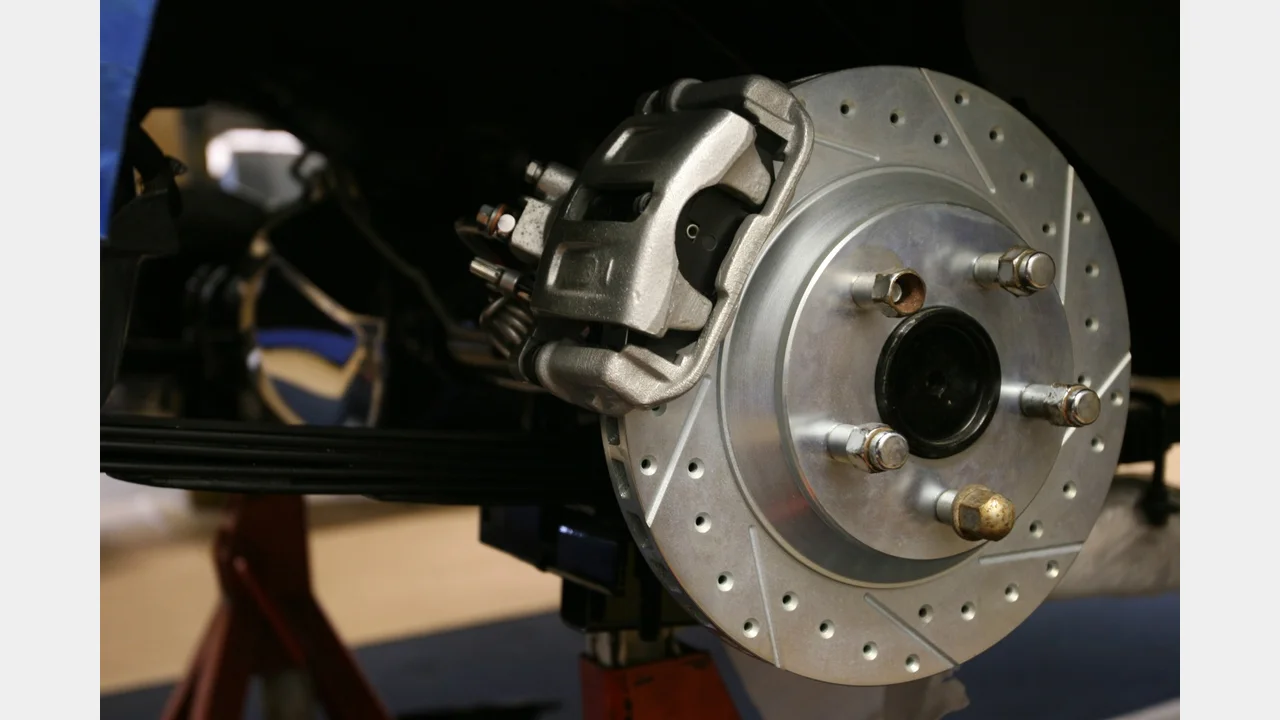
If you are searching for how to replace brake discs and rotors, start with one clarification: they are the same part. "Brake disc" and "brake rotor" are two names for the metal disc that spins with the wheel and is clamped by the brake pads to slow the vehicle. "Rotor" is the more common term in the US, while "disc" is more common in British English and in many manufacturer and parts catalogs. A brake disc replacement and a rotor replacement describe the same job. Brake disc replacement means removing worn, damaged or out-of-specification rotors and installing new ones, almost always together with new brake pads and always in pairs on the same axle. Whether you need it depends on measured rotor thickness, surface condition and the symptoms you notice while driving, not on mileage alone.
What Brake Rotors Do and How They Differ From Brake Pads
A disc brake has three main parts at each wheel: the rotor, the brake pads and the caliper. When you press the brake pedal, brake fluid transmits that force through the hydraulic lines to the caliper. The caliper pistons push the pads against both faces of the rotor, and friction turns the vehicle's motion into heat.
Brake pads carry a layer of friction material designed to wear away gradually; they are the primary consumable part of the system. The rotor is a much harder metal surface, typically cast iron on most passenger vehicles, that also wears, but more slowly. That is why pads are usually replaced more often than rotors, and why a pad replacement does not automatically require new rotors.
When Brake Discs Need Replacement
Rotors are replaced when they fall below their minimum safe thickness, when the braking surface is damaged, or when they no longer run true. Common signs include:
Pulsation or vibration through the brake pedal or steering wheel during braking, often caused by uneven rotor thickness or deposits on the rotor surface; Deep grooves or scoring on the rotor face, frequently from pads worn down to their metal backing plates; A pronounced raised lip at the outer edge of the rotor, showing significant surface wear; Visible cracks, particularly around the outer edge or near cooling vents; Blue or dark heat discoloration combined with uneven braking or vibration; Grinding noise, which usually means the pads are worn through and metal is contacting the rotor; Heavy corrosion or pitting on the braking surface, which can happen on vehicles that sit unused for long periods
Some light surface rust after rain or a car wash is normal and typically wipes off with the first few brake applications. It is persistent, deep pitting that matters.
Wear Limits: The Minimum Thickness Rule
Every rotor has a manufacturer-specified minimum thickness, often stamped or cast into the rotor itself, commonly on the hat section or the edge. A rotor that measures at or below that wear limit should be replaced. Thinner rotors hold less heat, are more prone to overheating and distortion, and can reduce braking performance.
Thickness is measured with a micrometer at several points around the braking surface. Technicians also check thickness variation and lateral runout, the side-to-side wobble of the rotor as it turns, using a dial indicator. Minimum thickness and runout limits vary by vehicle, so the correct figures come from the specification for your make, model, model year and brake package rather than from a general rule.
Resurfacing vs. Replacing Rotors
Resurfacing, also called machining or turning, removes a thin layer from the rotor faces to restore a flat, even surface. It only makes sense if the rotor will still be above its minimum thickness after machining. Many shops now favor replacement because modern rotors are often designed with less spare thickness, and new rotors are widely available.
Factor | Resurfacing | Replacement; Rotor thickness | Must remain above minimum after machining | Restores full original thickness; Suitable damage | Light scoring, minor thickness variation | Deep grooves, cracks, heavy wear, heat damage; Heat capacity afterward | Reduced, because material is removed | Full design capacity; Availability | Depends on shop equipment and rotor design | Widely available for most common vehicles; Typical outcome | Can extend rotor life if enough material remains | Usually the more straightforward, longer-term fix
Should Pads Be Replaced With the Rotors?
Yes, new rotors are normally installed with new brake pads. Old pads have worn to match the surface of the old rotors, so pairing them with a fresh, flat rotor leads to poor contact, uneven braking and noise. The reverse is not always true: new pads can often be fitted to existing rotors if those rotors are within specification and in good condition.
Rotors and pads should be replaced on both sides of the same axle at the same time. Replacing only one side can cause the vehicle to pull during braking because the two sides generate different amounts of friction. Front and rear axles wear at different rates and are evaluated separately; on many vehicles the front brakes do most of the work and wear faster.
Vehicle Fitment and Rotor Types
Correct vehicle fitment is essential. Rotor diameter, thickness, hub design and bolt pattern can differ not only between models but between trims, engines and optional brake packages within the same model year. Parts are usually matched by year, make, model and trim, and sometimes by the vehicle identification number when a model offered multiple brake configurations.
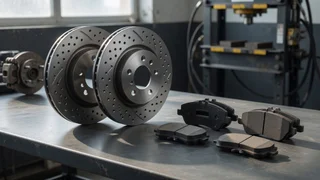
Solid rotors: a single piece of metal, often used on rear axles or lighter vehicles; Vented rotors: two faces separated by internal cooling vanes, common on front axles where heat loads are higher; Drilled or slotted rotors: designed to help manage gases, heat and debris; typically marketed toward performance use, and the benefits depend heavily on design and driving conditions; Coated rotors: carry a protective finish on non-braking surfaces to resist corrosion on the hat and vents; Two-piece or specialty rotors: found on some performance vehicles, with different replacement procedures and costs
For most daily-driven vehicles, a quality replacement rotor that matches the original design is the sensible choice. Upgraded rotor styles are an editorial consideration rather than a requirement and are most relevant for towing, heavy loads or spirited driving, where pad compound selection matters just as much.
What a Brake Disc Replacement Involves
The general process is similar on most vehicles with disc brakes, though details differ by design. A typical sequence looks like this:
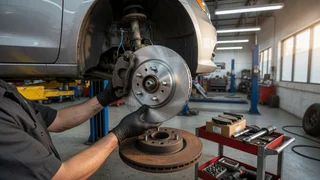
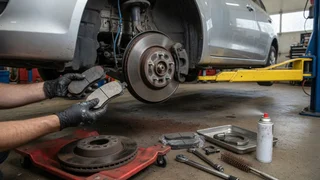
Securely lift and support the vehicle and remove the wheel; Remove the caliper and hang it so it does not stretch or kink the brake hose; Remove the caliper bracket, if the design requires it, to free the rotor; Remove the old rotor, which may be held by a retaining screw or seized to the hub by corrosion; Clean the hub mounting surface so the new rotor sits flat, since debris or rust can cause runout; Clean any protective coating or oil from the new rotor's braking surfaces if the manufacturer calls for it; Install the new rotor, the caliper bracket and new pads with appropriate hardware and lubrication on contact points; Compress the caliper pistons, check that the caliper slides move freely, and reinstall the caliper; Tighten fasteners and wheel lug nuts to the vehicle's specified torque; Pump the brake pedal to restore pedal height before driving, then bed in the new pads and rotors
Some vehicles add steps. Many with electronic parking brakes require a service mode or scan tool to retract the rear caliper pistons. Some rotors are integrated with the wheel hub or held in by axle components, which makes the job more involved. Vehicles with rear drum-in-hat parking brakes have a small drum inside the rear rotor that may need inspection at the same time.
Related Components Worth Checking
A rotor replacement is a good moment to inspect the rest of the brake system, because problems elsewhere can shorten the life of new parts:
Caliper: sticking pistons or seized slide pins cause uneven pad wear and can overheat rotors; Brake hoses: look for cracking, swelling or leaks; Hardware: abutment clips, shims and anti-rattle springs are often replaced with the pads; Brake fluid: fluid absorbs moisture over time, which lowers its boiling point; check its condition and the manufacturer's recommended service interval; Wheel bearings and hubs: excessive play can mimic or cause rotor runout
Bedding In New Pads and Rotors
Bedding in, or burnishing, is a series of controlled stops that deposits an even layer of friction material on the new rotor surface and seats the pads. It helps reduce noise and vibration and gives more consistent braking. Procedures differ by pad manufacturer, so follow the instructions supplied with the pads. Until bedding is complete, avoid hard, sustained braking from high speed.
DIY or Professional Service?
Brake disc replacement is a common job for experienced home mechanics with the right tools, including a proper jack and stands, a torque wrench and the ability to look up correct specifications. Brakes are a safety-critical system, though, and mistakes such as improper torque, contaminated rotors, a damaged brake hose or a missed caliper problem can have serious consequences.
A professional shop is the better choice if you are unsure of the procedure, if the vehicle has an electronic parking brake or hub-integrated rotors, if seized hardware is likely, or if you notice a soft pedal, fluid leaks or pulling that may point to a hydraulic problem rather than worn rotors.
What Affects the Cost
Prices vary widely by region, vehicle and shop, so it is more useful to understand the drivers than to rely on a single figure. Cost depends on the vehicle and brake size, rotor type and brand, whether pads and hardware are included, labor time for the specific design, and whether additional repairs such as calipers, hoses or a brake fluid service are needed. When comparing quotes, confirm whether they cover one axle or both, and whether pads, hardware and bedding are included.
Key Takeaways
Brake discs and brake rotors are the same part; the names differ by region and convention; Replace rotors when they reach the minimum thickness or show cracks, deep scoring, heat damage or vibration-causing variation; Resurfacing is only an option if enough material remains above the wear limit; Install new pads with new rotors, and replace both sides of an axle together; Match parts carefully to your vehicle's year, model, trim and brake package; Inspect calipers, hoses, hardware and brake fluid during the job, and bed in the new components afterward