Rear Brake Pads and Rotors: How They Work, When to Replace Them and How to Choose
Rear brake pads and rotors are the friction parts at the back axle of a vehicle with rear disc brakes. The pads clamp the rotor to slow the wheel, and both parts wear over time. Rear brakes usually do less of the stopping work than the front brakes, so rear brake pads often last longer. That is not guaranteed. Electronic stability systems, electronic parking brakes and the brake balance a manufacturer chooses can make the rear wear faster on some vehicles. Not every vehicle has rear pads at all. Many cars, trucks and SUVs still use drum brakes at the rear, which use brake shoes and drums instead of pads and rotors. This guide covers how rear disc brakes work, how they differ from front brakes, how to tell when they need service, whether to replace pads alone or pads and rotors together, and what to check before buying parts.
What rear brakes do and why they wear differently
When a vehicle brakes, its weight shifts forward. That puts more load on the front tires, so manufacturers send most of the braking force to the front axle. The rear brakes add stopping power and keep the vehicle stable. They are calibrated so the rear wheels do not lock up before the fronts. This is why rear brake parts are often smaller than front parts and why they tend to need replacement less often.
Several factors can change that pattern:
Stability and traction control: These systems brake individual wheels to correct a skid or wheelspin. On some vehicles they lean heavily on the rear brakes. Electronic brake-force distribution: Software adjusts the front-to-rear balance as load changes. Some designs send more work to the rear than older systems did. Towing and hauling: A loaded bed or trailer adds rear weight, so the rear brakes do more work. Electronic parking brakes: A motor applies the rear caliper, and the system may behave differently from a traditional cable brake. Hybrids and EVs: Regenerative braking takes over much of the normal slowing. The friction brakes see less use, which can lead to rust and sticking rather than ordinary wear.
Because of these differences, mileage from a previous vehicle or a friend's car is a poor guide. Inspecting the rear brakes at regular intervals tells you far more.
Rear disc brakes vs. rear drum brakes
Before shopping for rear brake pads, confirm what your vehicle actually has. The same model can come with rear discs on one trim or model year and rear drums on another.
Feature | Rear disc brakes | Rear drum brakes; Friction parts | Pads and a rotor | Shoes and a drum; How it works | A caliper squeezes pads against both faces of the rotor | Shoes press outward against the inside of a drum; Inspection | Pads are often visible through the wheel spokes or after removing the wheel | The drum usually has to come off to see the shoes; Parking brake | Built into the caliper, or a small drum inside the rotor hat | Uses the same shoes, applied by cable or lever; Common on | Many passenger cars, performance models and newer vehicles | Many economy cars, some trucks and some SUVs
If you can see a flat metal disc and a caliper through the rear wheel, the vehicle has rear disc brakes. If you see a closed, bowl-shaped drum, it uses drum brakes and does not take rear pads.
How rear brake pads differ from front pads
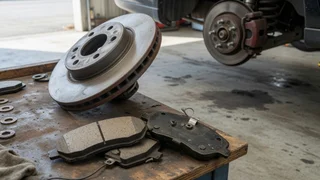
Rear pads work the same way as front pads. A steel backing plate carries a layer of friction material that presses against the rotor. The differences come from the job they do and the hardware around them:
Size and shape: Rear pads are usually smaller and shaped differently, so front and rear pads are not interchangeable. Friction compound: Some manufacturers specify a different compound for the rear to tune brake balance. Parking brake integration: Many rear calipers include a parking brake mechanism. This changes how the caliper piston has to be retracted during replacement. Wear indicators: Some rear pads have a metal tab that squeals when the pad is low. Others have an electronic sensor that turns on a dashboard warning. Some have neither.
The rear brake rotor
The rear brake rotor is the disc the pads clamp against. It turns braking force into heat and has to shed that heat. Rotors come in a few common designs:
Solid rotors: A single plate of metal. They are common at the rear because the rear brakes generate less heat. Vented rotors: Two plates joined by internal vanes that move air through the rotor. They are found on the rear of heavier or higher-performance vehicles. Drum-in-hat rotors: The center section of the rotor contains a small drum that serves as the parking brake, used with its own set of small shoes. Drilled or slotted rotors: Mostly a performance or styling choice. They are not automatically better for everyday driving.
Every rotor has a minimum thickness. This wear limit is usually stamped or cast on the rotor and is also listed in service information for the vehicle. A rotor worn below that limit has less material to absorb heat and must be replaced, not resurfaced. Rotors can also need attention before reaching the limit. Common reasons include deep scoring, heavy rust pitting, a raised lip at the outer edge, cracks, heat spots, or runout, meaning side-to-side wobble that causes pulsation.
Signs your rear brakes need attention
High-pitched squeal when braking or while driving: often the mechanical wear indicator touching the rotor. Grinding or scraping: the friction material may be gone, with metal contacting the rotor. Stop driving and inspect the brakes promptly, because this damages the rotor quickly. Brake pad warning light: shows up on vehicles with electronic wear sensors. Visible thin pads: little friction material left on the backing plate. Scored, grooved or heavily rusted rotor faces, or a pronounced lip at the rotor edge. Vibration or pulsation: usually felt in the pedal or seat rather than the steering wheel when the cause is at the rear. Pulling or uneven wear between sides: may point to a sticking caliper or seized slide pins rather than normal wear. Weak or changed parking brake behavior, or a parking brake warning on vehicles with an electronic system. A burning smell or one hot rear wheel after driving: a sign the brake may be dragging.
A pulling vehicle, a soft or sinking pedal, or a fluid leak points to a hydraulic or caliper problem, not just worn pads. Have these checked before driving further.
Pads only, or rear brake pads and rotors together?
A rear brake pad replacement does not always require new rotors. The decision depends on the rotor's condition and thickness, not on a fixed rule.
Situation | Typical approach; Rotor above minimum thickness, smooth surface, no vibration | Replace pads only. Some shops lightly clean or resurface the rotor face; Rotor near or below minimum thickness | Replace rotors along with pads; Deep grooves, lip, cracks or heat damage | Replace rotors; Vibration traced to the rear rotors | Resurface if enough thickness remains, otherwise replace; Heavy rust or pitting, common on low-use vehicles and EVs | Often replace rotors; Pads worn to metal and grinding | Rotors usually need replacement
Many owners and shops replace rear brake pads and rotors together. Rotors are often inexpensive relative to labor, resurfacing removes material the rotor may not be able to spare, and new pads seat best on a fresh surface. Replacing pads alone on a rotor in good condition is still a sound, common practice.
Whichever route you choose, replace pads and rotors as an axle set, both left and right together. Doing only one side causes uneven braking.
What a rear brake replacement involves
The basic job resembles a front brake service, but rear brakes add a few steps that catch people off guard:
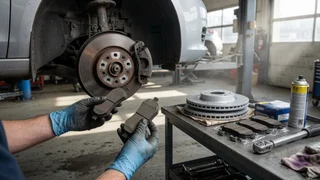
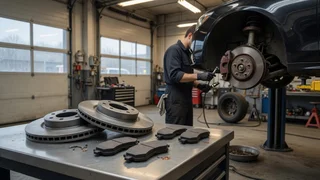
Retracting the caliper piston: On many rear calipers with an integrated parking brake, the piston has to be rotated back into the caliper rather than pushed straight in. Forcing it can damage the caliper. Electronic parking brake service mode: Vehicles with an electronic parking brake usually need the system put into a maintenance mode before the caliper is serviced. This is done with a scan tool or a specific dashboard or switch procedure for that vehicle. Skipping it can damage the motor or caliper. Removing the rotor: Rotors can be held by a retaining screw, seized to the hub by rust, or tight against the parking brake shoes on drum-in-hat designs. Backing off the parking brake adjustment may be necessary. Cleaning and lubricating hardware: Slide pins should move freely, and abutment clips should be clean or replaced. Use brake-specific lubricant only where the design calls for it. Parking brake adjustment: Drum-in-hat systems may need shoe adjustment after new rotors are installed. Torque and reassembly: Caliper bracket bolts and wheel lug nuts should be tightened to the vehicle's specified torque. Bedding in: New pads and rotors work best after a controlled break-in, a series of moderate stops that transfers an even layer of pad material onto the rotor. Follow the pad maker's instructions if provided.
Pushing the caliper pistons back raises the brake fluid level in the reservoir. If fluid was topped off while the pads were worn, it can overflow during the job. Check the level after the work is done instead of before. Brake fluid absorbs moisture over time, so a brake service is a sensible moment to check whether a fluid change is due under the vehicle's maintenance schedule.
Rear brake work is a reasonable DIY job on some vehicles. It is noticeably more involved on others, especially those with electronic parking brakes, seized hardware or drum-in-hat parking brakes. If you lack the tools, the service procedure for your vehicle, or confidence with brakes, a professional shop is the safer choice.
Choosing rear brake pads and rotors
Vehicle fitment comes first
Rear brake parts can vary within a single model. Match parts by model year, trim, drivetrain, brake package, rotor diameter and parking brake type, whether electronic or cable, integrated caliper or drum-in-hat. A VIN-based lookup or comparing the old parts with the new ones is the most reliable way to confirm fitment.
Friction material types
Pad compounds involve trade-offs. Exact behavior varies by manufacturer and product, so treat these as general tendencies:
Organic (non-asbestos organic): Usually quiet and gentle on rotors. They tend to wear faster and produce more dust than other types. Semi-metallic: Strong bite and good heat tolerance. Often used on heavier vehicles or for towing. They can be noisier, dustier and harder on rotors. Ceramic: Typically quiet, with low and light-colored dust and long life in everyday driving. A common choice for passenger cars.
Matching the type of compound the vehicle originally used is a safe default. Mismatched pad types between the front and rear axles can change brake balance, so mix them only when you have a reason.
Rotor quality and coatings
Many replacement rotors have a protective coating on the hat and vanes that slows rust on the parts the pads do not touch. This helps on vehicles that see road salt or long periods of little use. For normal driving, a plain, quality rotor that matches the original design is usually the practical choice over drilled or slotted versions.
What affects the cost
Prices vary widely by vehicle, part quality and region. The main factors are whether rotors are replaced along with pads, the parking brake design, whether electronic parking brake service or new hardware is needed, the condition of the calipers and slide pins, and local labor rates. A quote that includes calipers or a fluid flush covers more work than a basic pad replacement, so compare quotes line by line.
Quick answers
Do rear brake pads last longer than front pads? Often, because the front axle does most of the braking. Stability systems, electronic parking brakes, heavy loads and the manufacturer's brake balance can reverse that on some vehicles.
Can I replace only the rear brake pads? Yes, if the rotors are within their wear limits and in good condition. Always replace both sides of the axle together.
Are front and rear brake pads the same? No. They differ in size and shape and sometimes in compound, and they are not interchangeable.
Why are my rear rotors rusty when the pads look fine? Light surface rust after rain or washing is normal and wipes off with use. Heavy rust and pitting are common on vehicles that sit for long periods or use regenerative braking. If the pad contact area is pitted, the rotor may need replacement.
Is rear brake replacement different with an electronic parking brake? Yes. The system typically needs to be put into a service mode before the caliper is worked on, and skipping that step can damage the parking brake mechanism.