Replace Brake Discs and Rotors: A Practical Guide
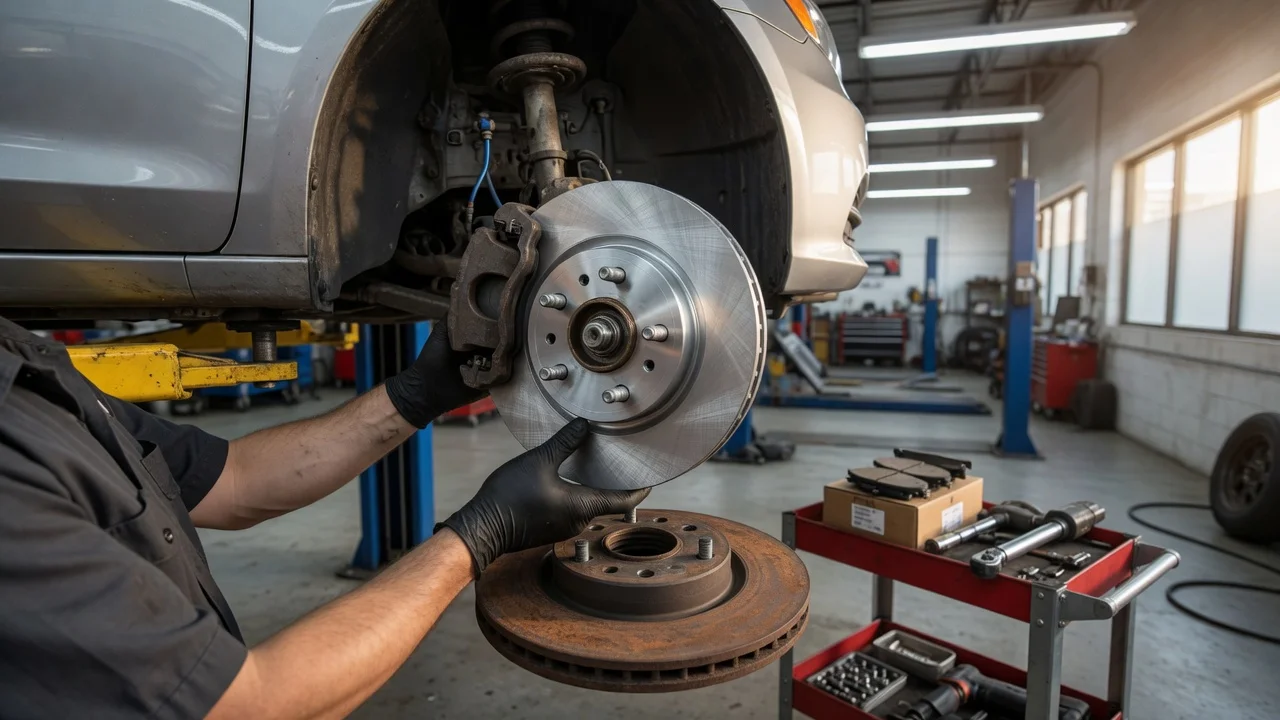
Direct Answer
Brake disc replacement means removing the worn metal discs that the brake pads clamp onto and fitting new ones. The terms 'brake disc' and 'rotor' refer to the same component, so replacing discs and replacing rotors are the same procedure. The work is generally required when the discs are worn below the manufacturer's minimum thickness, deeply scored, cracked, or warped enough to cause noticeable vibration during braking.
Scope and Material Qualification
The exact procedure varies by vehicle model, model year, generation, front or rear axle, and whether the parking brake is integrated into the rear caliper or uses a separate drum-in-disc design. Some vehicles also require a diagnostic tool to retract electronic parking brake motors before the rear caliper can be removed. Always confirm the correct disc diameter, thickness, and offset for the specific trim and market before starting.
When Replacement Is Warranted
Brake discs do not need to be replaced every time brake pads are replaced, but they should be measured against the minimum thickness stamped on the disc or listed in service information. Replacement is required if the disc is at or below that minimum, if it has deep grooves or cracks, or if the friction surface is uneven enough to cause brake pedal pulsation. Light surface rust on the outer edge or on the friction face after the vehicle has been parked is common and is usually not a reason to replace the disc.
Discs and Rotors Are the Same Component
'Brake disc' and 'brake rotor' are different names for the same exposed metal component that rotates with the wheel. In the same way, 'disc brake' and 'rotor brake' describe the same system. The guide applies identically whether a parts catalog uses the word disc or rotor.
Typical Replacement Steps
The replacement sequence generally follows a consistent order, but individual steps change with the vehicle. The standard process includes safely lifting and supporting the vehicle, removing the wheel, unbolting the brake caliper and caliper bracket, removing the old disc, cleaning the hub mating surface, and installing the new disc with clean hands or brake cleaner to avoid contaminating the friction surface.
Raise the vehicle and remove the wheel. Loosen and remove the caliper, then suspend it so the flexible brake hose is not strained. Remove the caliper bracket if it blocks disc removal. Remove any retaining screws or clips holding the disc to the hub. Pull the old disc off; light tapping with a soft-faced hammer may be needed if it is stuck on corrosion. Clean the hub face thoroughly; leftover rust can make the new disc run off-true. Fit the new disc and secure any retaining hardware. Refit the caliper bracket and caliper, then replace or correctly torque the bolts. After reassembly, pump the brake pedal until firm before moving the vehicle.
New Discs and Bedding
New discs should be installed with brake pads that have adequate friction material remaining. If the old pads are worn unevenly or are near their wear limit, replacing them at the same time is common practice. A new disc surface is smooth and should be bedded in with a series of moderate stops from road speed, but specific bedding procedures vary by pad and disc manufacturer.
Common Qualification Gaps
Torque specifications for caliper bolts, bracket bolts, and wheel fasteners are model-specific and are not provided here. The same applies to whether a thread-locking compound or replacement stretch bolt is required. For rear discs with an electronic parking brake, service information often requires a scan tool command to place the caliper in service mode before piston retraction. These model-specific values and procedures must be confirmed from the vehicle manufacturer's service data for the applicable market and model year.