Ventilated brake discs
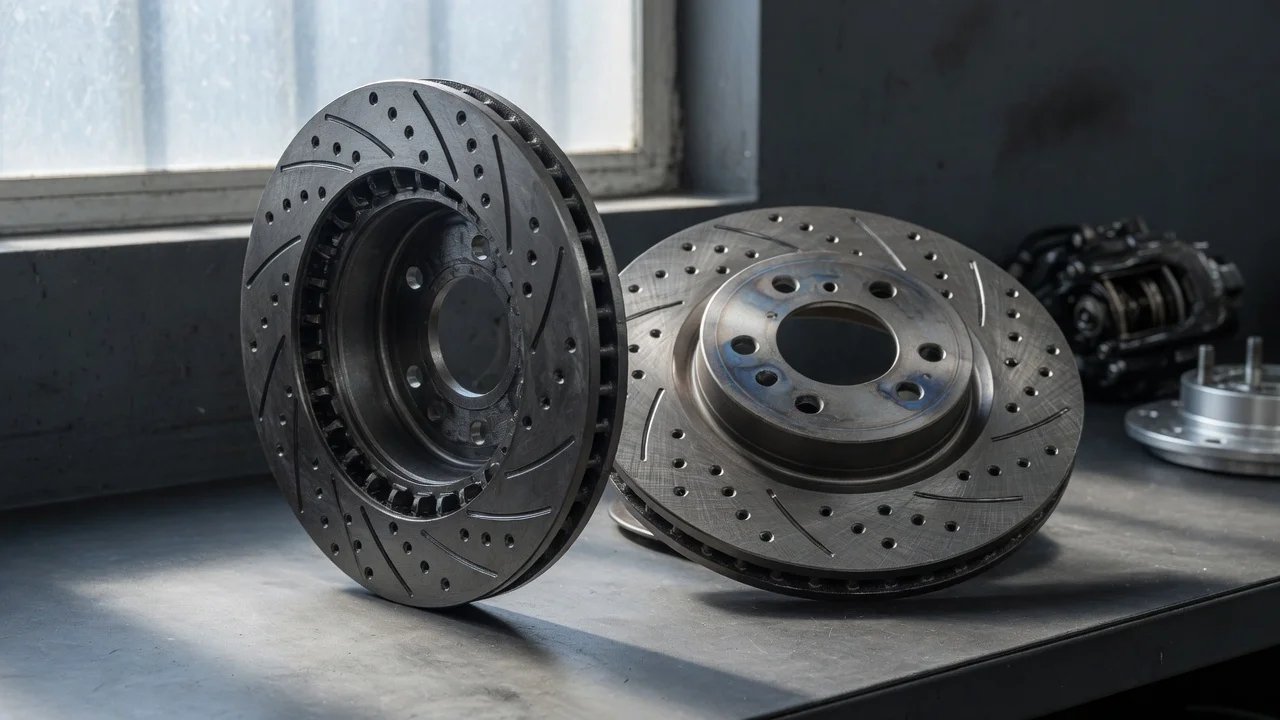
A ventilated brake disc is a rotor made of two friction faces joined by internal vanes, with open air channels between them. As the disc spins, air flows through those channels and carries heat away, so a vented disc copes with repeated or heavy braking better than a solid disc of similar size. If you are replacing discs, the short answer is to fit whatever type your vehicle was built with: a ventilated disc is thicker than a solid one and generally needs matching calipers, pads and mounting hardware, so it is not a simple swap. Converting from solid to vented is an upgrade project, not a like-for-like replacement.
How ventilated discs work
Braking turns a car's movement into heat at the disc and pad. A solid disc is a single slab of metal that sheds heat mainly from its two outer surfaces. A ventilated disc adds internal passages, giving it more surface area exposed to moving air, and the spinning disc acts like a simple pump that draws air in near the centre and pushes it out at the edge. Cooler discs and pads are less prone to brake fade, which is the loss of stopping power that occurs when components overheat.
Ventilation describes the internal structure of the disc. It is separate from cross-drilling or slotting, which are holes or grooves machined into the friction faces. A disc can be vented, drilled, slotted, any combination of these, or none of them.
Where they are typically fitted
Ventilated discs are most common on the front axle, because the front brakes do most of the work when weight shifts forward under braking. Many vehicles use vented discs at the front and solid discs at the rear, while heavier, more powerful or performance-oriented versions may use vented discs at both ends. Within a single model, the disc type can change with model year, market, trim, engine or drivetrain and optional equipment such as towing or sport packages. No vehicle-specific data was supplied for this article, so it cannot confirm which disc a particular car uses; that has to come from the vehicle's parts listing.
Checking compatibility before you buy
Identify the exact vehicle: model year, market, trim and powertrain, ideally by VIN, because brake specifications can differ between versions that look identical. Confirm the axle and whether the original disc is vented or solid; front and rear discs are not interchangeable. Match disc diameter, thickness, offset and bolt pattern to the original specification listed in the parts catalogue. Check whether the disc is directional; some vented discs have curved vanes and are made in left- and right-hand versions that must go on the correct side. Make sure the pads suit the caliper fitted to your car, since a vented setup may use a different caliper from a solid one on the same model.
Upgrading from solid to ventilated
Because a vented disc is thicker, it usually will not fit inside a caliper designed for a solid disc. A conversion normally means changing the caliper, its carrier or bracket, the pads and sometimes other hardware, and the result must still clear the wheels. Some manufacturers fitted vented brakes to higher trims of the same model, which can make factory parts a practical conversion route, but whether that applies to your vehicle depends on its specific version and should be confirmed with the parts supplier or manufacturer. Check local rules too, since brake modifications may need to be declared to an insurer or inspected in some markets.
For everyday driving on a car originally fitted with solid discs, the factory system was designed for that vehicle's weight and performance, and a conversion may bring little practical benefit. Vented discs make more sense where braking heat is a real issue, such as frequent towing, long mountain descents, heavy loads or track use.
Wear and replacement
Ventilated discs wear in the same way as solid ones and are replaced when they reach the minimum thickness specified by the manufacturer, which is often stamped on the disc itself, or when they show deep scoring, cracking or warping. Discs are normally replaced in pairs on the same axle, usually with new pads, to keep braking balanced. Corrosion or debris inside the vanes can affect cooling and balance, so it is worth checking the air channels during inspections. Specific wear limits, service intervals and prices vary by vehicle and supplier and were not provided here.
Next step
If you are replacing worn discs, look up your vehicle by VIN or by its exact model year, trim and powertrain and buy the disc type listed for each axle. If you are considering an upgrade, first confirm which calipers, brackets and pads a vented setup requires for your vehicle and whether your wheels will clear them, and have the work done or checked by a qualified technician.