Brake Caliper Replacement Cost: Parts and Labor Factors
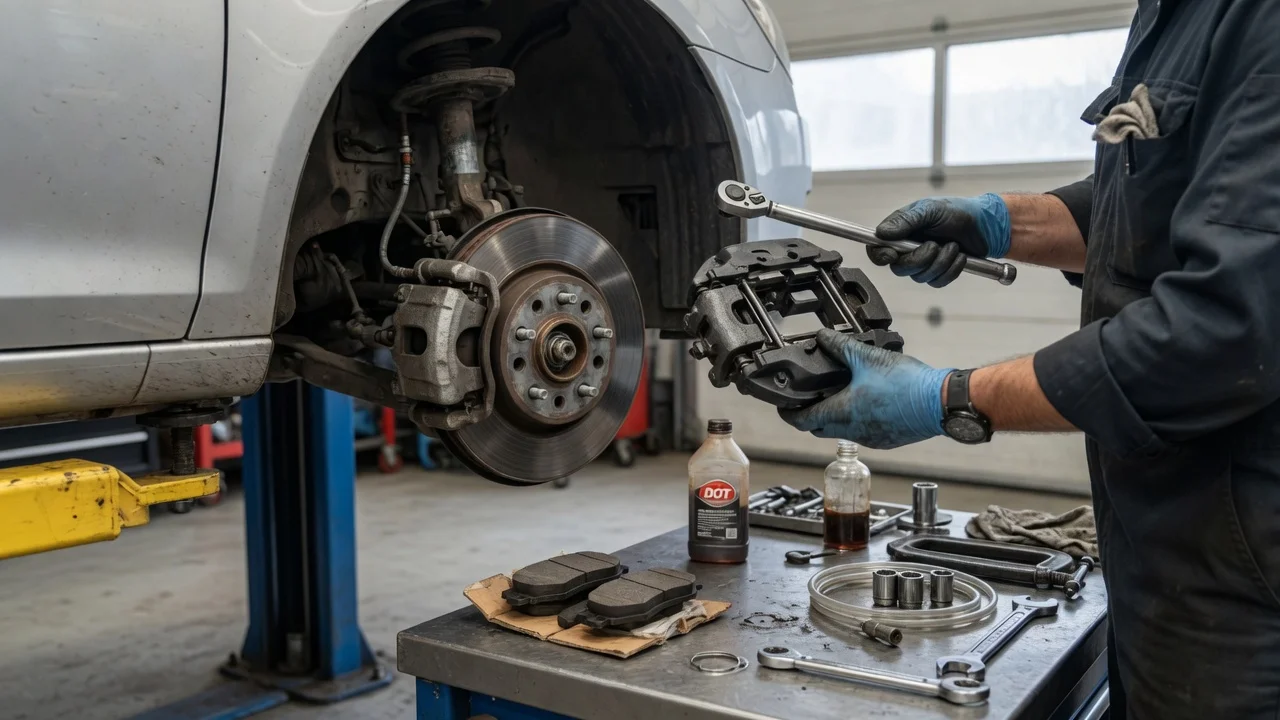
What a caliper replacement typically costs
There is no single price for a brake caliper replacement. The bill is the sum of the caliper, any related brake parts that should be renewed at the same time, and shop labor. Each of those items changes with the vehicle, which axle and side are failing, whether one caliper or a pair is replaced, and whether the parking brake is built into the caliper. A published typical range is not available from the material for this article, so treat any quote as vehicle-specific rather than a national average.
A caliper is the hydraulic clamp at each wheel that squeezes the brake pads against the rotor. When it leaks, sticks, or seizes, the car may pull to one side, a pad may wear unevenly, the wheel may run hot, or the brake pedal may feel soft. Replacement is the usual repair once the piston, seal, or sliding hardware will not restore free movement and a reliable seal.
Parts that make up the bill
The caliper itself is usually the largest parts line. Cost moves with whether the unit is new or remanufactured, original-equipment or aftermarket, and bare or loaded. A bare (unloaded) caliper is the housing, piston, and seals. A loaded caliper arrives with pads and, often, hardware already installed, which can raise the parts price while reducing extra pad and hardware lines and some fitting time.
Front calipers are often larger than rear calipers on the same vehicle because the front axle does more of the stopping. Rear calipers can still be expensive when they include an integrated parking-brake mechanism, especially on vehicles that use an electronic parking brake. Performance, heavy-duty, and some luxury or electric models may use multi-piston or otherwise specialized calipers that cost more than a common single-piston sliding design. Trim, model year, and market matter: the same model name can use different calipers across years or powertrains, so the part must match the exact vehicle.
Caliper condition and type: leaking, seized, or dragging units are replaced rather than rebuilt in most shops; remanufactured cores are common and usually cheaper than new original-equipment pieces if a good core is available. Pair replacement: shops often recommend replacing both calipers on the same axle so clamping force and pad wear stay even; that roughly doubles the caliper parts cost compared with one side. Related wear parts: pads, rotors, slide pins, boots, and mounting hardware are frequently due at the same time, especially if a stuck caliper overheated a rotor or wore one pad to the backing plate. Brake hose and fluid: a cracked or swollen hose, or fluid that is old or contaminated after a leak, can add a hose and a bleed or flush. Hardware unique to the car: electronic parking-brake actuators, wear sensors, and specialty fasteners can add parts that a basic hydraulic caliper job does not need.
Labor factors
Labor is billed as book time plus any extra work the car actually needs. Book time for a straightforward caliper swap is usually modest because the job is unbolting the old unit, transferring or installing pads and a hose, and bleeding the circuit. Time rises when fasteners are rusted or rounded, the caliper is seized on the bracket, the brake hose fitting is frozen, or the parking brake must be put in service mode with a scan tool before the rear pistons will retract.
Vehicle layout changes the job. Some rear calipers sit in tight wheel wells, need a special wind-back tool for a mechanical parking-brake piston, or require a battery-supported electronic parking-brake retract. Trucks, performance cars, and vehicles with large wheels can need more time to remove wheels and reach fittings. Corroded vehicles, common in regions that use road salt, often need extra labor for seized slide pins, frozen bleeder screws, and damaged threads. If a bleeder breaks, the caliper or a related fitting may have to be replaced after the job has already started.
Shops also differ. A dealer typically uses original-equipment parts and published labor times for that brand. An independent shop may offer remanufactured or aftermarket calipers and a lower hourly rate. Mobile service can be convenient for a simple swap if the vehicle is otherwise sound, but a seized caliper, damaged hose, or need for a lift and a full bleed still belongs in a shop. Always compare like with like: one quote may be a single bare caliper, while another is a pair of loaded calipers plus pads, rotors, and a fluid flush.
Conditions that change the total
The total moves most when the failure has already damaged neighboring parts. A caliper that stuck closed can glaze or crack a rotor and destroy a pad. A caliper that stuck open can overheat a wheel bearing or damage a hose. A leak can empty a circuit, pull in air, and in a severe case affect the master cylinder or the other caliper on that hydraulic circuit. Those follow-on parts are not optional if the new caliper is to work and last.
One wheel versus an axle pair: a single failed caliper can be replaced alone, but uneven clamping on the same axle is a common reason shops quote both sides. Pads and rotors already at the wear limit: combining that work with the caliper saves a second labor charge for the same corner. Electronic parking brake or dual-piston rear design: extra diagnostic and retract steps, and sometimes a higher-priced caliper assembly. Rust, broken bleeders, or damaged hose fittings: unplanned parts and time after teardown. Warranty and core charges: remanufactured units often carry a refundable core charge; original-equipment parts may carry a longer parts warranty at a higher price.
How to use a quote
Ask the shop to itemize the caliper (new or remanufactured, loaded or bare, one or both sides), pads, rotors, hoses, fluid, hardware, and labor as separate lines. Confirm the part matches the model year, market, trim, and brake package, including any electronic parking brake. If the quote is for one side only, ask what the shop would do if the opposite caliper is similarly aged. If the quote omits pads or rotors, ask whether those parts still have usable thickness and even wear, because a new caliper on a scored rotor or a worn-out pad will not restore even braking.
A suitable next step is a written estimate on the specific vehicle, with the failed corner inspected for leak, drag, and related damage. Drive the car only if the brakes still stop it in a straight line with a firm pedal; a leaking, dragging, or pulling brake is a safety issue, not a parts-shopping delay. Compare at least one dealer quote and one independent quote on the same scope of work before choosing parts grade and how many corners to repair.