What Is a Brake Caliper?
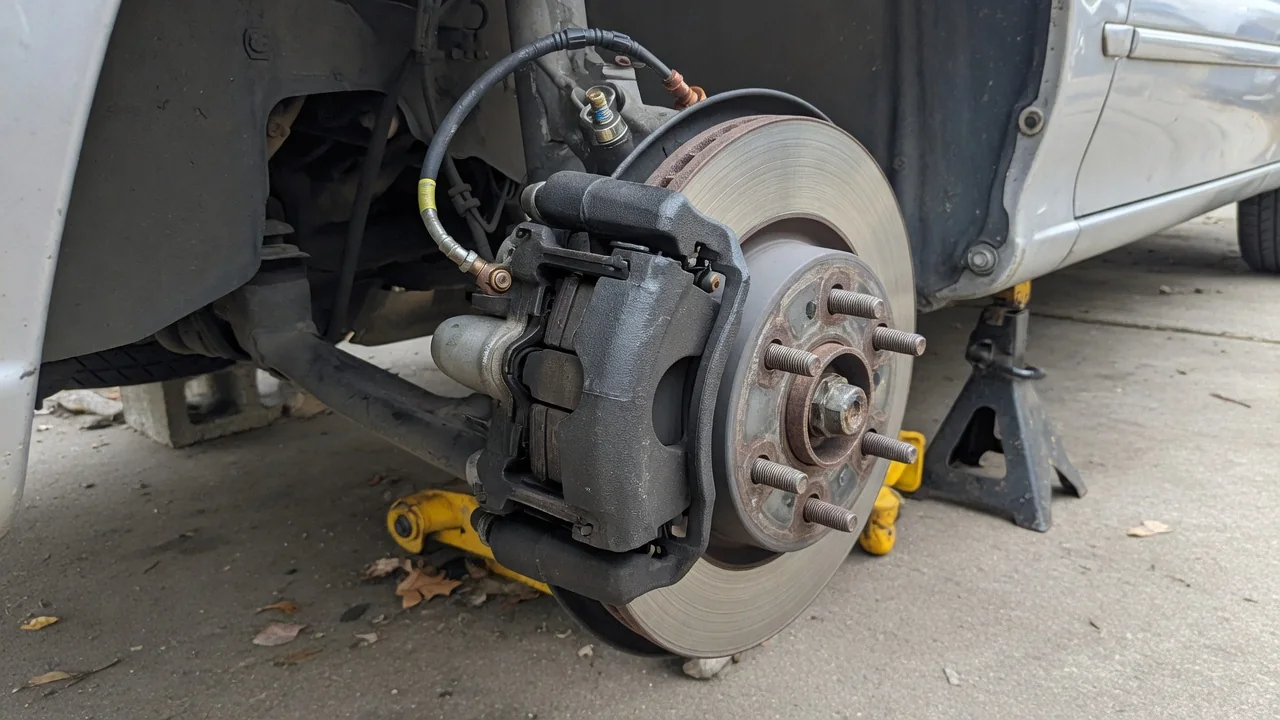
What is a brake caliper? It is the clamp-like assembly in a disc brake that straddles the spinning rotor, holds a brake pad on each side, and uses hydraulic pressure to squeeze those pads against the disc. Understanding how it grips, releases, and occasionally misbehaves helps drivers make sense of pedal feel, noises, and the wear patterns a technician points out during an inspection.
Fixed and sliding ideas
A fixed caliper is bolted rigidly to the suspension knuckle and does not move relative to the rotor. It has pistons on both sides of the disc, so when the driver presses the pedal, fluid pushes opposing pistons inward and each pad is driven directly against its face of the rotor. Because the body stays put, the design tends to feel firm and consistent, which is why it often appears on performance cars and heavier vehicles, though layouts and piston counts differ by manufacturer.
A sliding, or floating, caliper puts its piston or pistons on the inboard side only. When pressure builds, the piston pushes the inner pad into the rotor, and the reaction pulls the whole caliper body sideways along guide pins so its outer fingers draw the outboard pad into contact. Looking through the wheel spokes, a sliding unit usually appears compact with a smooth outer face, while a fixed one is wider and symmetrical. Many everyday cars use sliding designs, but the service information for the specific vehicle confirms which type is fitted.
Brake force
Brake force starts at the pedal. Pushing it moves a piston in the master cylinder, usually with help from a booster, and pressurizes brake fluid in the lines. Because fluid barely compresses, that pressure arrives at the caliper and acts on the piston face. A larger piston area turns the same line pressure into a greater clamping load, which is one reason front calipers are often bigger than rear ones, since the front axle typically handles more of the stopping work as weight shifts forward.
Clamping alone does not stop the car; friction does. The pads grip the rotor, and the caliper bracket must resist the pads' tendency to be dragged around with the disc, passing that torque into the knuckle and suspension. Kinetic energy becomes heat in the pads and rotor. When the pedal is released, the square-cut piston seal relaxes and draws the piston back a tiny amount, leaving the pads just clear of the rotor. Pad compound, rotor diameter, and electronic brake distribution all influence the result and vary by vehicle.
Sticking clues
A caliper sticks when the piston does not retract or the body cannot slide freely. Common contributors include corroded or dry guide pins, a torn dust boot that lets moisture reach the piston, pads binding in rusty bracket slots, or a deteriorated flexible hose holding pressure at the wheel. On vehicles where the parking brake mechanism is built into the rear caliper, a seized lever or actuator can produce similar dragging. Any of these keeps one or both pads rubbing the rotor after the pedal is released.
Drivers may notice the car pulling to one side, a hot or acrid smell after a drive, noticeably more heat radiating from one wheel than the others, heavier brake dust on a single rim, or a sluggish feeling as though the vehicle is being held back. Uneven wear is another clue: an inner pad far thinner than the outer often points toward slide problems on a floating design. These signs overlap with wheel bearing, hose, and alignment issues, so they are evidence to investigate rather than proof that the caliper itself has failed.
Everyday Use and Observations
In normal driving the caliper works almost invisibly. Each stop pushes the piston out by a fraction, and as the pads wear, the piston rests progressively farther out of its bore, taking up the lost thickness automatically. That is why the fluid level in the reservoir slowly drops as pads thin, without any leak. A brief light scrape after the car sits in wet weather is usually surface rust being wiped from the rotor, and it typically clears within the first few stops.
Observation without tools can reveal a lot. Through open-spoke wheels, the outer pad's remaining friction material is often visible against the rotor, and many pads carry a metal wear indicator that squeals when the material gets thin; some vehicles use an electronic sensor and a dashboard warning instead. A pedal that feels consistent, a car that tracks straight under braking, and wheels that collect similar amounts of dust all suggest the calipers are applying and releasing evenly. Wetness around the caliper or on the inside of a tire deserves prompt attention.
Limits and Next Steps
A visual check has limits. The inner pad, the piston boot, and the guide pins are usually hidden behind the wheel and caliper body, and a hose that has failed internally can look perfectly sound. Stored fault codes or warning lights related to the brake or stability systems add context, but they describe a condition the module detected, not a confirmed bad part, and their meaning can depend on the manufacturer. Confirming a caliper fault generally requires the wheel off and a hands-on inspection.
Because brakes are a primary safety system, suspected dragging, leaking, or a soft or sinking pedal is best evaluated by a qualified technician before more driving than necessary. They can measure pad and rotor condition, check slide movement and piston retraction, and examine fluid and hoses. Depending on findings, the remedy may be cleaning and lubricating hardware, replacing seals or pins, or fitting a new or remanufactured caliper, often alongside the matching side for balanced braking. Correct parts, torque values, and bleeding procedures are vehicle-specific, so the service information should guide the work.