Brake Booster Replacement Cost: Parts and Labor Factors
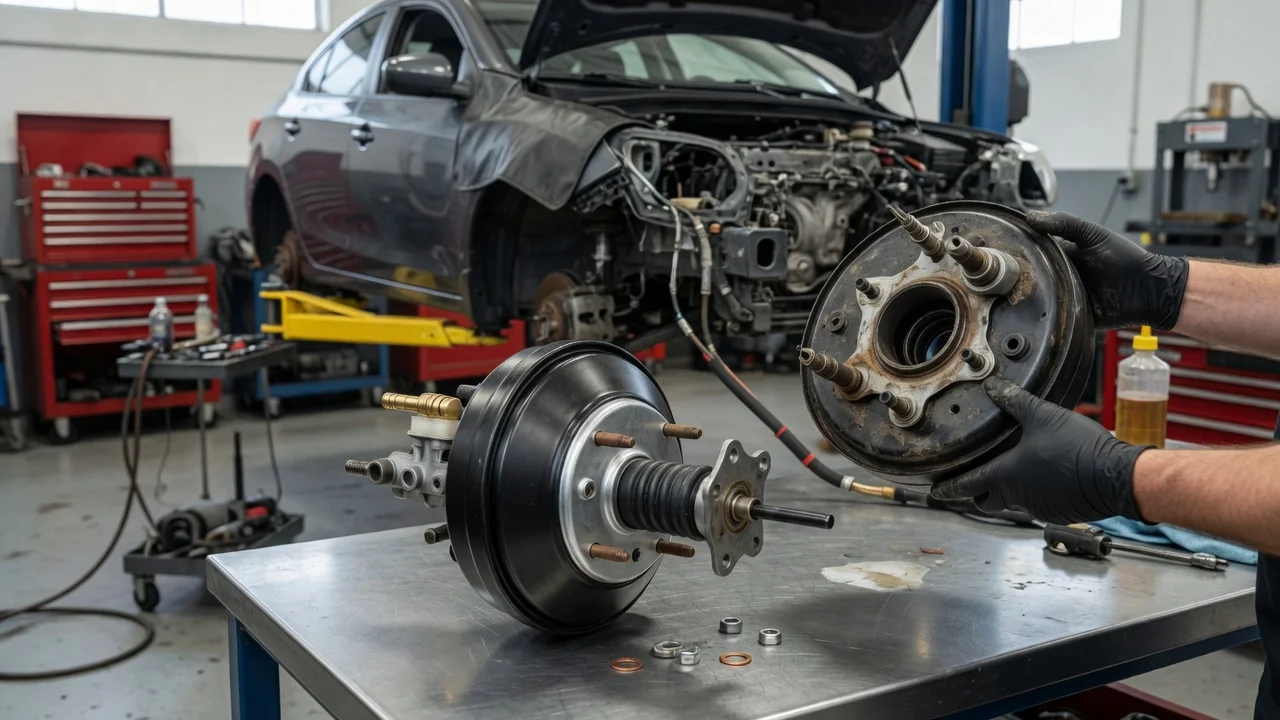
What a brake booster replacement typically costs
There is no single replacement price for a brake booster. The bill is the sum of a vehicle-specific part, the labor to R&R it, and any related items the shop must replace or bleed to restore a firm pedal. Those inputs change with booster design (vacuum, hydraulic, or electric), the vehicle’s make, model year, market, trim and powertrain, whether the part is OEM or aftermarket, and local shop rates. This article does not include dollar amounts, labor-hour estimates, or availability claims; a quote tied to the VIN is the reliable next step.
What the booster does, and why that changes the job
The brake booster multiplies the force you apply at the pedal so the master cylinder can raise hydraulic pressure without a hard pedal. Most gasoline passenger vehicles use a vacuum booster: a large canister on the firewall that draws engine vacuum through a hose and check valve. Many diesel trucks, some gasoline trucks, and certain heavy applications use a hydraulic booster (often called hydroboost) that takes pressure from the power-steering pump instead of vacuum. A growing set of hybrids, electrics, and late-model vehicles use an electric or electro-hydraulic booster that does not rely on engine vacuum at all.
Those three designs are not interchangeable. A vacuum unit, a hydroboost unit, and an electric booster are different parts, with different mounting, plumbing, and control connections. The correct unit is the one specified for that model year, market, trim and powertrain. If two trims of the same nameplate use different boosters, a parts lookup that ignores trim or engine will return the wrong assembly.
Parts factors that move the price
The booster itself is usually the largest parts line. Cost varies because housings, diaphragms, internal valves, and (on hydraulic and electric units) pumps or motors differ by application. OEM assemblies are built to the vehicle’s original specification. Aftermarket units may be listed as direct-fit for a range of years, but fitment still has to match booster type, pushrod length, mounting pattern, master-cylinder studs, and any electrical connectors. A listing that is “close” on year but wrong on engine, brake package, or market can leave a long or short pedal, a leak, or a warning lamp.
Booster type: vacuum, hydraulic (hydroboost), or electric/electro-hydraulic. Application: make, model year, market, trim, engine, and brake package. Brand path: OEM versus aftermarket, including whether a remanufactured core is offered and whether a core charge applies. Included hardware: gaskets, seals, check valve, vacuum hose, or mounting nuts that may or may not come with the assembly. Related hydraulics: a leaking or contaminated master cylinder is often quoted with the booster because the two unbolt together.
Remanufactured boosters can lower the parts line if a core is available for that application. They are still application-specific. A core charge is a deposit the shop or supplier refunds when the old unit is returned in acceptable condition; if the core is rejected, that charge stays on the invoice.
Labor factors that move the price
Labor is driven by access and by what else must come off. The booster typically sits on the engine-side of the firewall with the master cylinder bolted to it. Replacing it usually means disconnecting the master cylinder (often without opening every brake line, if the shop can support it), removing the booster from inside the engine bay and sometimes from the pedal side of the firewall, transferring or replacing the pushrod and seals, then bleeding the hydraulic circuit if any fluid was lost. Tight engine bays, cowl covers, wiper assemblies, and wiring looms add time. Hydroboost jobs add power-steering hose work and a steering-system bleed. Electric boosters add connector, calibration, or scan-tool steps specified by the manufacturer for that powertrain.
Shop type and region change the labor rate even when the book time is similar. A dealer may be the only source for an electric booster that needs factory programming. An independent shop can often complete a conventional vacuum-booster R&R if the part is in hand. Neither path has a universal hourly figure in this article.
Conditions that materially change the quote
Wrong booster family: quoting a vacuum unit on a hydroboost or electric vehicle (or the reverse) produces a useless number. Master cylinder condition: if the master is leaking, scored, or the fluid is badly contaminated, shops commonly replace it with the booster so the new unit is not mated to a failing hydraulic pump. Power-steering condition on hydroboost vehicles: a weak pump, aerated fluid, or leaking hoses can mimic booster failure and may be required work, not optional extras. Vacuum supply faults on vacuum vehicles: a collapsed hose, failed check valve, or intake leak can cause a hard pedal with a still-good booster. Those parts are inexpensive relative to the booster but must be ruled out first. Corrosion or seized fasteners at the firewall, which turn a straightforward R&R into extra labor. ADAS, ABS, or electronic parking-brake systems that require a scan-tool bleed or calibration after the hydraulics are opened. Whether that applies depends on the specific model year and brake package.
Symptoms that point to the booster versus something else
A failing booster often shows as a hard pedal that needs much more leg effort, a pedal that sinks slowly after a hard stop (more often a master-cylinder issue), a hiss from the firewall on vacuum units, or a grinding/whine tied to steering input on hydroboost units. A hard pedal with a running engine can also be a vacuum leak, a blocked check valve, or (on electric boosters) a failed pump or control module. A soft or sinking pedal is more often air in the lines, a fluid leak, or an internal master-cylinder bypass. Treating every hard or soft pedal as a booster job is how people pay for the wrong part.
A shop diagnosis should confirm booster function with the engine or pump running versus off, inspect the vacuum or hydraulic supply, and check for fluid in the booster (a sign the master cylinder is leaking rearward). That diagnosis is part of an informed replacement decision; skipping it to “just replace the booster” can leave the original complaint in place.
What a useful quote should itemize
Ask for a written estimate that names the exact booster (OEM or aftermarket part number for that VIN), whether a core charge applies, labor as a separate line, and any bundled items: master cylinder, check valve, hoses, fluid, bleed, and scan-tool procedures. Compare that package, not a single headline number. If two shops disagree on booster type, resolve the application against the VIN before choosing the lower bid.
Unresolved differences you should not guess: the correct booster for a given trim or engine when catalogs conflict, whether an electric booster needs programming on that model year, and the actual parts price and labor rate in your market. Those are gaps until a supplier and a shop look up the vehicle.
A practical next step
If the pedal is suddenly hard, the vehicle still needs to be treated as a reduced-assist braking problem: plan more stopping distance and have it inspected rather than driving it as a routine commute. For a planned replacement, take the VIN to a dealer parts counter and an independent shop, confirm booster type, and get itemized quotes that include related parts you are willing to approve only if inspection supports them. That comparison, not a generic average, is what lets you choose the suitable repair path.