Battery Smell in a Car: What It Means and What to Do
The short answer
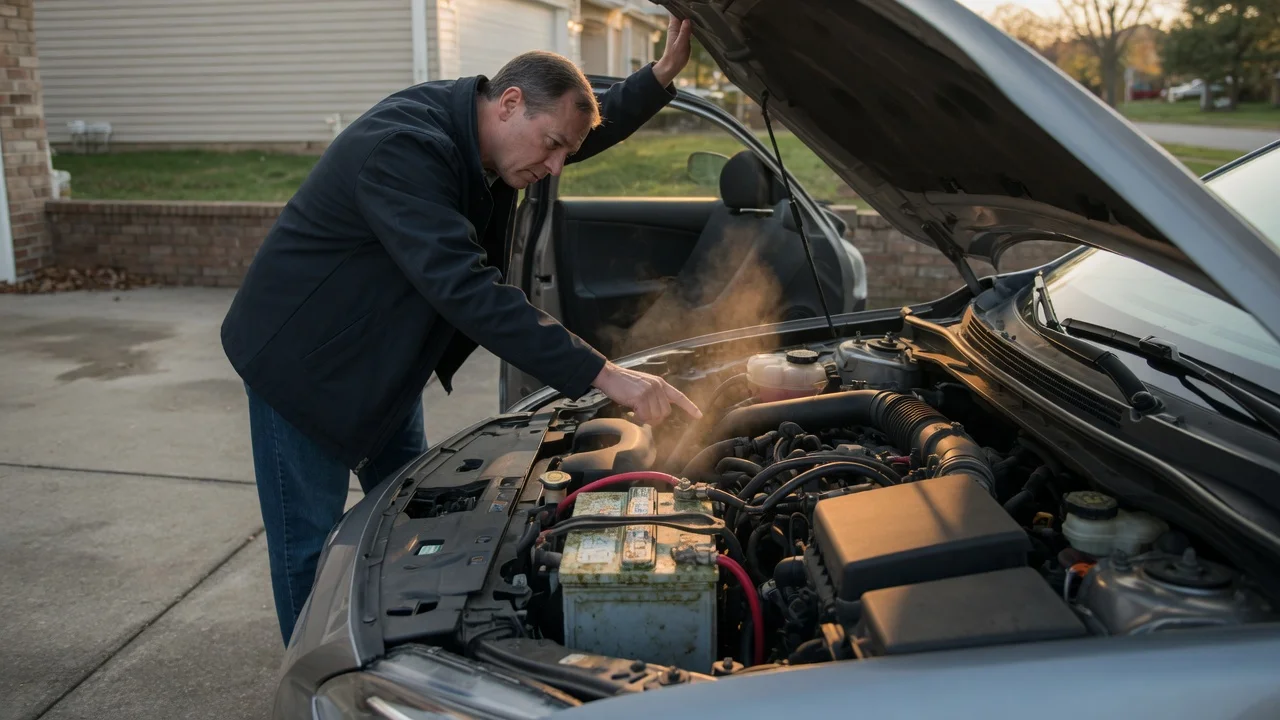
A distinct smell coming from a car battery is a warning sign. In a conventional 12-volt lead-acid battery, a rotten-egg or sulfur odor generally means the battery is venting gas because it is being overcharged, has an internal fault or is near the end of its life. The cause is often the battery itself, but it can also be the vehicle's charging system, such as a faulty alternator or voltage regulator pushing too much current into the battery. Treat the smell as a reason to stop using the vehicle normally and have the battery and charging system checked.
The answer changes for electric and hybrid vehicles. An unusual chemical, sweet or solvent-like smell, or any smoke, near a high-voltage lithium-ion battery pack can indicate a serious fault and should be treated as a potential safety emergency rather than a maintenance issue.
Why a 12-volt lead-acid battery smells
Lead-acid batteries contain sulfuric acid electrolyte. When a battery is overcharged or failing, the electrolyte can break down and the battery may release gases. The rotten-egg odor is commonly associated with hydrogen sulfide. Hydrogen gas can also be released during charging; it is odorless but flammable, which is why sparks and open flames near a gassing battery are a hazard.
Sealed designs such as AGM (absorbent glass mat) batteries are built to limit venting in normal use, but they can still vent if they are severely overcharged or damaged, so a smell from one should not be dismissed.
Signs that often accompany the smell
The battery case feels unusually hot; The case looks swollen, bulging or cracked; Liquid, residue or corrosion is visible around the terminals or vents; Hissing or bubbling sounds from the battery; Dim lights, slow cranking or a battery warning light on the dashboard
These signs strengthen the case that the battery is failing or being overcharged. Their absence does not rule out a problem, because odor can appear before visible damage.
What to do next with a conventional battery
Switch off the engine and any charger connected to the battery. Ventilate the area by opening the hood and garage door; do not keep the vehicle running in an enclosed space. Keep sparks, flames and cigarettes away from the battery. Avoid touching a hot, swollen or leaking battery with bare hands; battery acid can burn skin and eyes. Have a qualified technician test the battery and the charging system, since replacing only the battery will not fix an overcharging alternator or regulator.
Electric and hybrid vehicles
High-voltage lithium-ion packs in EVs and hybrids use a different chemistry from 12-volt lead-acid batteries. Electrolyte venting from a damaged or overheating cell can produce a noticeable chemical odor, and venting can precede smoke or fire. If you notice an unfamiliar smell, smoke or hissing that seems to come from the high-voltage pack, stop the vehicle in a safe place, get everyone out, move away and contact emergency services. Do not attempt to inspect or open the pack yourself. Most EVs and hybrids also carry a separate 12-volt battery, which can produce the same symptoms described above for lead-acid batteries.
Exact warning messages, emergency procedures and battery locations vary by manufacturer, model, model year and powertrain. The owner's manual for the specific vehicle is the authoritative source for those details.
When the smell may not be the battery
Sulfur-like odors can also come from other parts of a vehicle, and a catalytic converter is a common alternative source of a rotten-egg smell from the exhaust. Burning smells may point to electrical wiring, fluids or brakes. If the odor is not clearly coming from the battery area, a technician should trace it before parts are replaced.
Limits of this guide
No vehicle-specific specifications, test results or manufacturer service data were supplied for this article, so it does not give voltage thresholds, failure rates or model-specific procedures. The guidance above is general; for a particular vehicle, follow the manufacturer's instructions and a qualified technician's diagnosis.