Burnt Gear Oil Smell: What It Means and How to Diagnose It
The short answer
A burnt gear oil smell usually means one of two things: gear oil is leaking onto a hot component such as the exhaust, or the oil inside a gear housing is running hot and breaking down. Gear oil is the thick lubricant used in manual transmissions, differentials (the gear sets that split power between the wheels on an axle) and transfer cases on four-wheel-drive and all-wheel-drive vehicles. Many gear oils contain sulfur-based additives, so the smell is often described as sharp, sulfurous or similar to rotten eggs, and it becomes harsher when the oil is burned.
One qualification changes the answer considerably: the smell may not be gear oil at all. A slipping clutch, dragging brakes, burnt automatic transmission fluid and engine oil on the exhaust all produce burning odors that are easy to confuse with it. Which components on your vehicle actually use gear oil depends on the drivetrain layout, transmission type, model year and market, so check the owner's manual or service information for your specific vehicle before assuming which system is involved.
Rule out look-alike smells first
Before inspecting gear housings, consider when and where the smell appears. The pattern often narrows the source faster than crawling under the car.
Smell after hill starts, heavy traffic or towing in a manual car: a slipping or overheated clutch is a common cause and is often mistaken for burnt gear oil. Smell concentrated at one wheel after braking, sometimes with heat radiating from the wheel: a sticking brake caliper or dragging brake is more likely. Sweet or acrid burning smell from an automatic transmission vehicle: automatic transmission fluid, which is a different fluid from gear oil, may be overheating or leaking. Burning oil smell from the engine bay at idle or after parking: engine oil leaking onto the exhaust manifold is a frequent source. Sulfurous, heavy smell from underneath, near an axle or the transmission tunnel: this fits gear oil from a differential, manual gearbox or transfer case.
Checks to narrow down the cause
Let the vehicle cool before touching anything underneath. Exhaust parts, gear housings and the oil inside them can stay hot enough to burn skin well after driving. Park on level ground and use proper stands if you need to get under the vehicle; never rely on a jack alone.
1) Look for leaks and wet residue
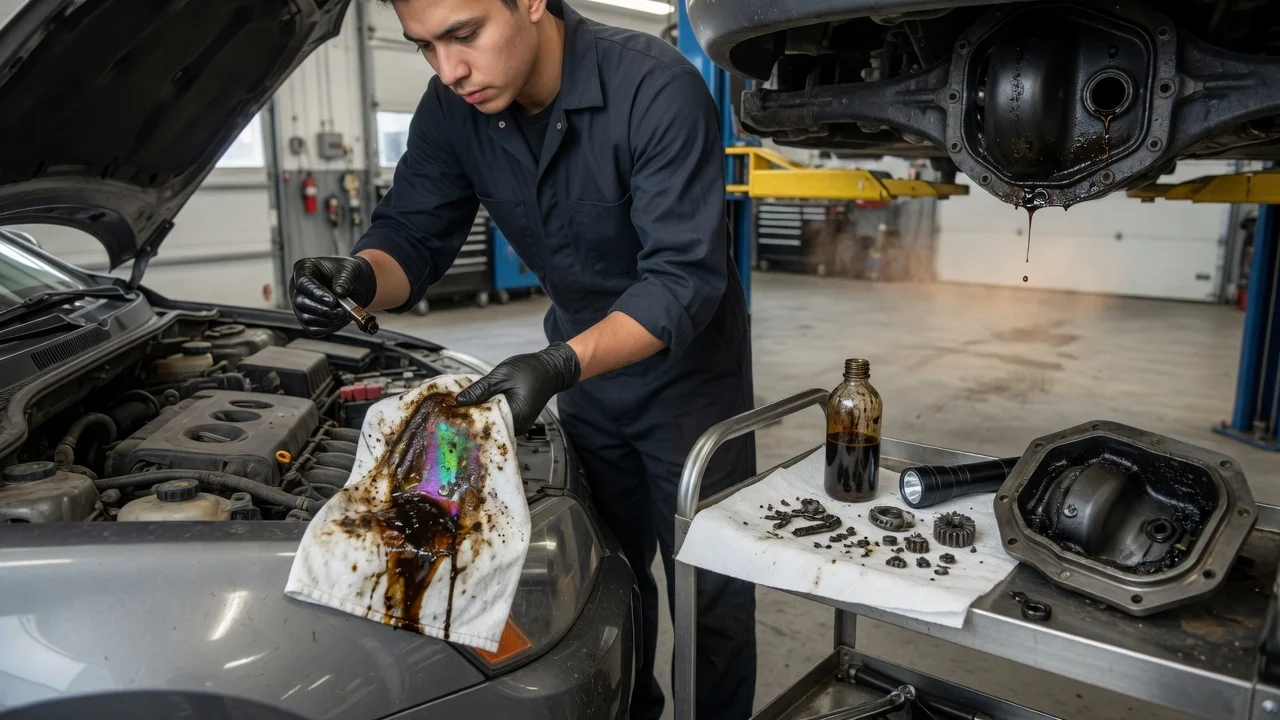
Check the ground where the vehicle has been parked overnight for drips, and inspect the underside for fresh, wet oil collecting dirt. Common gear oil leak points include the differential cover gasket, the pinion seal (where the driveshaft enters the differential), the axle seals at each end of the axle, the output shaft seals on a manual transmission or transfer case, and the drain and fill plugs.
What it indicates: wet residue near the exhaust or on a heat shield strongly suggests oil is reaching a hot surface and burning off, which matches the smell. Oil on the inside of a wheel, brake components or tire is more serious, because gear oil from a failed axle seal can contaminate the brakes and reduce braking performance.
2) Check the vent or breather
Differentials, transfer cases and some manual gearboxes have a small vent that lets pressure escape as the oil heats up. A blocked vent can push oil past seals, while oil spraying from the vent can point to overfilling, overheating or water contamination. Oily residue around the vent area is the observable clue here.
3) Check the fluid level and condition
Most differentials and many manual gearboxes are checked by removing a fill plug on the side of the housing; on many designs the correct level is at or near the bottom of the fill hole, but the procedure varies, and some units have no simple check point. Follow the service procedure for your vehicle. Remove the fill plug before the drain plug, so you are not left with an empty unit you cannot refill.
Level low: confirms fluid loss and supports a leak diagnosis; running low on gear oil can lead to overheating and accelerated wear. Oil very dark with a strong burnt smell: suggests the oil has been overheated and its protective properties may be degraded. Milky or foamy oil: suggests water contamination, sometimes after wading or through a vent. Fine metallic paste on a magnetic drain plug: some fine material can be normal wear, but chunks, flakes or larger pieces point to internal damage that needs professional assessment. Level too high: overfilling can cause foaming and push oil out through seals or the vent.
4) Consider recent work and how the vehicle is used
Recent fluid service is a frequent explanation. Spilled gear oil on the housing or exhaust can burn off for a short time afterward, which is usually harmless if the smell fades and no new leak appears. The wrong fluid type can also cause problems: some differentials, especially limited-slip units, require a specific fluid or friction-modifier additive, and some manual gearboxes are specified for a particular gear oil grade. Heavy loads, towing, sustained high speed and off-road use all raise gear oil temperatures and can produce a burnt smell even without a leak.
5) Listen and feel for mechanical symptoms
A whine or howl that changes with road speed, clunking when taking up drive, vibration, or grinding during gear changes alongside the smell points toward wear or damage inside the unit rather than a simple external leak. These symptoms suggest the overheating may be a result of internal failure, not just low fluid.
When to stop driving or get professional help
Visible smoke from under the vehicle or around a wheel. Oil on brake components, the inner wheel or the tire. Grinding, loud howling, clunking or vibration from the drivetrain. The fluid level is very low or you cannot find the leak source. Metal chunks on the drain plug or in the drained oil. The smell persists or returns after a leak has been cleaned up and the level corrected. A warning light or stored fault code related to the transmission, drivetrain or four-wheel-drive system.
If any of these apply, limit driving and have the vehicle inspected. Continuing to drive with low gear oil or contaminated brakes risks damage to the gearbox or differential and can compromise safety. If a fault code is present, treat it as a starting point for diagnosis rather than proof that a particular part has failed; codes can be triggered by wiring, sensor or fluid-related issues as well as mechanical faults.
Limits of this guide
This guide covers general diagnostic logic. No model-specific information was available, so it does not provide fluid specifications, capacities, check procedures, service intervals or known issues for particular vehicles. Those details vary by model year, generation, drivetrain and market, and should come from the owner's manual, official service information or a qualified technician familiar with your vehicle.