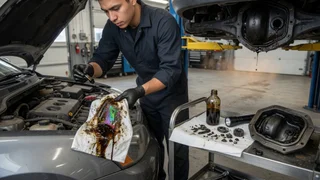
Diagnose a burnt gear oil smell
A burnt gear oil smell is a sharp, sulfurous odor that often signals extreme heat inside a manual transmission, differential, transfer case, or another gear-driven assembly. Unlike the sweet scent of engine coolant or the dusty smell of brake lining, this acrid aroma suggests the lubricant protecting meshing gears has overheated and begun to degrade. Identifying the location and conditions that trigger the odor helps distinguish a failing lubricating film from a minor fluid seep contacting a hot surface, so the vehicle can be evaluated before rotating parts lose critical protection.
Essential answer
The essential answer is that the odor typically indicates gear lubricant has been subjected to temperatures beyond its intended operating range, or that a small amount of fluid has landed on a hot exhaust component and is cooking off. Either way, the smell should not be ignored, because compromised gear oil loses its ability to maintain a durable film between the teeth of helical or hypoid gears. The distinct sulfur-phosphorus additives in many gear oils produce a rotten-egg or heavily industrial tang once scorched, making the smell more aggressive than ordinary hot oil vapor from an engine valve cover.
The issue can range from a mildly overfilled axle venting excess fluid to severe lubricant breakdown caused by sustained high load, low fill quantity, or internal friction. A brief whiff after hard climbing or extended highway towing may point to heat soak in the axle or transfer case, while a constant smell inside the cabin could mean a leaking output shaft seal is dripping lubricant onto a catalytic converter. Treat the odor as a warning that the lubricant specification, fill quantity, or mechanical health of the specific gear assembly needs attention rather than immediate proof that a major component has failed.
Diagnosing a problem
Begin by locating the point of origin, because a gear oil smell can travel from the differential, a transmission vent, or a transfer case. With the vehicle parked on a level surface and the powertrain cool enough to touch safely, look for wetness around the fill plug, axle seals, pinion seal, or case seams. A damp stain with road grime often indicates a small seep that reaches a hot exhaust pipe only under certain driving angles, producing an intermittent odor. Dark, thick, or varnish-like deposits around a fill plug may mean the lubricant has already oxidized from prolonged heat exposure.
Next, evaluate when the smell occurs and how the vehicle behaves. A smell that intensifies after sustained high-speed driving or heavy towing can reflect overheating caused by an incorrect lubricant viscosity, a low fluid level, or a dragging brake that transfers excess heat into an adjacent axle housing. If the odor appears alongside new whining, rumbling, or difficulty shifting, stop driving and have the system inspected immediately, because the gear set may already be losing its lubricating barrier. A fault code related to a temperature sensor or drivetrain control module is useful supporting evidence to inspect, but it does not by itself identify which seal or gear component is responsible.