Battery Melting: What a Melted Car Battery Means and What to Do Next
The short answer
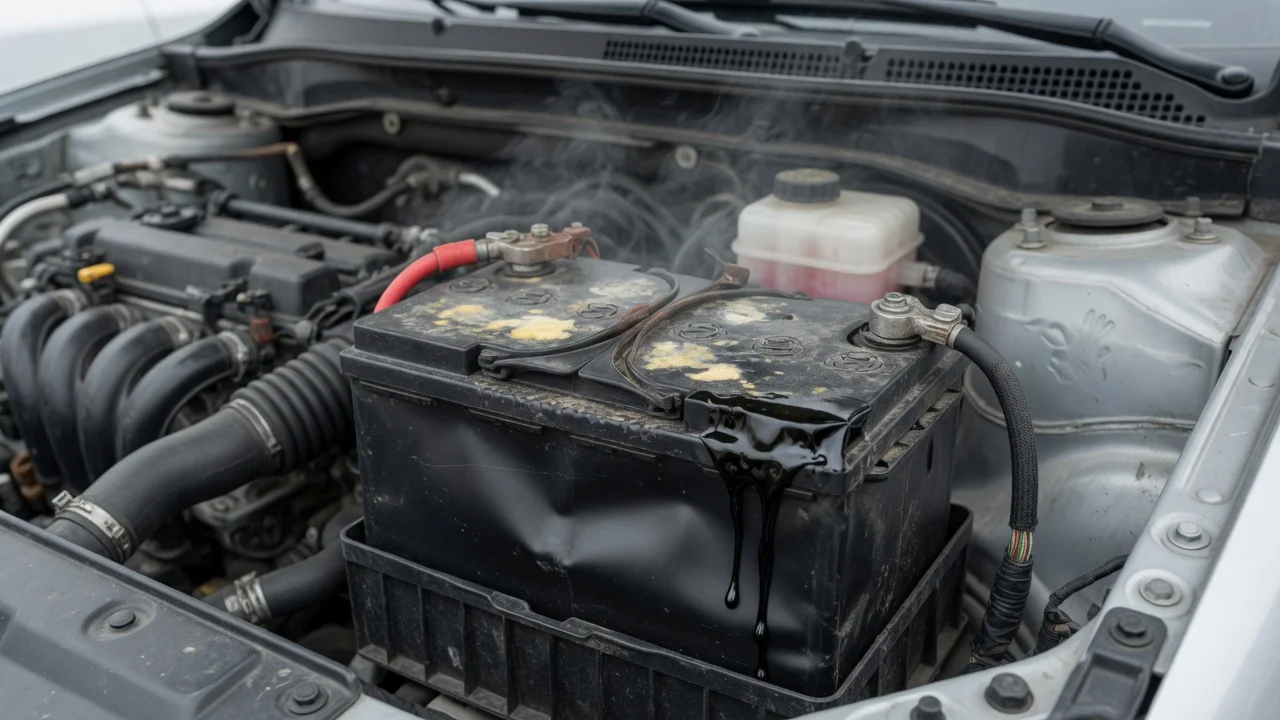
If a car battery has melted, it has been exposed to more heat than it is built to tolerate. That heat almost always comes from an electrical fault, such as overcharging, a short circuit or a high-resistance connection at a terminal, rather than from the battery simply wearing out. A melted battery should be treated as damaged and unsafe. It needs to be replaced, and the fault that caused the heat needs to be found first. Otherwise the new battery can fail the same way.
This guide covers the conventional 12-volt battery found in most petrol and diesel cars, which is usually a lead-acid type. Hybrids and electric vehicles also carry a 12-volt battery, and the same advice applies to it. The large high-voltage traction battery in a hybrid or EV is a different case and is covered separately below.
Melted terminal or melted case: why the location matters
Where the melting appears gives a useful first clue to the cause.
Melting around one post or cable clamp: this usually points to a loose, corroded or undersized connection. Current passing through a poor contact meets resistance, and that resistance generates heat right at the joint. A swollen, bulged or softened case: this suggests the battery itself overheated internally. Common causes are overcharging or an internal fault. Melting next to an exhaust manifold or other hot engine component: this can mean the battery is too close to a heat source, often because a heat shield is missing or the battery was fitted incorrectly.
Common causes
Overcharging: a faulty alternator or voltage regulator can push too much charge into the battery. This heats it and can make it gas excessively. Short circuit: damaged wiring, a tool bridging the terminals, or an internal plate failure can allow very high current flow. Poor terminal connections: loose clamps, corrosion or damaged cable ends create resistive heating at the post. Incorrect jump-starting or charging: connecting the leads with reversed polarity, or using an unsuitable charger, can damage the battery and the vehicle's electrical system. External heat: a missing heat shield or a battery fitted in the wrong position can expose the case to engine or exhaust heat.
Safety first
A lead-acid battery contains sulfuric acid and can release hydrogen gas, which is flammable. An overheated or damaged battery makes both hazards worse. Follow these precautions:
Do not try to jump-start, charge or keep driving on a melted battery. If there is smoke, fire, hissing or a strong rotten-egg smell, move away from the vehicle and contact emergency services. If the battery is cool and no longer reacting, wear eye protection and acid-resistant gloves before touching it. Keep sparks and flames away, and make sure the area is well ventilated. If you disconnect the battery yourself, remove the negative terminal first. Check your owner's manual, because some vehicles specify a particular procedure. Do not put a leaking or melted battery in household waste. Take it to a recycling point or a retailer that accepts used batteries.
Before fitting a replacement
Replacing the battery alone does not fix the cause. Before a new battery goes in, a technician should check four things: the charging system output, the condition of the battery cables and clamps, nearby wiring for heat damage or chafing, and the battery's position and heat shielding. The correct charging voltage varies by vehicle and battery type. Check it against the manufacturer's specification rather than a general rule of thumb.
If it is a hybrid or EV high-voltage battery
Signs of overheating in a high-voltage traction battery include smoke, popping or hissing sounds, a warning message about battery temperature, or visible damage under the vehicle. These signs are more serious than a melted 12-volt battery. Lithium-ion packs can enter thermal runaway, a self-sustaining overheating reaction that can reignite even after it appears to be out. Do not attempt to inspect or repair the pack. Get everyone clear of the vehicle, contact emergency services if there is any smoke or fire, and then contact the manufacturer or an authorised dealer. High-voltage systems should only be handled by trained technicians.
What this guide cannot tell you
No vehicle-specific data, recall information or test findings were supplied for this article. It therefore cannot confirm whether a particular model, model year or battery type is known for this problem. If you suspect a pattern on your vehicle, ask a dealer to check for open recalls or technical service bulletins for your exact model and market.