Battery smell
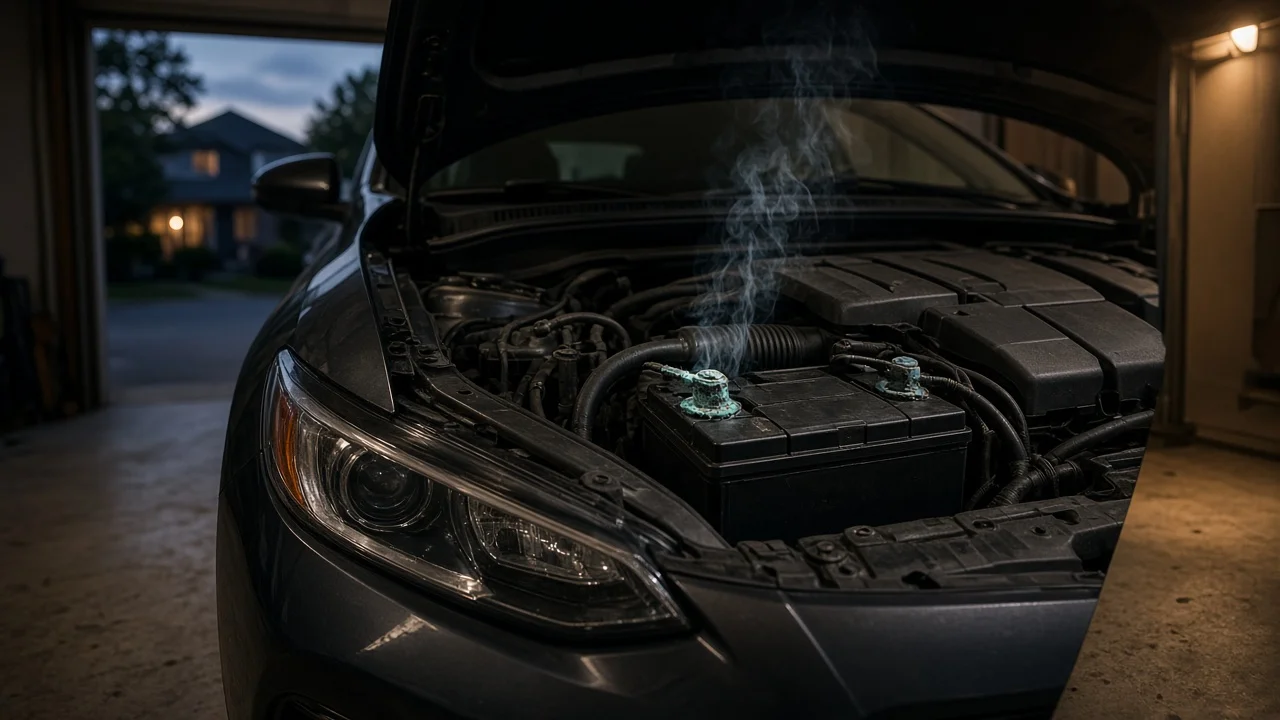
A battery smell in a vehicle is usually a warning that the electrical system is under stress, not a normal operating odor. Drivers may notice a sharp, sulfur-like scent near the battery terminals or under the hood after charging, cranking, or extended accessory use. The smell can come from hydrogen sulfide released by an overcharging battery, from electrolyte leaking onto hot surfaces, or from damaged wiring and excessive resistance. Interpreting the odor means considering the battery condition, charging output, and nearby electrical connections before the issue leads to failure or damage.
Essential answer
A battery smell most often points to abnormal chemical or electrical activity at the battery itself. In a flooded lead-acid battery, overcharging breaks down water in the electrolyte and can release sulfur-bearing gas that carries a distinct rotten-egg odor. The scent may become noticeable after a long drive with high charging output or when a failing voltage regulator pushes system voltage too high. A hot battery case or visible moisture around the vent caps strengthens the likelihood that charging should be evaluated.
The same smell can also come from electrical problems near the battery rather than from the fluid inside it. Corroded battery terminals, a loose cable end, or an undersized connection can create enough resistance to melt insulation or heat the terminal. That type of failure tends to smell acrid or plastic-like, and it can exist even when the battery itself tests fine. A voltage drop check across the main cables and an inspection of the terminal surfaces help separate chemical odor from connection overheating.