Bad 62TE TCC Solenoid Symptoms
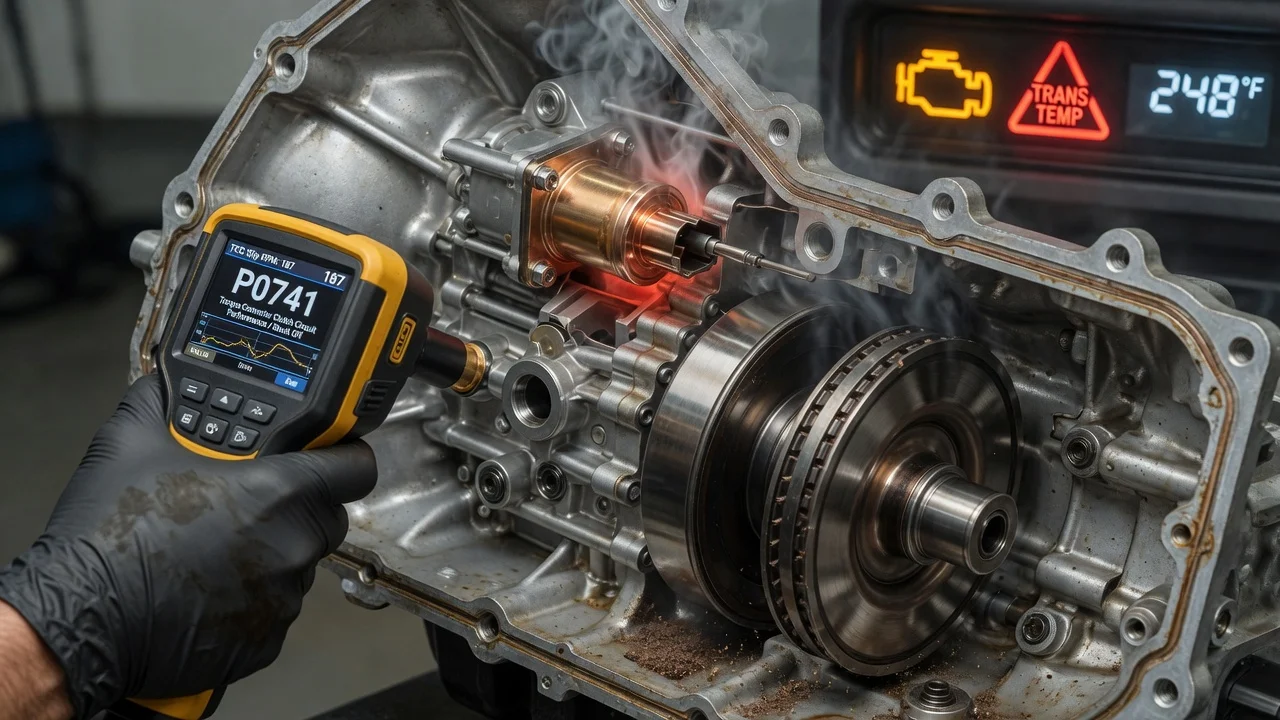
A torque converter clutch problem on a 62TE six-speed transaxle can feel like several other faults: a shudder at cruising speed, a higher engine speed on the highway, or an engine that stumbles as you slow to a stop. Confirm the transmission type and vehicle configuration first, then gather observations and diagnostic codes in a logical order. This guide covers what the symptoms suggest, what else causes them and what a technician needs to confirm the fault.
Establish the symptoms
The 62TE is a front-wheel-drive six-speed automatic used in a range of Chrysler-group minivans, crossovers and sedans. Confirm it is actually fitted to your vehicle from the build data or a dealer lookup, because other model years and engine options may use a different transaxle, and procedures, fluid specification and diagnostic paths differ between them. Then note exactly when the complaint appears: road speed, throttle position, whether the engine is cold or fully warm, and whether it happens while cruising, accelerating gently or coming to a stop.
Converter clutch complaints usually fall into three patterns. When the clutch fails to apply, cruising RPM sits higher than usual, fuel economy can drop and the fluid runs hotter. When it applies roughly or slips, drivers describe a shudder that feels like driving over rumble strips, often under light throttle at steady cruising speeds. When it stays applied, the engine may lug, stumble or stall as the vehicle stops, much like a manual car brought to a halt in gear. Also record any warning lights, a gear-hold or limp-in condition, harsh or delayed shift behavior, and recent changes such as a fluid service, battery disconnection, module replacement or engine work.
Distinguish plausible causes
On the 62TE, converter clutch apply is commanded by the transmission control module through the solenoid and pressure switch assembly rather than a standalone, easily swapped part. A symptom therefore points to a circuit or function, not automatically to one solenoid. An electrical fault in the solenoid assembly, its wiring or its connector tends to set codes and may cause the module to stop commanding lockup altogether. A hydraulic or mechanical problem, such as sticking valve body components, worn converter clutch friction material or internal leakage, more often produces shudder or slip with no electrical code.
Fluid condition is a frequent contributor. Low level, overheated or oxidized fluid, or fluid that does not meet the specified ATF+4 type, can cause shudder and erratic apply. If the problem began right after a fluid service, the fill level and the fluid used are early suspects. Outside the transmission, engine misfire, worn engine mounts and damaged CV joints can create vibration that feels like converter shudder; misfire under light load is an especially common mimic. Adaptive learning matters too: after battery work, module replacement or valve body service, the transmission may need a relearn procedure, and some applications have received software updates affecting shift and converter behavior.
Checks in a useful order
Start with observations that need no tools. Check the fluid level using the procedure for your vehicle; the reading depends on temperature and some applications lack a conventional dipstick, so follow service information rather than guessing. Note color and smell: dark, burnt-smelling fluid or visible debris points toward overheating or internal wear. Look for leaks and for damaged harnesses or connectors around the transaxle. On a test drive, watch the tachometer at steady cruise. A small, steady drop in RPM after the vehicle settles into a higher gear usually indicates lockup, while a needle that hunts up and down suggests slipping or cycling.
Next, read diagnostic codes with a scan tool that can access the transmission control module, since many basic readers show only engine data. Codes in the P0740 to P0744 range relate to the converter clutch circuit or its performance, and solenoid or pressure switch codes can implicate the shared assembly. Record codes and freeze frame data before clearing anything, and check engine misfire data at the same time. A capable scan tool can also display the commanded converter state and slip, comparing engine speed with transmission input speed.
Tests beyond this require specifications and equipment: electrical checks of solenoid resistance and circuit integrity, hydraulic pressure testing, relearn procedures and module software verification. These belong with a qualified technician or a shop with factory-level scan capability, because the solenoid assembly, valve body and converter are serviced to model-specific procedures.
Interpret the findings
An electrical converter clutch code backed by a failed circuit test strongly supports a wiring or solenoid assembly fault, but the technician should still isolate whether the problem lies in the harness, the connector, the assembly or the module before replacing parts. A performance code with no electrical fault points more toward hydraulic or mechanical causes, including fluid problems, valve body wear or the converter itself, and replacing the solenoid assembly alone may not cure it.
Shudder with no codes, healthy fluid and normal slip data deserves a close look at misfires, mounts and driveline parts. If slip is high while lockup is commanded and the fluid is degraded, a fluid correction followed by a relearn may be tried where service information allows, but slip that persists afterward usually implicates internal wear. Fluid carrying significant debris or a burnt smell suggests damage beyond a solenoid, and the repair options may extend to valve body work, converter replacement or a transmission overhaul.
Urgency and next action
Stop driving and arrange towing if the engine stalls when coming to a stop, the vehicle will not move or holds an unexpected gear in traffic, a transmission warning appears, or there are signs of overheating such as a burning smell or smoke. Stalling at intersections is a safety hazard, and ongoing slip generates heat that can damage clutches and the converter. A mild shudder without warnings is less immediate, but continued driving can still turn a minor fault into a larger repair, so have it diagnosed promptly rather than relying on any estimate of remaining mileage.
Give the shop the vehicle identification number, engine, confirmed transmission type, mileage, recorded codes with freeze frame data, a description of when the symptom occurs and the service history, including the date and fluid used in the last transmission service and any recent battery, module or engine work. That information lets a technician confirm parts fitment, check for applicable software updates or service bulletins, and choose between wiring repair, solenoid assembly replacement, valve body service or converter and transmission repair based on evidence.