Can You Drive With a Bad TCC Solenoid?
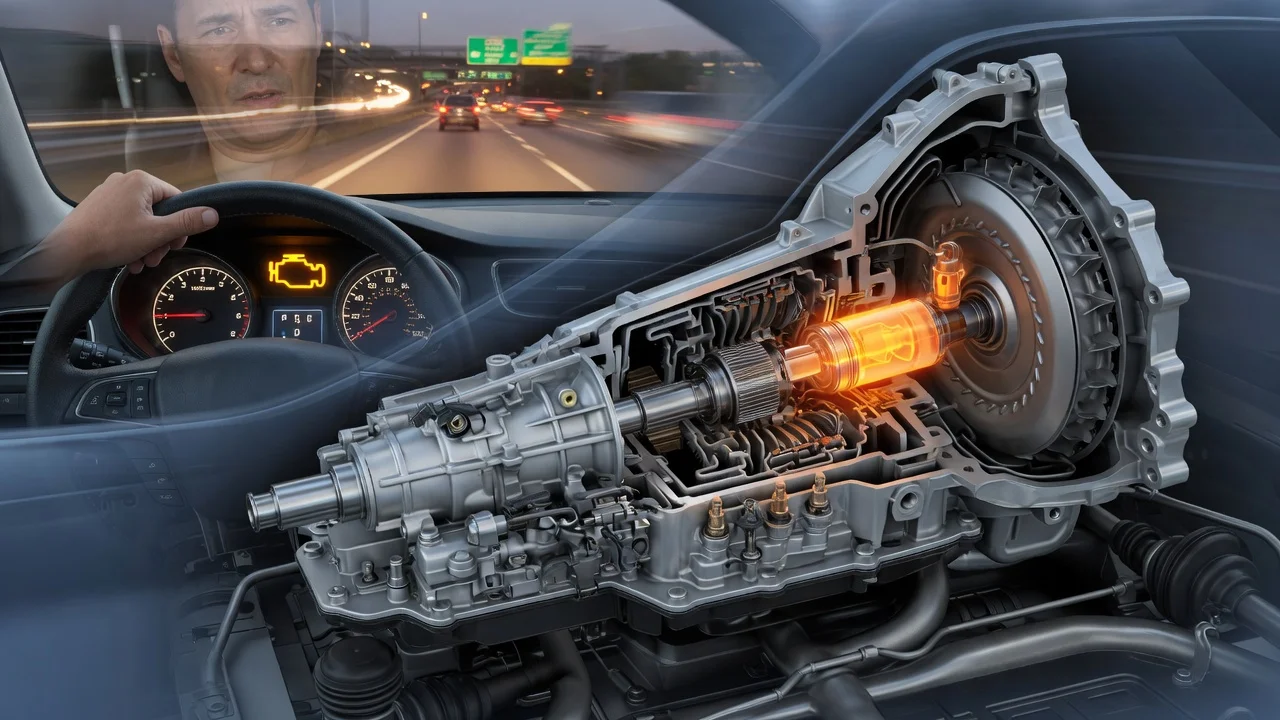
A failing torque converter clutch (TCC) solenoid rarely leaves a car stranded on the spot. Many owners keep driving and wonder how much risk they are taking. The honest answer depends on how the solenoid circuit has failed, which transmission type is in the vehicle and how the car is being used. This article covers when short, careful driving is reasonable, when it is not, and what to check before the problem grows.
Short answer: sometimes, for a limited time
In many cases you can drive a vehicle with a faulty TCC solenoid for a short distance, such as to a repair shop, as long as the transmission still shifts normally and the engine does not stall. The most common failure keeps the converter clutch from locking up. The car still moves, but cruising RPM rises, fuel economy drops and the transmission fluid runs hotter than designed. Treat that as a reason to schedule diagnosis soon, not as permission to ignore the problem.
The answer changes to do not drive if the clutch stays applied as the vehicle slows and the engine stalls at stops. A stalling engine can lose power steering assist and reduce brake assist, which is a real safety hazard. The same applies if the transmission enters a limp mode that leaves it in one gear, slips badly, or triggers a transmission temperature warning. Keep in mind that these symptoms point toward the torque converter clutch system, not automatically to the solenoid itself. Wiring, fluid condition, the valve body or the converter can produce the same signs.
How the torque converter clutch works
A torque converter connects the engine to an automatic transmission through fluid, which lets the engine idle while the car sits in gear. Fluid coupling always involves some slip, and slip turns into heat and wasted fuel. To reduce it, the converter contains a clutch that can lock the engine and the transmission input together, usually at steady cruising speeds once the vehicle has warmed up.
The TCC solenoid is an electrically controlled valve that directs hydraulic pressure to apply or release that clutch. The engine or transmission control module decides when lockup should happen based on speed, throttle position, load and temperature, then commands the solenoid. Many modern units modulate the solenoid to allow controlled partial slip rather than a simple on or off. When the module detects a mismatch between engine speed and transmission input speed during commanded lockup, or an electrical fault in the circuit, it typically stores diagnostic codes. Generic codes in the P0740 to P0744 range are common, but code numbers and definitions vary by manufacturer.
What changes the answer
Failure mode matters most. A solenoid or circuit stuck off usually produces higher highway RPM, reduced mileage and extra fluid heat. A circuit stuck on, or a clutch that will not release, tends to cause stalling or bucking when coming to a stop. An intermittent fault often shows up as shudder, a vibration that feels like driving over rumble strips at light throttle, or as RPM that flares and drops while cruising.
Transmission type and configuration matter as well. Conventional geared automatics and many CVTs use a torque converter with a lockup clutch, while dual-clutch transmissions and manual gearboxes do not have one, so the question does not apply to them. On some units the TCC solenoid can be reached by removing the pan; on others it sits inside the valve body, a solenoid pack or an integrated control unit that requires more extensive work. Fluid specification is another factor, because lockup clutches depend on the friction characteristics of the correct fluid. The wrong fluid or badly degraded fluid can cause shudder that looks like a solenoid problem.
Operating conditions change the risk. Towing, heavy loads, long grades and hot weather all raise fluid temperature, and a converter that never locks adds to that heat. Gentle commuting at moderate speeds puts far less stress on the transmission than highway towing.
What the owner can do now
Start by noting exactly what happens: the speed and gear where the symptom appears, whether it occurs only when the vehicle is warm, whether the engine stalls when stopping, and how RPM behaves at a steady highway speed. Read diagnostic codes with a scan tool, including transmission-specific codes if the tool supports them, and record freeze-frame data instead of clearing codes right away. These details help a technician separate an electrical fault from a hydraulic or mechanical one.
Check the fluid if the transmission has a dipstick and the manufacturer's procedure allows it, following the correct temperature and engine-running conditions. Low level, a burnt smell or dark fluid with debris suggests a broader problem than a single solenoid. Many newer transmissions have no dipstick and require a specific fill-check procedure, so leave those to a shop. Review the service history too: when the fluid was last changed, which fluid was used, and whether software updates or earlier transmission repairs have been performed.
Until the vehicle is diagnosed, drive gently, avoid towing and heavy loads, limit long highway trips and pull over if a warning light or temperature message appears. If the engine stalls at stops, arrange a tow rather than driving it.
Limitations and next step
Repair options vary widely. Depending on the confirmed cause, the fix may be a wiring or connector repair, a software update, a fluid service with the correct specification, a solenoid or solenoid pack replacement, valve body work or a torque converter replacement. Replacement parts must match the exact transmission and model year, so confirm fitment by VIN or transmission identification rather than by vehicle name alone. Some solenoid packs and control units also need programming or an adaptive relearn after installation.
What cannot be determined without inspection is which part has actually failed and whether any damage has already occurred. A code naming the TCC circuit tells you where the module saw a problem, not necessarily which part to buy. Electrical testing of the solenoid and wiring, pressure testing and road-test data from a capable scan tool are often needed. Use the service information for your specific vehicle or consult a transmission specialist before replacing parts, and have the car checked promptly. Addressing a lockup fault early usually keeps the repair smaller than waiting until heat and contamination spread through the transmission.