7.3 Powerstroke Glow Plug Control Module Location
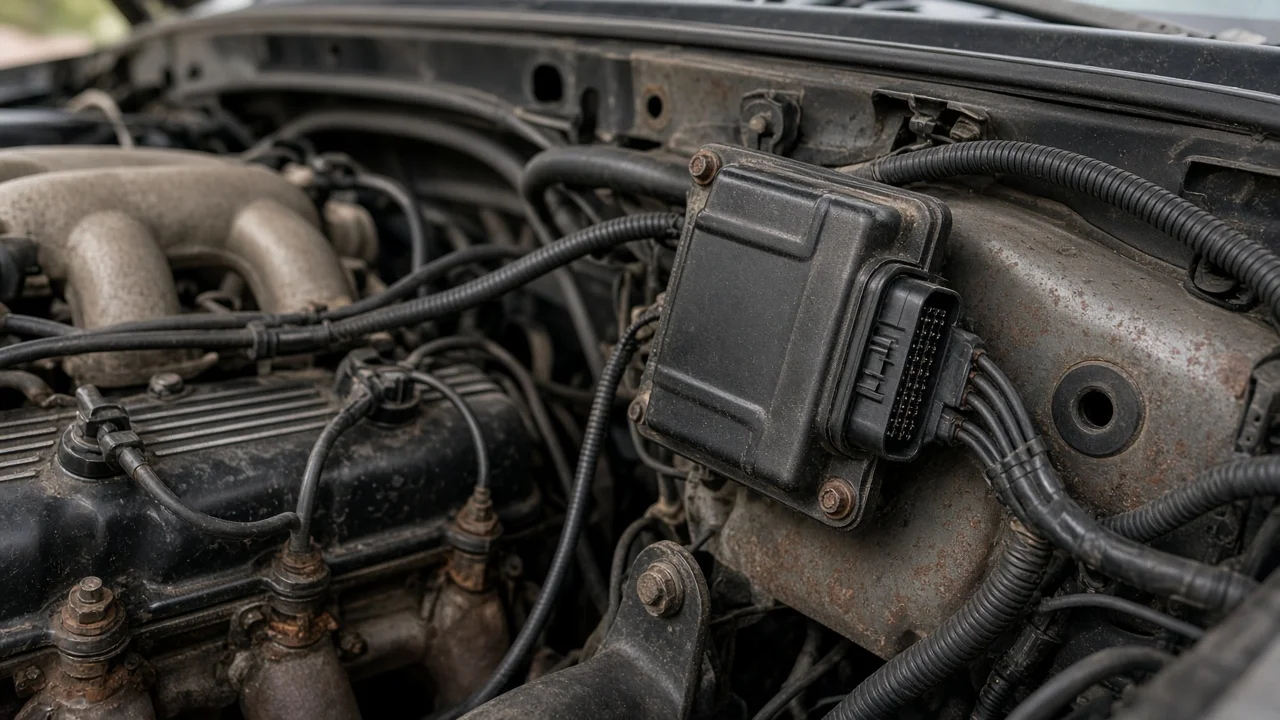
If your 7.3L Power Stroke is hard to start cold, the part that switches power to the glow plugs is a likely suspect. Ford used two different devices for this job during the engine's production, and they are mounted in different places. This guide covers where to look on your truck, how the circuit works, what changes the answer, and what you can safely check before blaming either the glow system or the fuel side.
Where to find the glow plug control module
Earlier 7.3 engines do not have a glow plug control module. Older F-Series pickups and the first Super Duty years use a glow plug relay instead. On Super Duty trucks built before the 2001 changeover, the relay is bolted on top of the driver-side valve cover. It is a solenoid-style part with a heavy cable from the battery and leads running to the glow plug feed. On older body-style trucks the relay is also on the driver side of the engine, but its exact position differs, so confirm it by following the heavy cable.
Later 7.3 trucks, starting partway through the 2001 model year and running through 2003, use a solid-state glow plug control module (GPCM). That range is why searches for the 2002 Ford 7.3 glow plug control module location end up here. On these pickups the module is not on top of the engine. It is commonly mounted low on the driver side, near the frame rail beneath the battery area, and is usually easiest to see from under the front of the truck. Mounting details vary by body and build, so trace the harness rather than relying on a description alone.
Here is a quick way to tell which system you have. Look at the top of the driver-side valve cover. If you find a relay there with a thick battery cable attached, you have the relay system. If there is no relay, you most likely have the later module, and you should follow the glow plug feed wiring down toward the driver-side frame area.
How the glow plug circuit works
A diesel ignites fuel using the heat of compression. On a cold engine, the cylinder walls and head absorb too much of that heat for reliable ignition, so the glow plugs preheat the combustion chambers. The powertrain control module decides when to energize the glow plugs and for how long, mainly based on engine oil temperature and barometric pressure. The relay or module then carries the heavy current from the batteries to the eight glow plugs. On this engine, that feed passes through connectors in the valve cover gaskets and a harness under the valve covers.
The wait-to-start lamp on the dash runs on its own timer. The glow plugs can stay powered after the lamp goes out, so the lamp does not tell you whether the plugs actually heated. The relay is a simple switch with no self-checking. The later module can monitor the glow plug circuits and report faults to the PCM, which makes diagnosis easier on those trucks.
Glow heat is only part of a cold start. The 7.3 uses hydraulically actuated injectors, which are fired by high-pressure engine oil, while a low-pressure fuel pump supplies diesel to them. If oil pressure for the injectors is slow to build or the fuel supply is weak, the engine can crank and fail to start even when the glow system is healthy.
What changes the answer
Model year and build date matter most, because the switch from relay to module happened partway through the 2001 model year. A 2001 truck can have either system. Check the build date on the door-jamb label, then confirm by looking at the valve cover. Body style matters too. Excursion and E-Series van installations package the engine differently from pickups, so the pickup locations above may not match. Previous owners sometimes changed the setup, for example by replacing a failed module with an aftermarket relay arrangement or by relocating parts, so what you find may not match the factory engine configuration.
Operating conditions change how a fault shows up. In warm weather, a dead relay or several failed plugs may cause little more than brief rough running and white smoke right after startup. In freezing weather, the same fault can prevent a start entirely. Fuel matters as well. This is a diesel-only system, and summer-grade or contaminated diesel can thicken or gel in the cold, restricting the fuel filter and producing symptoms that look like a glow plug problem.
What the owner can do
Start with safety. The 7.3 uses two batteries, and the glow circuit carries high current. Disconnect both negative cables before touching relay terminals, module connectors or glow plug wiring. Then inspect the relay or module, its cables and its connectors for corrosion, loose terminals, melted insulation or chafing against the frame or engine. On relay-equipped trucks, a cold key-on usually produces an audible click as the relay engages. No click points toward the relay, its control signal or its wiring. On module-equipped trucks, use a scan tool that supports this engine to read stored codes, because the module can report circuit faults the relay cannot.
With the batteries disconnected, you can check glow plug circuits for continuity or resistance at the valve cover connectors, comparing all eight. One or two plugs reading very differently from the rest usually means failed plugs or a damaged harness under the valve cover. Voltage checks at the relay or module output require the circuit to be live during a glow cycle. Do those only with a suitable meter, clean connections and no metal tools bridging terminals.
If the engine is hard to start even when warm, look at the fuel side before replacing glow parts. Check the fuel filter service history and the filter housing drain, listen for the fuel pump running at key-on, and do a visual leak check for fuel or oil around the filter housing, lines and valve covers. Supply fuel pressure can be measured with a proper gauge at a test port where the system provides one. Do not loosen fittings on a running engine or try to bleed pressure by cracking lines. Fuel additives can help with cold-weather fuel handling, but they do not repair a failed relay, module, glow plug or injector.
Limitations and next step
Exact mounting points, connector layouts and wire colors vary by year, body and build, and a truck may have been modified. The general locations above are a starting point, not a substitute for the factory service information for your VIN. Readings meant for gasoline engines, such as fuel trim, do not apply to this diesel, so rely on glow circuit tests, codes and fuel supply checks instead.
Get professional help if your tests are inconclusive, if the fault is in the harness under the valve covers, which requires removing the valve covers and working around the injectors, or if codes point to injection control pressure or injector circuits. A diesel technician with the correct scan tool can watch glow command, injection control pressure and cranking data together, which separates a glow system fault from an oil or fuel supply problem faster than replacing parts one at a time.