7.3 Powerstroke Glow Plug Relay Location
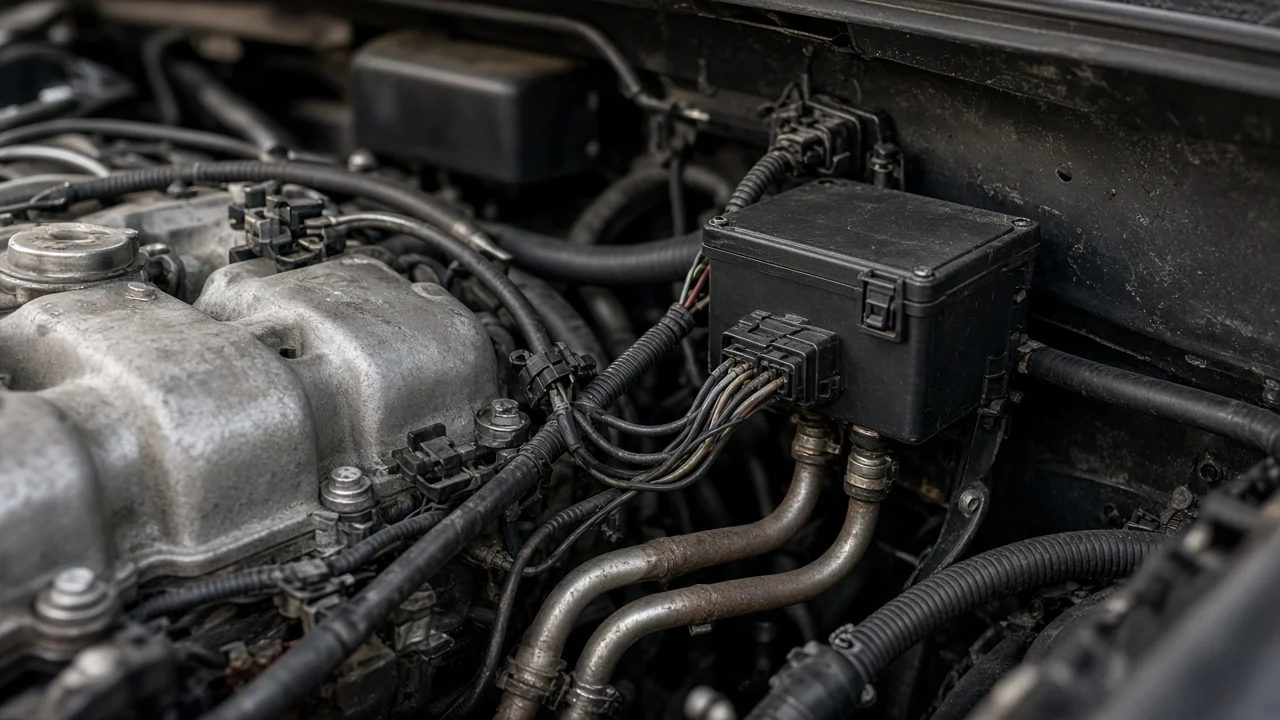
If your 7.3 Powerstroke cranks too long on cold mornings or the wait-to-start light acts strangely, the glow plug relay is usually the first part to find. It is easy to reach once you know what it looks like. This guide covers where the relay is mounted, how it works with the glow plugs, what differs between trucks, and how to check it safely without opening the engine's high-pressure systems.
Where the glow plug relay is on a 7.3
On most 7.3 Powerstroke pickups and SUVs, the glow plug relay is bolted to the top of the driver-side valve cover. Open the hood, stand at the driver-side fender, and look along the top of that cylinder head. The relay is a compact unit with two heavy threaded terminal studs and a small control connector. One thick cable brings battery power to the relay. The other stud sends power to the glow plug harness, which feeds both cylinder banks.
The exact spot along the valve cover, the bracket, and the cable routing vary with model year and body style, so treat the valve cover as the place to start looking rather than an exact coordinate. On 1999 to 2003 trucks you may also see separate relays for the intake air heater elsewhere in the engine bay. Those relays run a different preheat circuit and should not be mistaken for the glow plug relay.
How the relay powers the glow plugs
A diesel ignites its fuel with the heat of compression rather than a spark. In cold weather, the cylinders lose too much of that heat to the metal around them. The glow plugs fix this by preheating each combustion chamber, one plug per cylinder on this V8. The engine computer decides how long to glow, based mainly on its engine oil temperature reading, and it switches the relay on through the small control wire. When the relay closes, it connects the battery feed to the glow plug circuit. You can often hear it click when you turn the key on with a cold engine.
The wait-to-start lamp and the relay are timed separately, so the relay may stay energized after the light goes out. The relay carries heavy current. On these engines, the glow plugs connect through a harness that runs under the valve covers. None of this is part of the fuel system. The injectors are hydraulically actuated by high-pressure engine oil, and the fuel pump supplies diesel through the fuel filter at a much lower pressure. A hard cold start can therefore come from either the preheat side or the fuel and oil side, and it pays to separate the two before replacing parts.
What changes the answer for your truck
The engine was used in several vehicles. These include the 1994.5 to 1997 F-Series, the 1999 to 2003 Super Duty pickups, the Excursion, and E-Series vans of the same era. The valve cover mounting is typical for the pickups and the Excursion, but the details of each platform are different. In a van, the engine sits partly under the interior engine cover, so reaching the relay is harder and its position can differ. Previous owners sometimes install aftermarket relays or reroute cables, so what you find may not match a factory picture.
Operating conditions also matter. A warm engine needs little or no glow time, so a failing relay may only show up on cold starts. Fuel can produce the same symptoms. Summer-blend diesel or biodiesel blends can thicken or gel in the cold and restrict the filter, which looks like a weak preheat system. Winter fuel treatments may help prevent gelling, but no additive is a proven repair for a failed relay, worn glow plugs, or a damaged harness.
What you can check yourself
The relay's battery stud is live even with the key off. Before you remove the relay, tighten its nuts, or work near its terminals, disconnect both batteries; these trucks normally have two. Then inspect the relay. Look for loose or corroded terminal nuts, melted or chafed insulation, a damaged control connector, and signs of overheating on the bracket. Never let a wrench bridge the two heavy studs or touch ground while the batteries are connected.
To test the relay, reconnect the batteries and work with a cold engine. Have a helper turn the key on and listen for the click. Use a test light or meter to check for power at the output stud while the relay should be on. If the control signal arrives but no power comes out, the relay is suspect. If power reaches the output but the engine still starts poorly, the problem may be the glow plugs or the harness under the valve covers. A relay that fails repeatedly often points to a shorted plug or damaged wiring further along the circuit.
If the preheat circuit checks out, look at the fuel side. Check the fuel filter's service history, drain the water separator if your truck has one, and look for air leaks or wet fittings. Do this leak check visually with the engine off. Do not loosen fuel or oil fittings while the engine runs to bleed or relieve pressure. The high-pressure oil that drives the injectors can cause injury, and testing the system properly requires the correct gauges and procedures.
Limitations and next step
The location described here is the common arrangement, not a guarantee for every vehicle. Production changes, body style, and earlier repairs can all move or replace the relay. For an exact answer, use the factory service information and wiring diagram for your VIN. Stored trouble codes and live data from a scan tool that reads Ford diesel parameters can confirm whether the computer is commanding the relay.
See a diesel technician if the engine still will not start after you have confirmed the preheat circuit, if you suspect injector or high-pressure oil problems, or if you find fuel or oil leaking near hot parts. Those faults need proper pressure testing and diagnostic equipment rather than guesswork. Most owners can find and inspect the relay themselves, as long as they work with the batteries disconnected.