7.3 Powerstroke Glow Plug Control Module Selection
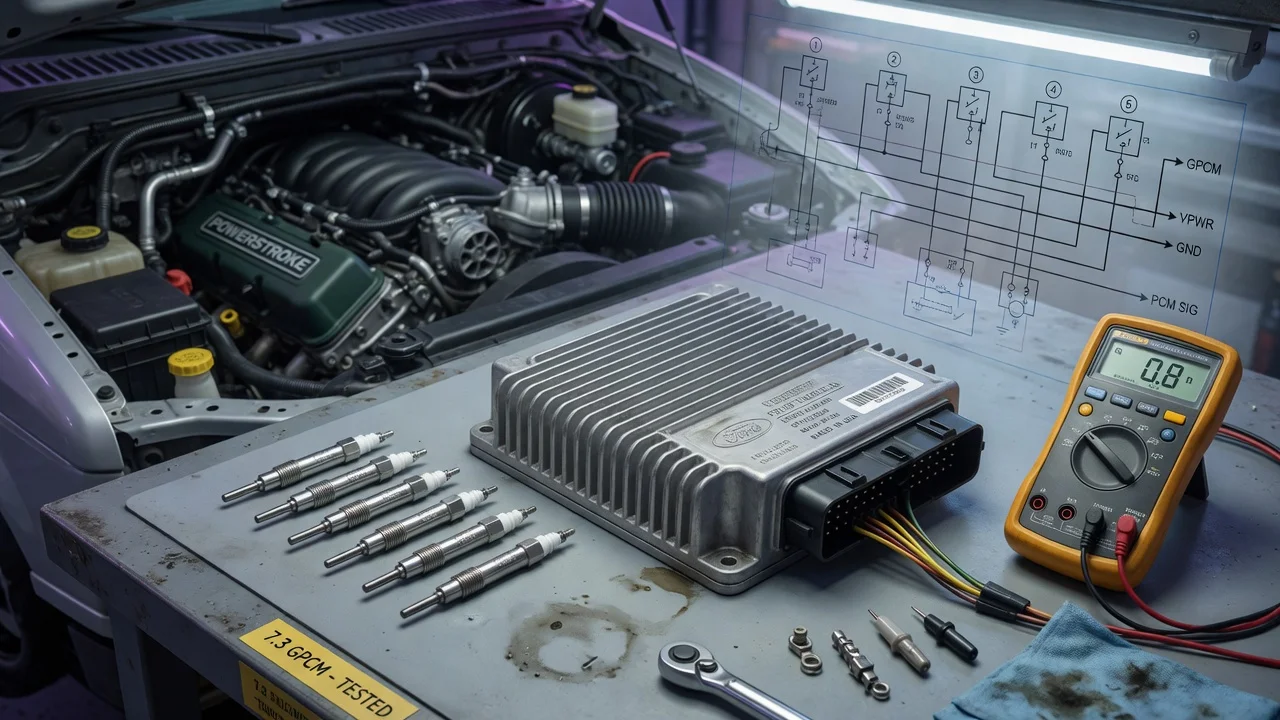
A long crank on a cold morning sends many 7.3 Powerstroke owners shopping for a glow plug control module. The part only helps when the controller is actually the fault. This guide covers how to confirm the need, match a replacement to your truck, judge features and warranty claims, and plan for the costs that come with the glow plug circuit. The goal is a shortlist based on fitment and evidence, not price or branding alone.
Define the job the product must do
On the 7.3 diesel, the glow plug controller is a high-current switch. The powertrain control module decides when and how long the eight glow plugs should heat, based on temperature information. The controller then carries battery current to the plugs. It does not meter fuel, set fuel pressure or affect injector timing. Its whole job is to deliver reliable heat to the combustion chambers so the engine can start and idle cleanly when cold. If your truck starts normally in cold weather, a new module will not add power, economy or smoother running.
Several faults look like a bad controller: extended cranking in cold weather, heavy white smoke at startup, and a rough idle that clears as the engine warms. The fuel and oil systems can cause the same pattern. A weak fuel pump, a restricted fuel filter, aerated fuel, a tired injector or low injection control pressure in the high-pressure oil circuit all produce similar symptoms. Before buying, confirm that the glow plug feed receives voltage during a cold key-on cycle. Check plug resistance with the key off, and inspect the under-valve-cover harness connectors, which are a known weak point on this engine.
Keep fuel-side checks within safe limits. Diesel is less volatile than gasoline, but the 7.3 runs hydraulically actuated injectors on high-pressure engine oil. Never loosen oil or fuel fittings with the engine running or hot to see whether pressure is present. A fuel pressure reading belongs on a proper gauge at the designated test point. Any leak check should be visual, on a cooled engine that is shut off. Additives may help with fuel conditioning, but they will not repair a failed controller, open glow plugs or damaged wiring.
Check compatibility
Across its production run, Ford equipped the 7.3 with different glow plug control hardware, and the style varies by model year, chassis and build. The 2000 model year is a frequent search for that reason. Do not assume a part fits because the listing says 7.3. Read the part number on the unit currently installed and compare the connector shape and pin count. Then look at the mounting footprint and the arrangement of the power studs. Finally, confirm the match with a parts catalog lookup by VIN or build date.
The engine configuration is shared across pickups, the Excursion and E-Series vans, but mounting locations and harness routing are not. A unit that is electrically correct can still fail to bolt in cleanly, or can strain the connector once installed. Universal relays sold as substitutes usually need adapters or harness changes. Avoid them unless you are comfortable verifying every circuit yourself. Also check the battery cable lugs and the controller connector for corrosion. A new module bolted onto a green, high-resistance terminal will perform like the old one.
Features that affect the choice
Most options fall into three groups. Original-equipment parts carry the factory part number. Aftermarket units are sold as direct equivalents to that number. Economy parts compete mainly on price. The most useful evidence is concrete: • a cross-reference to the factory part number for your build; • a stated current rating; • an identical connector and mounting; • clear warranty terms; • a stated return policy; Many sellers will not accept returns on installed electrical parts, so check that policy before you open the package. Some kits add a pigtail connector, terminal boots or hardware. These extras are useful if your original connector is brittle or heat-damaged.
Treat labels such as heavy duty, upgraded or performance with caution when they come without specifications. A controller that switches the same circuit under PCM command cannot make the plugs hotter or the truck start faster than a correctly working original. Manual timer kits and push-button glow plug switches are a different category. They bypass the PCM's timing logic and rely on the driver to avoid overheating the plugs. They are not equivalent replacements, and they can shorten glow plug life if misused.
Limitations and ownership costs
A new controller cannot fix open glow plugs, a damaged under-valve-cover harness, a sticking injector, a failing fuel pump or low high-pressure oil. Battery condition matters too. The glow plugs draw heavily during a cold start, and weak batteries reduce both glow plug heat and cranking speed. Most 7.3 trucks carry two batteries, so test both and disconnect both negative cables before working on the controller or its power studs. Tighten stud nuts securely without overtightening, and route the harness away from heat and sharp edges.
Budget for the whole circuit, not just the module. Glow plugs are commonly replaced as a set once several have failed. Reaching the under-valve-cover harness means removing the valve covers and replacing their gaskets. Use that opportunity to inspect for oil seepage while the covers are off. If the controller failed early, look for the cause before installing the new one. Shorted plugs, chafed wiring and poor ground connections can all overload the controller and ruin a replacement.
Build a practical shortlist
Start your shortlist only after testing points to the controller: no glow plug voltage during a cold key-on cycle with good plugs, a sound harness and healthy batteries. Then use these criteria: • The part number matches the unit removed from your truck or the VIN-based catalog result. • The connector and pin count are identical. • The mounting and power stud layout fit your chassis. • The current rating is published. • The warranty length is stated, and you know whether it covers labor. • The return policy for installed electrical parts is clear. • You know whether a replacement pigtail or hardware is included.
Drop any listing that relies on vague fitment such as fits all 7.3 engines, carries no part number cross-reference, or advertises gains no switching component can deliver. Among the options that remain, an original-equipment or documented direct-equivalent unit is the lower-risk choice. Weigh price against warranty support and connector quality rather than marketing language. If symptoms persist after installation, return to the fuel and oil side, with pressure testing and injector diagnosis, before replacing anything else.