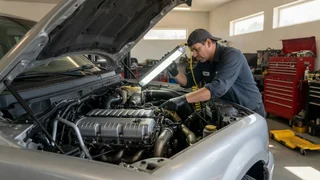
3.0 Duramax Oil Pressure: What Is Normal and When to Worry
The Short Answer
On the 3.0-liter Duramax, oil pressure is not one fixed number. The reading on the gauge changes with engine speed, oil temperature, oil viscosity and load. A lower reading at hot idle and a higher reading at cruising speed or under load is the expected pattern. This article does not include verified factory pressure figures. The exact specification for your engine should come from GM service information or a dealer, not from a single number repeated online.
The practical test is whether pressure stays within the range the truck's own gauge and warning system treat as normal. A sudden drop, a low-pressure warning or a reading that departs from what your engine usually shows matters more than any general figure.
Which Engine This Covers
The 3.0 Duramax is GM's inline six-cylinder turbodiesel used in light-duty pickups and full-size SUVs. It has been produced in more than one version, commonly identified by the engine codes LM2 for the earlier engine and LZ0 for the later update. Specifications, recommended oil and service guidance can differ between versions and model years, so confirm which engine your vehicle has before comparing readings. The engine code is usually listed on the vehicle's service parts identification label or can be confirmed by a dealer using the VIN.
Why the Reading Moves
Engine speed: the oil pump moves more oil as rpm rises, so pressure generally climbs with engine speed. Oil temperature: cold oil is thicker and resists flow, which raises pressure. Fully warmed oil thins out and pressure drops, especially at idle. Oil viscosity and condition: oil that is the wrong grade, overdue for a change, or diluted can lower pressure. Oil level: a low oil level can let the pump draw air and cause erratic or low readings. Gauge behavior: some dashboard gauges are buffered or scaled for readability, so small changes may not show, while a sudden visible drop is significant.
Warning Signs That Need Attention
A low oil pressure warning message or warning light on the instrument cluster. Pressure that falls noticeably lower than usual at the same temperature and engine speed. A reading that flickers or drops sharply during driving, braking or cornering. New engine noises, such as ticking or knocking, along with a low reading. Pressure that stays unusually high after the engine is fully warmed up.
If a low oil pressure warning appears while driving, stop safely and shut off the engine as soon as possible. Check the oil level after the engine has sat briefly. Continuing to run an engine with genuinely low oil pressure can cause serious internal damage. If the level is correct and the warning remains, have the vehicle diagnosed before driving it further.
How to Check Whether a Reading Is Real
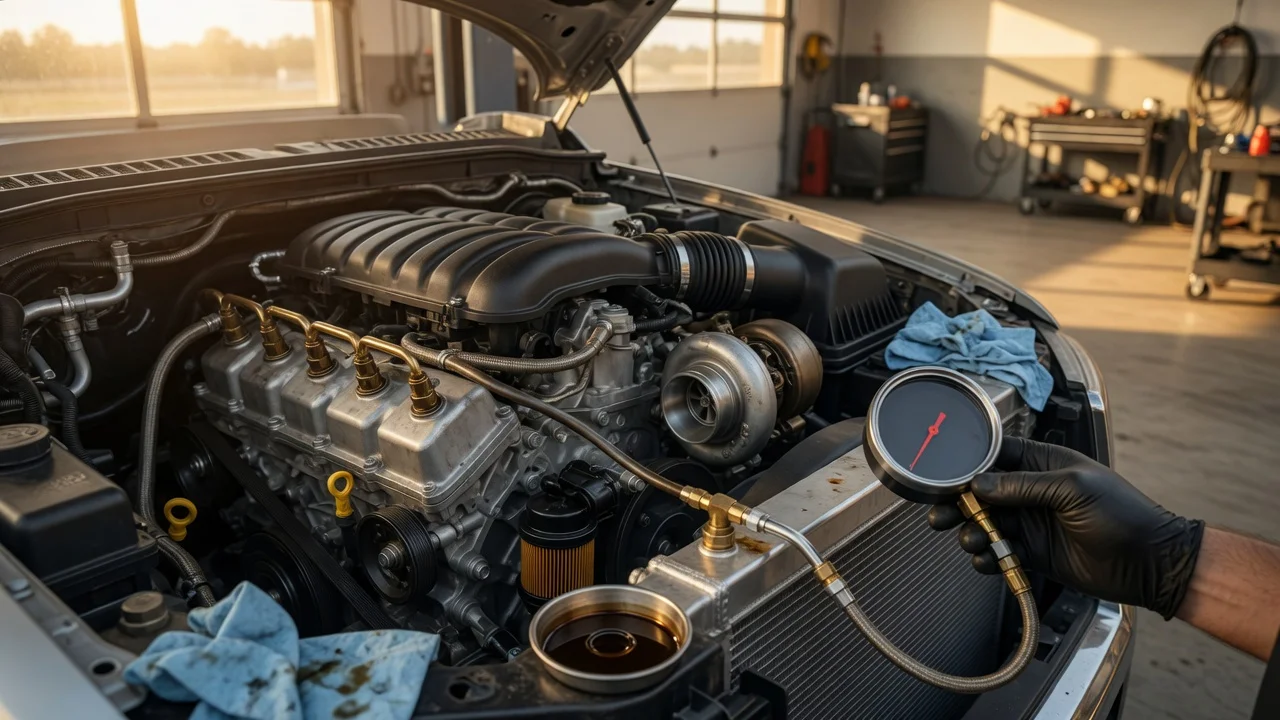
A low reading can come from a mechanical problem or from a faulty sensor or wiring. A technician can tell the two apart by fitting a mechanical test gauge and comparing it with the factory sensor reading. That test, compared against the published spec for your engine version, gives a far more reliable answer than the dashboard alone.
Keeping Oil Pressure Healthy
Use the oil grade and diesel-rated specification listed in the owner's manual for your model year and engine version. Follow the oil life monitor and the maintenance schedule in the owner's manual. Check the oil level regularly, and more often when towing or making many short trips. Watch for and act on any oil pressure warning or unusual gauge behavior rather than waiting for the next service.
Information Gaps
This guide does not state numeric oil pressure values for idle or driving speeds, model-year differences in oil pump design, or any recalls or service bulletins tied to oil pressure on the 3.0 Duramax, because no verified source data for those points was available. Check those details in GM service information, the owner's manual for your truck, or with a GM dealer using your VIN.