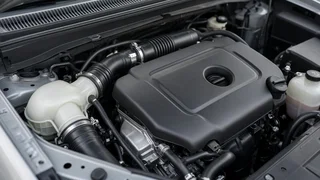
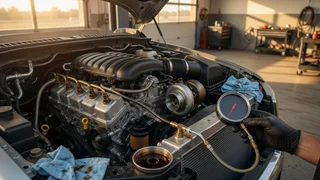
3.0 Duramax Oil Leak: What It Usually Means and How to Narrow It Down
The Short Answer
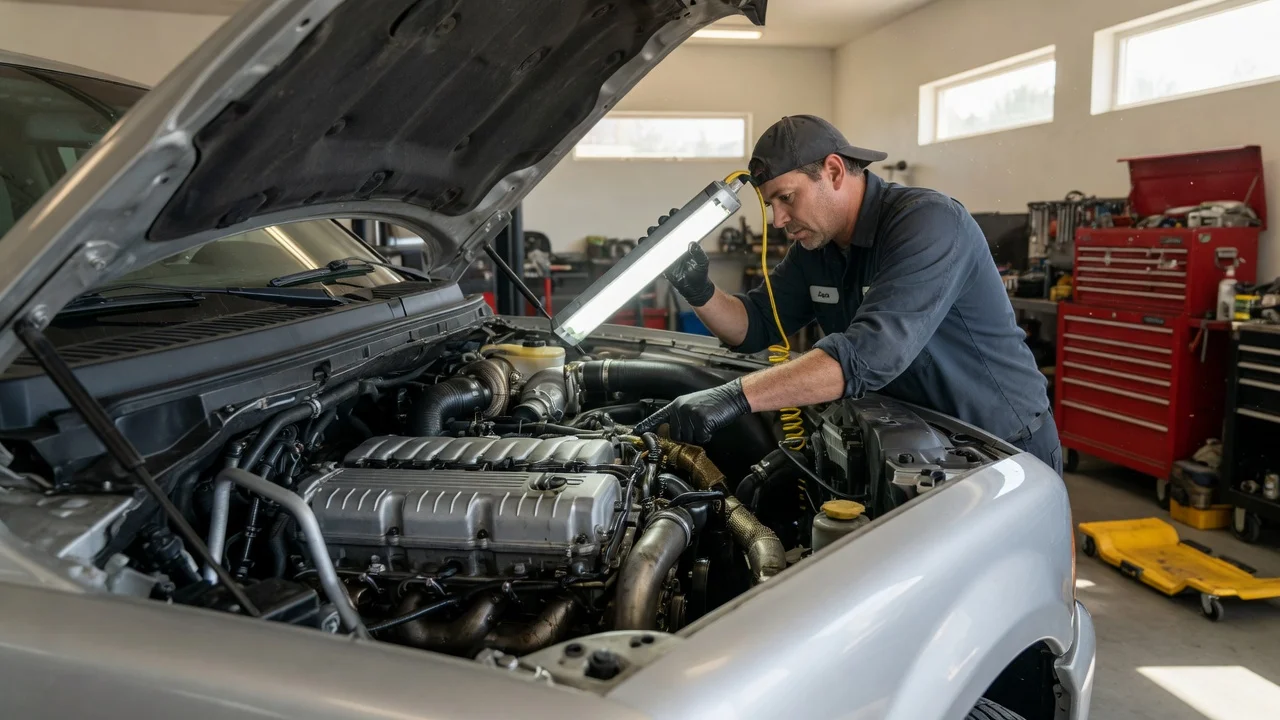
An oil leak on a 3.0 Duramax has no single standard cause. Like any engine, the 3.0L diesel can lose oil through gaskets, seals, hoses, fittings or the filter area, and the right fix depends on where the oil is actually escaping from. The useful first step is to find the highest, freshest point of wetness, not the place where oil drips onto the ground. Oil runs downhill and spreads along the engine and transmission, so a drip under the bell housing or oil pan often starts somewhere higher up.
This guide covers how to approach the problem and what affects the answer. It does not draw on any GM service bulletin, recall or failure-rate data, because none was supplied for this article. If you suspect a known factory issue, ask a GM dealer to check your vehicle identification number (VIN) for open recalls and technical service bulletins (TSBs).
Which Engine This Covers
The 3.0 Duramax is GM's 3.0-liter turbocharged inline-six diesel. It has been offered in half-ton pickups and full-size SUVs such as the Chevrolet Silverado 1500, GMC Sierra 1500, Chevrolet Tahoe and Suburban, GMC Yukon and Cadillac Escalade. Availability varies by model year, trim and market. The engine is usually identified by GM's RPO (Regular Production Option) code: LM2 for earlier versions and LZ0 for the later updated version. Your model year and engine code can change which parts, procedures and bulletins apply, so confirm them from the VIN or the RPO label, which is usually in the glove box, before ordering parts or comparing your truck to someone else's.
Do not confuse this engine with the larger Duramax V8 diesels used in heavy-duty trucks. Leak points, part numbers and repair experiences for those engines do not transfer directly to the 3.0L.
First, Confirm It Is Engine Oil
A diesel truck carries several fluids that can be mistaken for engine oil. Identifying the fluid correctly can change the diagnosis completely.
Fluid | Typical appearance | Notes; Engine oil | Dark brown to black on a used diesel; slick feel | Diesel oil darkens quickly, so color alone does not show its age or condition; Transmission fluid | Usually red or reddish-brown when fresh | A leak near the bell housing could be either oil or transmission fluid; Coolant | Colored, thin, often with a sweet smell | Check the coolant reservoir level for loss; Diesel fuel | Thin, light-colored, distinct diesel smell, evaporates slowly | Treat fuel leaks as urgent because of fire risk; DEF (diesel exhaust fluid) | Clear, water-like, can leave white crystal deposits | Found near the DEF tank, lines and exhaust aftertreatment; Condensation | Clear water, often from A/C or exhaust | Normal in many conditions
Place clean white cardboard under the truck overnight. The color, location and size of the spots give a better starting point than a quick look at a damp undercarriage.
Where to Look
The list below shows general areas where oil leaks occur on modern diesel engines. It is a search guide, not a ranking of failures specific to the 3.0 Duramax.
Oil filter and filter housing area, including the cap seal, especially if oil was recently changed; Oil drain plug and its sealing washer; Oil pan gasket or sealant joint; Valve cover gasket and related seals on top of the engine; Turbocharger oil feed and return lines and their fittings; Oil cooler and its connections; Front and rear engine covers and crankshaft seals; Oil pressure and other sensors threaded into oil passages; Crankcase ventilation system hoses and connections
The 3.0L Duramax places its timing drive and oil pump drive at the rear of the engine, next to the transmission, instead of at the front as on many engines. Because of this, oil appearing at the joint between the engine and transmission does not automatically mean a failed rear main seal. It could come from a rear cover, from higher on the engine, or even from the transmission. Repairs in this area can mean removing the transmission, so it is worth confirming the source before committing to that labor.
Leak, Seep or Oil Consumption
It helps to separate three situations, because they lead to different decisions.
Active leak: fresh oil drips onto the ground or the oil level drops noticeably between checks. This needs diagnosis soon. Seep: a gasket or seal area is damp or dusty with oil but not dripping. Note it and monitor it, and mention it at the next service. Consumption with no visible leak: the oil level drops but the outside of the engine stays dry. This points to internal oil use, such as through the turbocharger or crankcase ventilation, rather than an external leak, and needs a different diagnosis.
Oily residue inside intake or charge-air hoses is not the same thing as an external engine leak. A light film can come from crankcase ventilation and turbocharger operation. A diagnosis is needed to tell normal residue from a turbocharger or ventilation problem.
Practical Steps Before Paying for Repairs
Check the oil level on level ground with the engine in the condition the owner's manual specifies, and write down the reading and mileage. Check whether the leak started right after an oil change. If it did, a loose filter cap, damaged cap seal, or loose or reused drain plug washer is a reasonable first suspect. Clean the suspected area, drive normally, then inspect again to find where fresh oil first appears. If the source is hard to see, ask a shop about UV dye testing, which marks the exact leak point under ultraviolet light. Have the VIN checked for recalls, TSBs and remaining powertrain warranty coverage before paying for a repair. If oil is reaching hot exhaust components, if there is smoke or a burning smell, or if the oil pressure warning appears, stop driving and have the vehicle inspected.
What This Guide Cannot Tell You
No model-year-specific failure data, bulletin numbers, repair costs, torque values or labor times were available for this article, so none are given. Any of these can vary by model year, engine code and vehicle, and they should come from GM service information or a qualified technician working on your specific truck. If several owners report the same leak point on your exact model year and engine code, treat that as a lead to check, not as confirmation of your truck's problem.