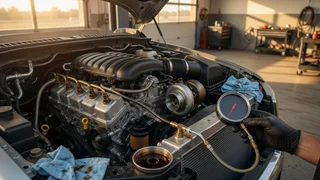
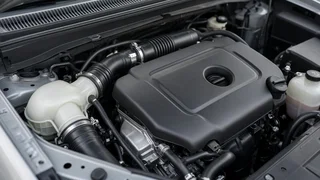
3.0 Duramax oil pressure specs

A 3.0 Duramax oil pressure reading is only useful when interpreted against the engine’s operating state. The inline-six turbodiesel uses a variable-displacement oil pump, so pressure changes with rpm, oil temperature, and engine load. Owners often ask about a single normal oil pressure for 3.0 Duramax value when they see the gauge move. Instead of one fixed specification, the expected range shifts between hot idle and highway cruise. Recognizing that relationship helps distinguish ordinary behavior from a genuine lubrication fault.
Essential answer
The essential answer is that normal oil pressure for the 3.0 Duramax is a dynamic range rather than one static number. At a fully warmed idle, the gauge may read noticeably lower than it does at moderate rpm, and that reduction is generally part of the engine’s lubrication strategy. The variable-output pump reduces parasitic load when demand is low, then raises delivery as bearing speed and turbocharger requirements climb. For this reason, a parked hot engine and a loaded engine climbing a grade can show very different values without either being abnormal.
That scope changes when the pressure does not follow the expected rpm relationship or when the reading falls outside the broad operating band consistently. A gauge that drops close to zero at speed, fluctuates erratically, or stays pinned low during a cold start is no longer within the normal oil pressure for 3.0 Duramax pattern. Because lubricant specification, fill quantity, and level check accuracy all influence the measured result, the first practical step is comparing the observed reading with the engine’s known warm and cold behavior rather than treating a single snapshot as proof of a problem.