12V Battery Disconnect Switches: How to Choose the Right Type
The short answer
A 12V battery disconnect switch lets you cut the battery from the vehicle's electrical system without removing a cable. It is commonly used to stop slow battery drain during storage, to make the electrical system safer during work, or as an anti-theft measure. The right switch depends on three things: your battery's terminal style (top post or side post), the current the switch must carry, and whether you want to operate it at the battery or from somewhere else. On modern vehicles, cutting power also resets some electronics, so check that before you rely on a switch for routine use.
Main types of disconnect switch
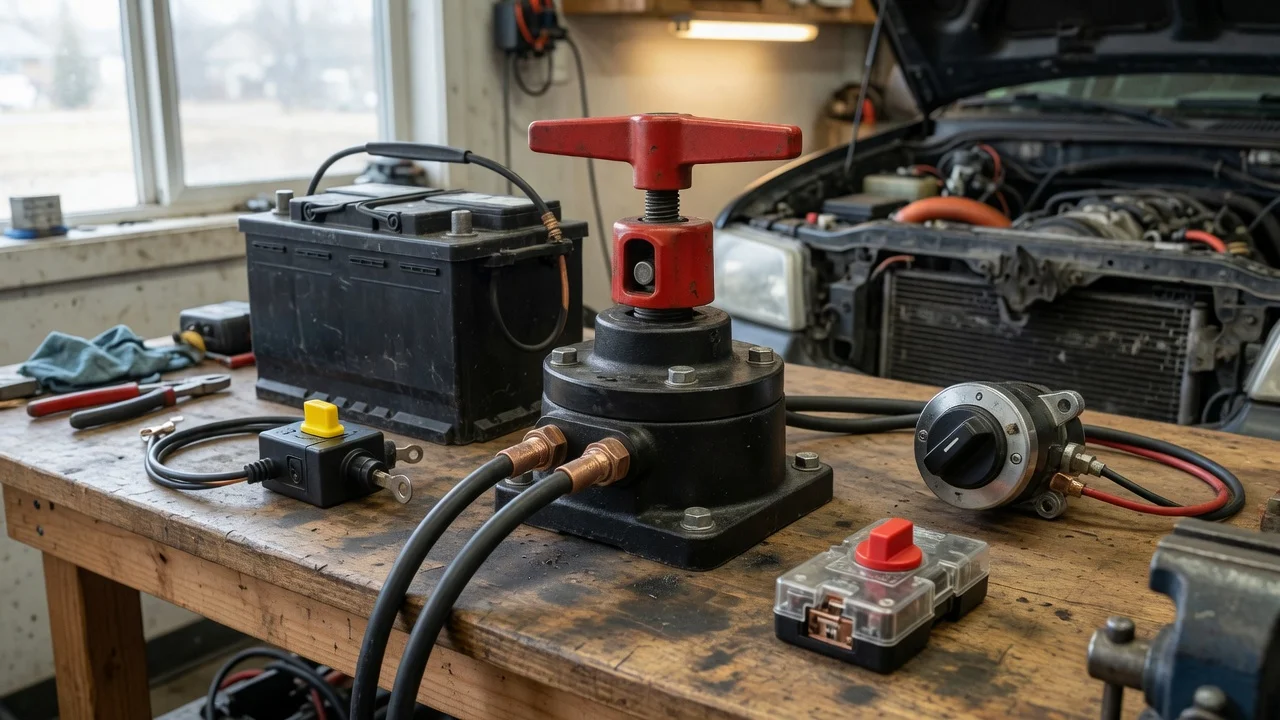
Terminal-mounted knob or knife-blade switch: bolts directly onto a battery post. You turn a knob or lift a lever to break the connection. It is simple, but you have to open the hood to use it. Rotary (key or handle) switch: mounts on a panel, bulkhead or battery box and is wired into the battery cable. It is common in boats, RVs, race cars and trailers, and some versions use a removable key. Remote or solenoid-based switch: a relay carries the battery current, and you control it with a button, key fob or wireless remote. It is convenient, but the control circuit adds complexity and can draw a small amount of current itself.
Matching the switch to your battery terminals
Battery terminal style is the first compatibility check. Top-post batteries have tapered round posts on the top of the case. Side-post batteries, used on many GM vehicles and some others, have threaded connection points on the side of the case where the cable bolts in. A switch designed for top posts will not fit a side-post battery. For side-post batteries, look for a disconnect made specifically for side terminals. These usually thread into the battery between the battery and the cable end.
Terminal style can vary with the battery group size fitted to a particular model year, trim or engine. It can also change if a previous owner installed a different battery. Check the battery actually in your vehicle rather than relying on a general model listing. Also confirm there is enough clearance around the battery for the switch body and handle, and that the hood closes without contacting it.
Ratings to check
Disconnect switches are usually sold with a continuous current rating and a higher short-duration or cranking rating. The switch must handle the starter's draw during cranking, not only the vehicle's normal running load. Larger engines and diesels generally need more cranking current than small engines. Compare the switch's stated ratings with your vehicle's starting requirements and leave some margin. This article does not supply specific ratings or test results for any product, so use the manufacturer's published figures.
Also confirm the switch suits a 12V system and look at how well it is made. A poorly made or loosely fitted terminal switch can add resistance. That can lead to heat at the connection and to hard starting. Choose a switch whose contact design and materials you can verify from the listing or packaging.
Which cable to switch
Terminal-mounted switches are commonly fitted on the negative (ground) post. Breaking the ground side lowers the risk of accidental shorts if a tool touches the chassis while you are working near the battery. Rotary and remote switches may be wired on either side, depending on the application and any regulations that apply, such as motorsport rules that require a specific kill-switch setup. Follow the switch maker's wiring instructions.
Caveats for modern vehicles
Electronics reset: cutting power can clear radio presets, the clock and learned engine or transmission settings. Some vehicles behave differently for a short time afterward, and some radios need a security code. Battery monitoring: vehicles with stop-start or a battery sensor may need a relearn or reset procedure after the battery is disconnected. Check the owner's manual or service information for your model year. Hybrids and EVs: the 12V system works alongside the high-voltage system and may have its own disconnect procedure. Follow the manufacturer's guidance and do not improvise. Never open the switch with the engine running. Suddenly disconnecting the battery while the alternator is charging can cause a voltage spike that may damage electronics. Keep-alive features: remote start, alarms, telematics and some dash cams lose power while the switch is off.
Buying from online marketplaces or parts stores
Disconnect switches are widely listed by large online marketplaces and chain auto parts stores. This guide does not include current prices, stock levels or specific product recommendations, so check those directly. Whatever the source, confirm the terminal type (top or side post), the stated current ratings, the mounting hardware included, and whether the listing names compatible battery group sizes. On marketplace listings, give more weight to clearly stated specifications than to generic product titles.
Choosing your next step
If you mainly want to prevent drain on a stored car or occasionally isolate the battery for work, a terminal-mounted switch that matches your post style is the simplest option. If you need to cut power often, from inside the cabin, or to meet a safety requirement, a rotary or remote switch is more practical, though it takes more installation work. Before buying, confirm your battery's terminal style and your vehicle's starting current needs. Also check whether your model needs any reset procedure after power is restored.