Top-Post Battery Disconnect Switches: Types Worth Considering and How to Choose
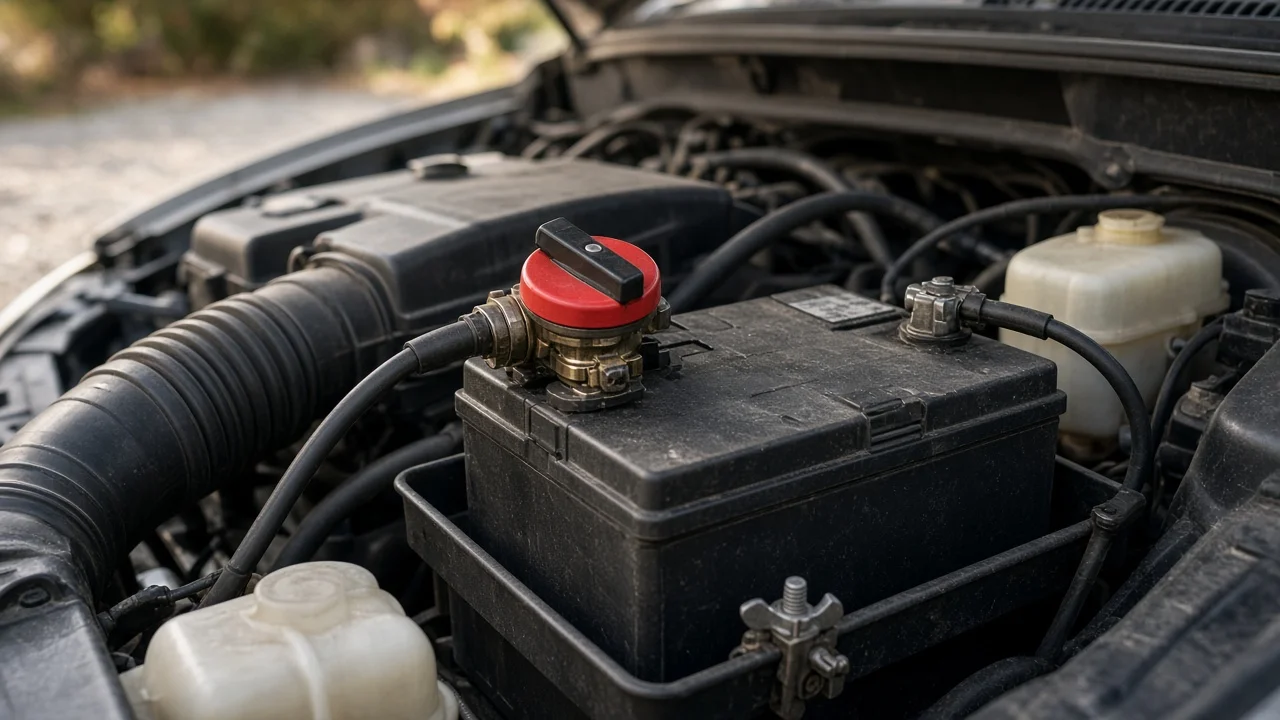
A top-post battery disconnect switch lets you cut the electrical connection between a battery and the vehicle without unbolting a cable. Owners usually want one for one of three reasons: a stored or seasonal vehicle keeps going flat, a car has a small electrical drain that hasn't been traced yet, or they want a quick way to isolate the battery for security or while working on the vehicle. This guide covers the main switch designs that work with top-post batteries, what each one is good at, and where each one falls short.
What this list covers and how it is ordered
The list includes switch types that either clamp directly onto a top-post battery terminal or are commonly wired to top-post batteries as part of a disconnect setup. It does not rank individual brands or products, and it isn't a full inventory of every disconnect device on the market. The entries run from the simplest and most hands-on designs to the more convenient or automated ones, which is roughly the order of increasing installation complexity.
Top-post batteries have round, tapered lead posts on top of the case. They are different from side-terminal batteries, which use threaded sockets on the side, as found on many older General Motors vehicles. A switch made for side terminals won't fit a top post without an adapter, and the reverse is also true, so check your battery's terminal style before comparing switches.
1) Knife-blade disconnect switch
A knife-blade switch fits onto the battery post and holds the cable clamp on a hinged metal blade. When you lift the blade, the circuit opens. When you lower it into its slot, the circuit closes. It is one of the most common and least expensive top-post disconnects.
Why it matters: it is simple, you can see at a glance whether it is open or closed, and you need no tools to operate it once it is installed. Drawbacks: the blade sticks up above the battery, which can cause problems with hood clearance or the hold-down bracket. The exposed contacts can also corrode or loosen over time, which can cause hard starting or intermittent electrical faults. It suits occasional use more than daily switching.
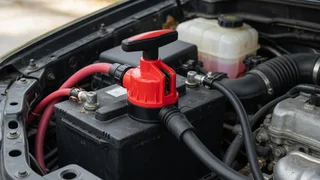
2) Rotary knob (twist-type) terminal disconnect
This design sits on the post and has a large threaded knob, often brightly colored. Unscrewing the knob separates an internal contact and breaks the circuit. Screwing it back down restores the connection.
Why it matters: it is compact, cheap, and easy for anyone to use, which makes it popular for cars, motorcycles and lawn equipment in storage. Drawbacks: you have to give the knob several turns, so it is slower than a lever. Over-tightening or under-tightening can affect contact quality, and like the knife-blade type it adds height at the terminal. Twist-type disconnects are sold in both top-post and side-terminal versions, so confirm which one you are buying.
3) Quick-release lever battery terminal
Strictly speaking this is a terminal clamp, not a switch. A cam lever tightens or releases the clamp on the post, so you can pull the cable off by hand in seconds.
Why it matters: it replaces a bolted clamp with a tool-free one and adds very little height, which helps in tight engine bays. Drawbacks: there is no separate open position. Disconnecting means lifting the clamp off and keeping it away from the post so it can't fall back into contact. It is a good option if you disconnect occasionally and have no room for a taller switch.
4) Remote-mounted rotary master switch
A master switch, sometimes called a battery isolator switch or kill switch, is a heavy-duty rotary or key-operated switch mounted away from the battery on a panel, firewall or bracket. The battery cable runs to the switch, and a second cable runs from the switch to the vehicle. Many versions use a removable key, which adds some theft deterrence.
Why it matters: it keeps the battery top clear, it can be mounted where you can reach it easily, and it is usually built for higher current than clamp-on designs. It is common in race cars, off-road vehicles, RVs, trailers and boats. Drawbacks: installation takes more work because you need extra cable runs, correctly sized cable and properly crimped lugs. Motorsport sanctioning bodies have their own rules on switch type and location, so racers should check their series rulebook.
5) Remote-controlled (solenoid or latching relay) disconnect
These units put an electrically operated relay between the battery post and the cable. A wireless key fob or a dashboard button opens and closes the relay, so you never have to lift the hood. Latching designs hold their position without drawing power continuously.
Why it matters: it is convenient for vehicles you disconnect often, and it can serve as a security feature. Drawbacks: the relay electronics need a tiny amount of power to listen for the remote, so the battery is never completely isolated. The unit also adds another component that can fail, and it costs more than a mechanical switch. If the fob battery dies or the relay fails, you need a manual override to get going.
6) Automatic low-voltage disconnect
An automatic disconnect, often marketed as a battery saver or battery guard, monitors battery voltage. If the voltage drops below a set threshold, it opens the circuit and leaves enough charge to start the engine. Some types reconnect when you press a button or open a door, and others reconnect automatically when they detect a load.
Why it matters: it protects against a flat battery without you having to remember to switch anything off, which helps vehicles with a slow parasitic drain or ones left parked for long periods. Drawbacks: the vehicle can shut down unexpectedly when parked, and how well it works depends on the threshold and on the battery's condition. It is a safety net, not a fix for whatever is causing the drain.
Quick comparison
Switch type | Tool-free operation | Added height at post | Install effort | Full isolation | Best fit; Knife-blade | Yes | Moderate to high | Low | Yes | Occasional storage, budget setups; Rotary knob | Yes | Moderate | Low | Yes | Seasonal vehicles, small engines; Quick-release lever terminal | Yes | Low | Low | Yes, when lifted off | Tight engine bays; Remote master switch | Yes | None at post | High | Yes | Racing, off-road, RV, marine; Remote-controlled relay | Yes, no hood access | Moderate | Moderate | Near-full (small standby draw) | Frequent disconnecting, security; Automatic low-voltage | Automatic | Moderate | Moderate | Conditional | Unattended parking, slow drains
How to choose the right one
Terminal fit: Standard SAE top posts are tapered, and the positive post is slightly larger than the negative. Some batteries, especially those built to the Japanese JIS standard, have smaller posts that may need an adapter or a matching clamp. Current capacity: The switch has to carry starter current without overheating. Compare the manufacturer's stated rating with your vehicle's starting demand, and be cautious with unrated or vaguely rated products on large engines or diesels. Clearance: Measure the space above and around the battery, including the hood, the hold-down bracket and any nearby metal, before choosing a tall clamp-on design. How often you'll use it: Mechanical clamp-on switches suit occasional use. For daily or remote operation, a master switch or relay unit makes more sense. Environment: In wet, dusty or marine conditions, look for sealed or corrosion-resistant construction. Exposed contacts degrade faster there.
Installation basics
Clamp-on disconnects normally go on the negative terminal. Breaking the ground side reduces the risk of a short if a tool touches the switch and the vehicle body at the same time. When you install one, remove the negative cable first and reconnect it last. Clean the post and clamp surfaces, and tighten the connections firmly but without excessive force. A loose or corroded switch can cause the same symptoms as a weak battery or a failing alternator, such as slow cranking, flickering lights or warning lights, so check the switch first if new electrical problems appear after you fit one.
What to expect on modern vehicles
Cutting battery power on a modern car can erase radio presets, the clock and trip data. Depending on the make, model and model year, it can also clear learned engine idle or transmission shift settings, reset automatic window positions, or trigger a radio security code. Some vehicles run a relearn routine on the first drive after reconnection. If your vehicle is known to be sensitive to power loss, check the owner's manual. A memory-saver device can preserve settings while the battery is disconnected for service, but it defeats the purpose during storage.
A disconnect switch is not a charging-system repair
A disconnect stops a battery from draining while the vehicle sits. It does not fix a weak battery, a failing alternator or a circuit that draws too much power with the ignition off. If the battery goes flat after only a short time, or if the battery or charging warning light comes on while driving, test the battery and charging system and track down the source of the parasitic draw. For vehicles in long-term storage, a disconnect works well alongside a smart battery maintainer, which keeps the battery charged.