THE SPARROW STORY
Single Passenger by Design: Why the Sparrow Seats One
The Sparrow is a niche vehicle built for a very large niche: people who commute alone. Estimates the Corbin team cited put solo trips as high as 91 percent of commuter traffic. Mike Corbin's original insight came from watching a Los Angeles freeway in 1994, where nearly every car carried a single person.
From the Sparrow archive. Product plans, events and availability described here belong to the original historical period.
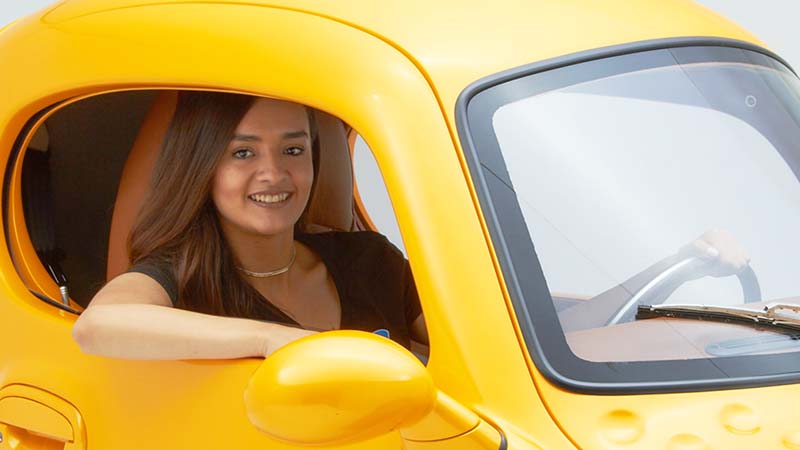
What a one-person cabin allows
Designing around one occupant lets the body be narrow, the chassis light and the frontal area small. Less mass and less drag mean less energy per mile, which is the central concern in any electric vehicle. As a motorcycle-registered three-wheeler, the Sparrow could also use high-occupancy vehicle lanes in California, the lanes Mike had noticed sitting nearly empty while the general lanes crawled.
The team was candid that this is a trade-off. The Sparrow carries a driver and a modest amount of cargo, and nothing else. For the trips it targets, they argued, that is exactly enough.
Range as tested
Driven conservatively at 55 to 65 miles per hour, the team found the prototype capable of about 100 miles on a charge. One documented trip over Pacheco Pass and around Hollister ended with just over 100 miles on the clock and 7 percent remaining in the pack. Driven harder at 60 to 75 miles per hour through the hills and afternoon winds of Central California, they routinely covered more than 80 miles.
Top speed is programmable and was set to 80 miles per hour during testing, which the team judged adequate for regular highway use. These were their own observations from development driving, not certified ratings.