THE SPARROW STORY
Cargo Space in the Sparrow
The Sparrow was designed around one occupant, so its storage was scaled to a commute rather than a family road trip. The archived specification page described room for office essentials and a couple of bags of groceries picked up on the way home.
From the Sparrow archive. Product plans, events and availability described here belong to the original historical period.
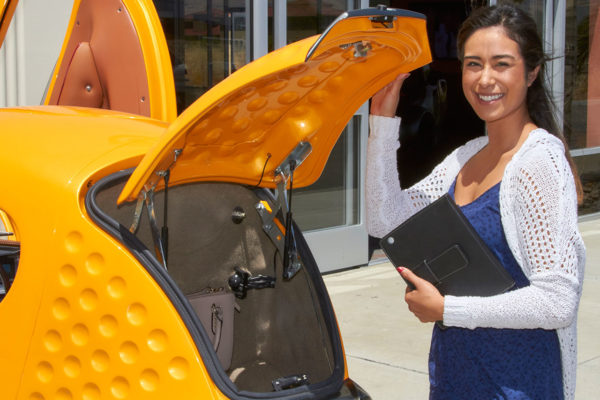
Storage sized for a solo commute
The Sparrow's purpose, as its inventor Mike Corbin described it, was to move one person efficiently. That focus shaped the cargo area. The page did not list a volume figure, but the intent was clear: enough space for a briefcase or laptop bag plus a short stop at the store. Anything larger fell outside the vehicle's brief.
This was not a new concern for the design. During the 1999 to 2003 production years, the original Sparrow was redesigned with a larger trunk and conventional wheels, producing the Generation 2 car that drivers nicknamed the Pizza Butt. The modern prototype carried that lesson forward, treating cargo as a practical daily need rather than an afterthought.