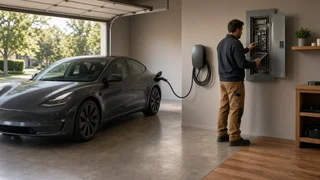
Xcel Energy Home EV Charging Programs: What They Offer and How to Choose
Xcel Energy, an electric utility serving customers in several US states, runs home EV charging programs that can cover the charging equipment, how it is installed, and what you pay for the electricity that goes into your car. The details are not the same everywhere. Program names, eligibility rules, rebate amounts and rate structures differ by state and change over time, so the right option for you depends on where you live and how you charge. This guide explains the types of program Xcel has offered, how they differ, and what to check before you enroll.
The Short Answer
Xcel Energy's home EV charging offerings generally fall into a few groups: programs that supply and install a Level 2 charger for you, electricity rates designed to reward charging at off-peak times, rebates or incentives that offset equipment or wiring costs, and managed charging arrangements where the utility can shift when your car charges. Some states have extra support for income-qualified households. Not every option is offered in every state at the same time, so check what is current in your service territory before you plan an installation.
Where Xcel Energy Programs Apply
Xcel Energy provides electricity in parts of Colorado, Minnesota, Wisconsin, Michigan, New Mexico, Texas, North Dakota and South Dakota. Each state's utility regulators approve programs separately, which is why an offer available to a Colorado or Minnesota customer may not exist, or may look different, for a customer elsewhere. You generally have to be an Xcel electric customer at the address where the charger will be installed to qualify. Renters usually need the property owner's permission before any wiring work.
Types of Home Charging Programs
Charger installation and subscription: In some states Xcel has offered a program, marketed as EV Accelerate At Home, in which the utility arranges installation of a qualifying Level 2 charger and the customer pays a recurring fee on their electric bill instead of buying the equipment outright. These programs typically cover maintenance of the utility-supplied unit. EV or time-of-use electricity rates: These rates charge different prices depending on the time of day. Charging overnight or during other designated off-peak hours costs less than charging during peak demand. Rebates and incentives: Depending on the state and period, Xcel has offered rebates toward a charger, toward home wiring upgrades, or toward the vehicle itself for qualifying customers. Amounts and eligibility vary. Income-qualified support: Some programs provide larger incentives or reduced costs for households that meet income guidelines. Managed charging: Under this arrangement you let the utility or its software schedule or briefly adjust your charging to ease grid demand, usually in exchange for a lower rate or an incentive.
How the Options Differ
Option | What you get | Best suited to | Main trade-off; Utility-installed charger subscription | Level 2 charger installed and maintained, paid through a monthly bill charge | Owners who want a hands-off setup and predictable payments | Ongoing fee; limited choice of charger models; total cost over time may exceed buying your own; Buy your own charger plus rebate | Your choice of charger, with a rebate if eligible | Owners who want specific features or already have a preferred unit | Upfront cost; you arrange the electrician and handle maintenance; Time-of-use or EV rate | Lower electricity price during off-peak hours | Drivers who can plug in overnight or at other off-peak times | Charging during peak hours can cost more than on a standard rate; Managed charging | Incentive or reduced rate for allowing schedule adjustments | Drivers with flexible schedules and predictable daily mileage | Less direct control over exactly when charging happens
These options are not always exclusive. A household might combine a charger rebate with a time-of-use rate, for example. Whether a particular combination is allowed depends on the program rules in your state.
Check Your Vehicle and Home First
Before enrolling in any program, confirm that the charger and your car will work together and that your home can supply the power. A few terms come up repeatedly.
Connector standard: Most non-Tesla EVs sold in the US have used the J1772 connector for Level 2 charging. Tesla's connector has been standardized as SAE J3400, often called NACS, and many automakers are moving to it. Confirm which connector your vehicle uses, or whether an adapter is needed, before accepting a utility-supplied charger. Vehicle compatibility: Any EV that accepts the charger's connector can use it, but your car's onboard charger caps how fast it can take AC power. A high-output wall unit cannot push power faster than the car accepts. Charging power: Level 1 charging uses a standard household outlet and adds range slowly. Level 2 uses a 240-volt circuit and is much faster, which is why most home charging programs focus on it. Actual power depends on the charger rating, the circuit, and the vehicle. Supply capacity: A Level 2 charger needs a dedicated circuit, and your electrical panel must have enough spare capacity for it. Older homes or homes with many large electric appliances may need a panel upgrade or a load-management device, which can add significant cost. Charging protocol: Programs that offer managed charging or time-based rates often require a networked, or smart, charger that can communicate with the utility or receive schedules. A basic charger without connectivity may not qualify for those features.
Estimating Your Charging Costs
Your home charging cost depends mainly on how much energy your car uses and the price of that energy when you charge. Energy consumption is measured in kilowatt-hours (kWh). A rough monthly estimate starts with the miles you drive, divided by your vehicle's efficiency in miles per kWh, which gives the kWh you need. Add a margin for charging losses, then multiply by the applicable rate. On a time-of-use rate, use the off-peak price for the share of charging you can schedule overnight and the peak price for anything you cannot shift. Your current Xcel rate schedule and your vehicle's efficiency rating supply the numbers.
What the Installation Process Typically Looks Like
Confirm eligibility: Check which programs are open in your state and whether your account and home qualify. Assess your electrical system: A licensed electrician, or an installer arranged through the program, evaluates panel capacity, circuit routing, and charger location. Choose your path: Decide between a utility-installed subscription charger or buying your own and applying for any available rebate. Permitting and installation: Electrical work for a Level 2 circuit usually requires a local permit and inspection. Program installers typically handle this; if you hire your own electrician, confirm they will. Enroll in a rate or managed charging option: If you want off-peak pricing, enroll in the relevant rate and set your car or charger to charge during those hours. Submit rebate paperwork: Rebates often have deadlines and documentation requirements, such as receipts or proof of installation, so keep records.
Subscription or Buy Your Own?
A utility subscription suits owners who value convenience, want installation and maintenance handled in one place, and prefer spreading the cost over time. Buying your own charger usually makes more sense if you plan to stay in your home for years, want a specific feature set, or want the lowest long-term cost. To compare, add up the total subscription payments over the period you expect to keep the charger and set that against the purchase price, installation cost and any rebate. Also check whether either path is required to access a particular EV rate or managed charging incentive in your state.
Next Steps
Start by confirming which Xcel Energy EV programs are currently available for your state and account type, since offerings and incentives change. Then verify your vehicle's connector and onboard charging limit, get an electrician's opinion on your panel's capacity, and estimate your monthly charging energy. With those pieces, you can tell whether a utility-installed charger, a self-purchased unit with a rebate, an off-peak rate, or some combination fits your driving and budget.