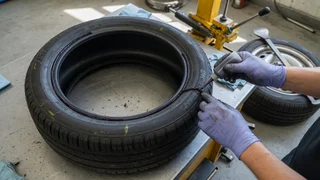
X-Tra Seal Tire Bead Sealer (14-101) Review
A slow leak at the tire bead can be frustrating because the tread and sidewall may look fine while inflation pressure drops steadily over a few days. X-Tra Seal Tire Bead Sealer (14-101) is formulated to address exactly that narrow failure: the interface where rubber meets the wheel flange. This review gives the direct answer for drivers considering the product, explains what it can and cannot reasonably fix, and outlines the inspection steps that make the purchase worthwhile. The goal is to help you match the sealer to the actual tire condition rather than masking unrelated damage.
The direct answer
X-Tra Seal Tire Bead Sealer (14-101) is a practical choice when a tubeless tire loses air through a corroded, lightly pitted, or imperfectly seated bead area. The sealer is a rubber-compatible coating that fills small voids between the tire bead and the wheel rim after demounting and cleaning. It is not a puncture repair product, and it will not correct a bent rim, cracked tire casing, faulty valve stem, or porous casting. Used as directed, it is appropriate for bead-seat leaks that disappear when the mating surfaces are clean but return once the wheel flexes in service.
The immediate question for most shoppers is whether this product deserves a place in the garage before a leak is diagnosed. The answer depends on conditions you can check at home. A tire that requires frequent air top-ups despite no visible nail or screw often points to a bead leak, especially after new tires are installed or a vehicle sits through wet weather. In that situation, a bead sealer is a reasonable repair material rather than a guess. If the wheel lip is heavily rust-scaled or visibly deformed, sealing compound alone is unlikely to hold reliably.