Why Does Leather Upholstery Develop Creases?
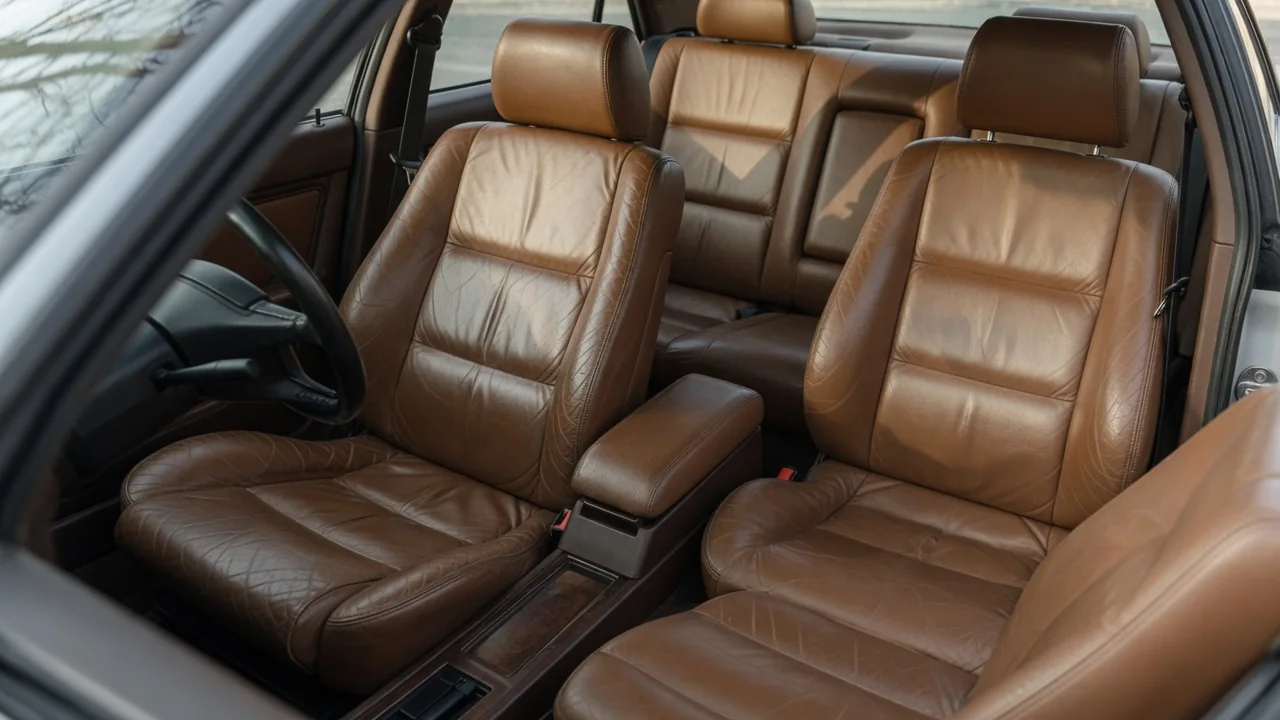
Leather upholstery creases because it is a flexible natural material stretched over seat foam that compresses and rebounds every time someone sits down. Over many cycles the hide relaxes, the cushion beneath it settles, and folds form where the surface bends most. Car leather seat creases are largely a normal result of use. How deep they get and how quickly they appear depend on the leather, the seat design, how the seat is used, and how the surface is cleaned and protected.
Material movement: how leather stretches, folds and relaxes
Leather is a network of interwoven collagen fibers. The outer grain layer is dense and tight, while the layer beneath it, the corium, is looser and more open. During tanning and finishing, oils and lubricants are worked into this fiber structure so the fibers can slide against one another. That internal movement lets leather bend without breaking. It is also why leather does not behave like a rubber band. When leather is stretched, some fibers rearrange and stay in their new position instead of fully returning.
On a seat, the cover is pulled over a foam cushion and fastened to the frame under tension. When a person sits, the foam compresses and the leather follows it, stretching across raised areas and bunching where the surface curves inward. When the load is removed, the foam springs back faster and more completely than the leather. The small amount of length the cover gained has to go somewhere, so it gathers into soft wrinkles. When this happens in the same places again and again, those wrinkles become defined creases.
Most automotive leather also carries a pigmented, flexible topcoat that resists stains and wear. That coating bends with the hide, but every fold concentrates strain along a line. If the leather underneath is stiff, the fold becomes sharper. The finish along a crease line is where cracking or color loss often begins. A crease is therefore a change in the material's shape, while a crack is damage to the finish or the grain layer itself.
Use: where and why seats crease faster
Creases follow the load. The seat cushion, where body weight concentrates, and the lower part of the backrest usually show them first. The outer side bolster of the driver's seat is another common area. The driver slides across it when getting in and out, which adds friction and twisting to the ordinary up-and-down compression. For the same reason, a seat used daily by one person typically creases sooner than a rarely used rear or passenger seat in the same vehicle.
How the seat is used matters as much as how often. Heavier loads deepen compression, and sitting in the same position on every trip folds the leather along the same lines. Several habits add stress at the fold: dropping into the seat, kneeling on it, or sliding across the bolster with stiff denim, rivets, or hard objects in pockets. Heat from sunlight or seat heaters can soften the cover while it is under load. Over the long term, heat also contributes to drying of the leather and its finish.
The structure under the leather also plays a role. Cushion foam gradually loses some height and resilience with age and use. As it settles, the cover is no longer held as tightly, so slack appears even if the leather itself has not stretched much. Seat construction varies between vehicles, including stitching layout, padding thickness, and whether a seat uses perforated or quilted panels. As a result, the location and pattern of creases are partly design-specific, not purely a sign of how the car was treated.
Care: slowing creases without promising to stop them
Care cannot prevent leather from folding, because folding is how it accommodates the occupant. What care can influence is how supple the material stays and how well the finish survives repeated bending. Dirt and fine grit settle into crease lines and act as an abrasive when the leather flexes. Regular, gentle cleaning with a product intended for automotive leather is therefore one of the most useful steps. Wiping with a damp microfiber cloth between deeper cleanings removes surface dust and body oils before they build up.
Conditioning is often presented as the main answer, but its effect depends on the leather. Many modern automotive leathers have a sealed, coated surface that absorbs relatively little product. On these leathers, heavy or frequent conditioning can mainly leave residue that attracts dirt. Less heavily finished leathers may benefit more from occasional conditioning. The safest approach is to follow the owner's manual or the upholstery maker's guidance and to test any product on a hidden area first. Avoid household solvents, alcohol-based cleaners and harsh degreasers, which can dry out or damage the finish.
Limiting heat and ultraviolet exposure also helps. Parking in shade and using a windshield sunshade reduce surface temperature and slow fading and drying of the finish. Inside the car, small habits make a difference. Ease into the seat instead of dropping into it, empty back pockets of hard objects, and avoid kneeling or standing on seats while loading cargo.
Practical implications and limits
Light creasing on a used leather seat is generally expected wear. By itself, it is not evidence of a defect or neglect. It is more useful to judge creases by their condition than by their presence. Soft folds that flatten when the seat is unoccupied and show intact color are cosmetic. Warning signs include lines that look whitened, feel rough, have flaking finish or show splits. These indicate that the surface is breaking down, and such areas usually worsen with continued flexing.
Once creases have formed, they can seldom be removed completely. Cleaning and appropriate conditioning may soften their appearance, but the rearranged fiber structure remains. Methods that use direct heat or steam to relax leather carry a real risk of shrinking, hardening or damaging the finish, especially on coated automotive leather. These methods are best left to upholstery professionals. When slack comes from settled foam, restoring or replacing the cushion padding addresses the cause more directly than treating the leather surface. Damaged finish along crease lines can often be repaired and recolored, though the result depends on the leather type and the extent of wear.
Expectations should also reflect what the seat is actually made of. Many vehicles combine genuine leather on the seating surfaces with synthetic material on the sides and backs. Some upholstery described as leather-like is entirely synthetic. These materials crease and age differently, and care products suitable for one may not suit another. Check the specification in the vehicle's documentation before choosing products or repairs. This avoids treating the wrong material and gives a realistic baseline for how a particular seat will look over the years.