Why Does a Fully Loaded Road-Trip Car Need Extra Checks?
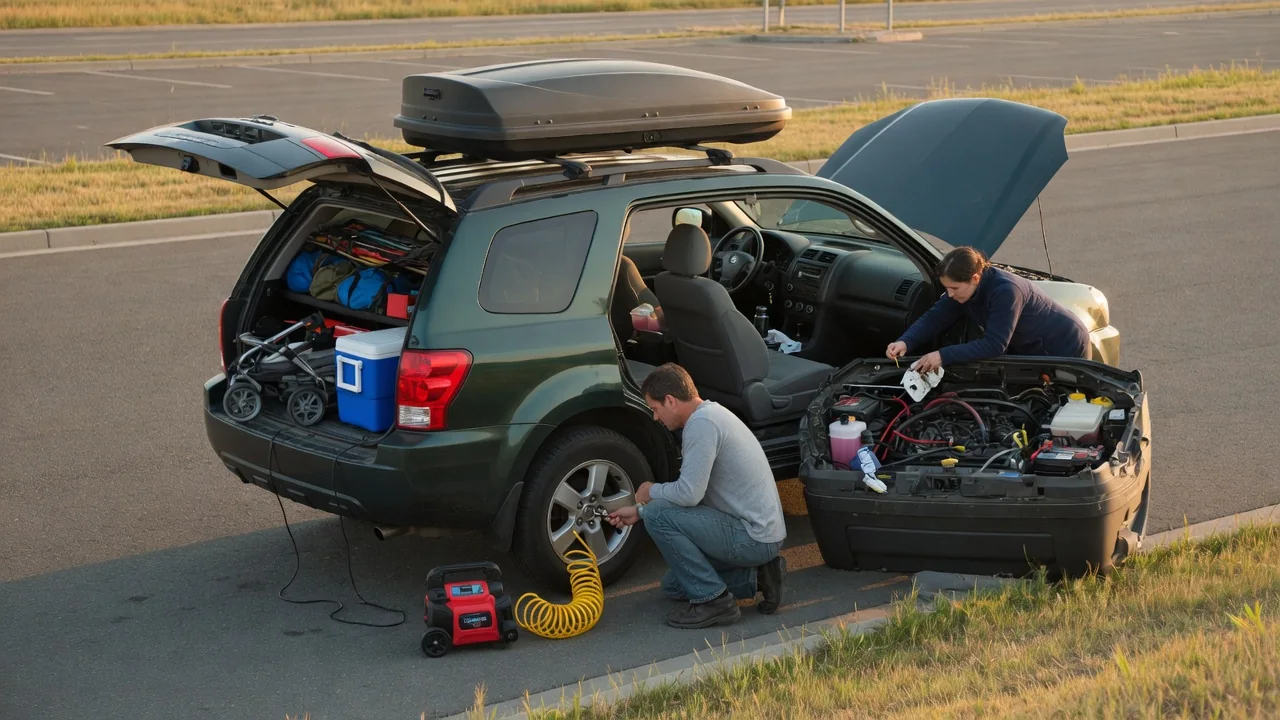
A car packed with passengers, luggage, coolers, and gear does not drive like the car you take to work every day. The added weight changes how the tires carry the load, how objects inside the cabin move during sudden maneuvers, and how much distance the brakes need to stop. That is why a fully loaded road-trip car needs extra checks before it leaves. This guide covers the three areas that matter most and explains why each one needs attention.
Tire Pressure: Matching Inflation to the Real Load
Tires carry the vehicle's weight mainly through the air pressure inside them, not through the rubber alone. When you add a significant amount of people and cargo, each tire has to support more mass. If the pressure stays at a level suited to light daily driving, the sidewalls flex more with every rotation. That extra flexing generates heat. Heat is one of the main threats to a tire's internal structure, especially during hours of sustained highway driving in warm weather.
Start with the tire and loading information placard, usually on the driver's door jamb, and the owner's manual. These list the recommended cold inflation pressure set by the vehicle manufacturer. Some vehicles specify a separate, higher pressure for full-load or high-speed driving, while others use a single value. The number molded into the tire sidewall is the maximum pressure the tire can hold. It is not a target for normal use and should not replace the vehicle's recommendation.
When you check matters as much as the number. Check pressure cold, before driving or after the car has been parked for a while, because driving warms the air and raises the reading. The best moment is after the car is packed but before you leave, so you can adjust for the actual load. A tire pressure monitoring system is a useful warning tool, but many systems alert only after pressure has dropped noticeably, so a gauge gives a more precise reading. While you are at each wheel, look at the tread and sidewalls for cuts, bulges, or uneven wear.
Cargo Restraint: Keeping Mass Where You Put It
Loose items follow simple physics. During hard braking or a collision, an unsecured object keeps moving at the speed the car was traveling until something stops it. Inside a cabin, that something may be a seatback, the dashboard, or a person. A heavy suitcase, a toolbox, or a full cooler can turn a situation the driver could otherwise manage into one that causes injuries. The more you pack, the more potential projectiles you carry.
Good cargo restraint starts with placement. Put heavier items low and as far forward in the cargo area as practical, ideally against the back of a rear seat that is upright and latched. Lighter, softer items can go on top. Keeping the load below the top of the seatbacks helps preserve rear visibility and makes it less likely that items slide into the passenger area. Many vehicles have tie-down points in the cargo floor, and straps or a cargo net anchored to them help keep things from shifting. In SUVs and wagons, a cargo barrier adds another layer of protection if one is available for the vehicle.
Roof boxes and racks need their own attention. The vehicle and the rack each have a load limit, and the lower of the two applies. Weight on the roof raises the center of gravity, which can make the car feel less settled in turns and crosswinds. Before leaving, confirm that the rack mounts are tight, the box is closed and locked, and the straps are not fraying or flapping. Check everything again after the first stretch of driving, because loads often settle.
Braking Margin: Planning for Longer Stops
Brakes stop a car by turning its motion into heat. A heavier car carries more energy at any given speed, so the brakes must absorb and shed more heat to bring it to a stop. Tire grip rises somewhat with load, but not enough to fully cancel the extra mass. In practice, a loaded car usually needs more distance to stop, and its brakes work harder doing it. On long descents, repeated or prolonged braking can heat the system until it loses effectiveness, a condition commonly called brake fade.
Before a loaded trip, confirm that the brake fluid level is within the marked range on the reservoir, that the pedal feels firm, and that there is no grinding, squealing, or pulling to one side. On the road, leave more following distance and start braking earlier. On long downhill grades, use a lower gear so engine braking takes some of the work off the brakes. Anti-lock brakes help you keep steering control during hard stops, but they do not change the physics of extra weight.
Practical Implications and Limits
Every vehicle has a weight limit. Most list a maximum combined weight of occupants and cargo on the door-jamb placard. Exceeding it can overload the tires, suspension, and brakes at the same time, and careful inflation or packing cannot fully make up for it. Estimating the weight of passengers and luggage before the trip shows whether the plan is realistic or whether some items should stay home or be shipped separately. Towing a trailer brings its own limits, including tongue weight, which are outside the scope of this guide.
General advice also has limits. Recommended pressures, payload ratings, roof load limits, and tie-down locations vary by vehicle, trim, and tire size, so the owner's manual and placard remain the final authority. Extra weight also changes steering response and body motion differently from one design to another, so the same load can feel very different in two vehicles. Loaded car trip checks reduce risk but cannot guarantee safety. Treat the packed car as a heavier vehicle that needs more space and time, and use rest stops during long days to look over the load and the tires again.