How to Prepare Your Car for a Long Road Trip: A Practical Maintenance Guide

The Short Answer
To prepare a car for a long road trip, first bring it up to date on its manufacturer's maintenance schedule. Then inspect the items most likely to fail under sustained highway driving, heavy loads or temperature extremes: tires, fluids, brakes, battery, belts and hoses, lights, wipers and the cooling system. Finally, pack a basic emergency kit. Exactly what your car needs depends on its make, model year, powertrain and current mileage, so the owner's manual and service history matter more than any generic checklist.
Prepare early rather than the day before you leave. If an inspection turns up a worn part, a week or more of lead time lets you order the part, schedule a repair and drive a short distance afterward to confirm everything works.
Start With the Maintenance Schedule
Every vehicle has a recommended service schedule. It is usually found in the owner's manual, a separate maintenance booklet or the infotainment or manufacturer app on newer cars. The schedule lists intervals, by mileage, time or both, for oil changes, filter replacements, fluid flushes and inspections. Many manufacturers also list a separate severe-service schedule. It often applies to towing, carrying heavy loads, driving in extreme heat or cold, or long periods in dusty conditions, which are common situations on road trips.
Compare your car's current mileage, plus the miles you expect to cover on the trip, against the next due services. If an oil change or other service would come due partway through the drive, it is usually simpler to have it done before you leave than to find a shop on the road. If your dashboard shows an active service reminder or warning light, have it diagnosed before departure.
Fluids
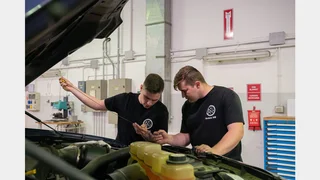
Fluids lubricate, cool and transmit force throughout the vehicle. Several can be checked at home with the engine off and the car parked on level ground. Follow the manual's instructions for when to check each one, since some must be checked hot and others cold.
Engine oil: Check the level on the dipstick, or through the electronic oil-level display on cars that lack a dipstick. Note how close the car is to its next oil change. Coolant (antifreeze): Check the level in the overflow reservoir only when the engine is cool. Never open a hot radiator or pressurized coolant cap. Brake fluid: Check the reservoir level. A low level can signal worn brake pads or a leak and is worth having inspected. Transmission fluid: Some vehicles have a dipstick and many newer ones do not. If yours is sealed, a shop can check it. Power steering fluid: This applies only to cars with hydraulic power steering. Many newer vehicles use electric steering and have no such fluid. Windshield washer fluid: Top it off, and consider a formula suited to the temperatures and bug conditions you expect.
Also look under the car where it is normally parked. Fresh drips or puddles, especially green, orange, pink, red or brown fluid, are a reason to have the vehicle inspected before a long drive.
Tires
Tires deserve particular attention because sustained highway speeds, heat and extra weight all increase the stress on them.
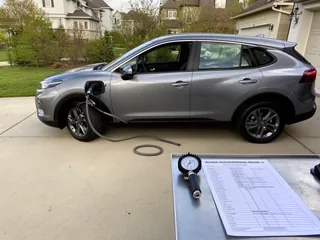
Pressure: Inflate the tires to the pressure on the placard inside the driver's door jamb, not the maximum pressure molded into the sidewall. Check the pressure when the tires are cold. Some vehicles list a higher recommended pressure for full loads. Tread depth: Look for the tread wear indicator bars molded into the grooves. When the tread is flush with these bars, the tire needs replacing. In the common penny test, you insert a penny head-first into a groove. If you can see the top of Lincoln's head, the tread is worn. Condition: Inspect the sidewalls and tread for cracks, bulges, cuts, embedded objects or uneven wear. Uneven wear can point to alignment or suspension problems. Age: Tires degrade over time even with good tread remaining. The manufacture date is coded on the sidewall, and a tire shop can interpret it. Spare: Check that the spare tire, if your car has one, is inflated and that the jack and lug wrench are present. Many newer cars come with a tire inflator and sealant kit instead, so confirm which yours has and that the sealant has not expired.
Brakes
Long trips can involve mountain descents, heavy traffic and a loaded vehicle, all of which demand more from the brakes. Warning signs include squealing or grinding, a pulsing pedal, a soft or sinking pedal, the car pulling to one side when braking, or a brake warning light. If you notice any of these, or if the brakes have not been inspected recently, have a shop measure pad thickness and check the rotors and fluid before you go.
Battery and Charging System
A weak 12-volt battery may start the car reliably at home and still fail after a night in the cold or the heat far from home. Many auto parts stores and repair shops can load-test a battery and check the alternator's charging output. Look at the terminals for white or greenish corrosion and make sure the cables are tight. Slow cranking, dimming lights or a battery warning light are reasons to test the system before departure.
Belts, Hoses and Cooling System
The serpentine belt drives accessories such as the alternator and, on many engines, the water pump. Look for cracking, fraying, glazing or missing chunks. Coolant hoses should feel firm, not brittle, spongy or swollen, and they should show no leaks at the clamps. Because overheating is a common cause of roadside breakdowns in hot weather, a cooling system inspection is worthwhile if your route crosses deserts or long grades. Timing belts, on engines that use them, are hidden and have a replacement interval in the maintenance schedule. Check whether yours is due.
Lights, Wipers and Visibility
Lights: With a helper, check the headlights (low and high beam), taillights, brake lights, turn signals, hazard lights and reverse lights. Wiper blades: Replace them if they streak, chatter or leave unwiped areas. Also check the rear wiper if your car has one. Windshield: Have small chips assessed before the trip, since temperature changes and road vibration can turn a chip into a crack. Cabin air filter and HVAC: A clogged cabin filter reduces airflow. Make sure the air conditioning and defroster both work before driving through hot or wet conditions.
Considerations for Hybrids and Electric Vehicles
Hybrids still need most of the conventional checks above, including engine oil, coolant, tires and brakes. Some hybrids also have a separate cooling circuit or an air intake for the high-voltage battery that should be kept clear. Electric vehicles have no engine oil or belts, but tires, brakes, coolant for the battery thermal system, cabin filter, wipers and the 12-volt battery still matter. EVs are often heavier than comparable gasoline cars, which can increase tire wear.
For EV road trips, plan charging stops in advance. Confirm that you have the apps, accounts or adapters needed for the charging networks along your route. Allow for reduced range at sustained highway speeds, in cold weather and with heavy loads. Your vehicle's trip planner or a charging-network app can help estimate this. If you plan to carry a portable charging cable, make sure it is in the car.
Loading, Towing and Roof Cargo
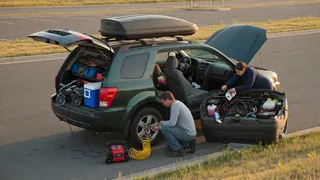
Check your vehicle's payload and towing ratings, which are found on the door-jamb placard and in the manual. Do not exceed them. Rooftop carriers and bike racks add drag and change handling, and roof racks have their own load limits. If you are towing, inspect the hitch, safety chains, trailer lights and the trailer's own tires. Towing usually means following the severe-service maintenance schedule.
Emergency Kit and Documents
Registration, proof of insurance and roadside assistance information; Phone charger or power bank; Flashlight with spare batteries; Jumper cables or a portable jump starter; Tire pressure gauge and, ideally, a portable inflator; Basic first-aid kit; Reflective warning triangles or flares; Water, nonperishable snacks and any necessary medications; Blanket and weather-appropriate clothing, plus an ice scraper and small shovel for winter routes; Offline maps or a downloaded navigation route for areas with weak cell coverage
What You Can Check Yourself vs. What to Leave to a Shop
Item | Reasonable DIY check | Better handled by a shop; Tire pressure and tread | Yes | Alignment, rotation, replacement; Engine oil level | Yes | Oil and filter change, if you are not equipped for it; Coolant and washer fluid levels | Yes, coolant only when the engine is cool | Coolant flush, leak diagnosis; Lights and wipers | Yes | Headlight aiming, electrical faults; Battery terminals | Visual check | Load test, charging system test; Brakes | Listen and feel for symptoms | Pad, rotor and fluid inspection; Belts and hoses | Visual check where visible | Timing belt, hidden hoses; Warning lights | Note them | Diagnosis with a scan tool
During the Trip
Preparation does not end when you pull out of the driveway. Recheck tire pressures every few days, preferably in the morning before driving. Watch the temperature gauge and dashboard warnings, especially on long climbs or in heat. Pay attention to new noises, vibrations or smells. If a warning light comes on, consult the owner's manual. A flashing check-engine light or a high-temperature warning generally means you should stop safely and get help rather than keep driving.
Bottom Line
The most effective road trip preparation is to get current on the service schedule, then inspect the systems that endure the most stress on a long drive: tires, fluids, brakes, battery, cooling and visibility. Do the simple checks yourself, have a shop handle anything that needs measurement or tools, leave enough time to fix what you find, and carry a basic emergency kit. For any detail specific to your vehicle, from tire pressure to fluid type to service intervals, follow the owner's manual for your model year and powertrain.