Daily Vehicle Maintenance Inspection Checklist: What to Check Before You Drive
The short answer
A daily vehicle inspection is a quick look at the items most likely to change from one day to the next or to cause an immediate safety problem: tires, lights, visible leaks, warning lights, brakes, wipers and anything loose or damaged. It typically takes a few minutes and requires no tools beyond a tire gauge. It does not replace the service schedule in your owner's manual, which covers oil changes, filter replacements, fluid flushes and component inspections at set mileage or time intervals.
One qualification changes the answer for some readers. For most private car owners in the US, a daily check is a good habit rather than a legal requirement. Drivers of commercial motor vehicles are in a different position: federal rules require commercial drivers to be satisfied the vehicle is in safe operating condition before driving and, in many cases, to complete a written driver vehicle inspection report. If you drive for work in a regulated commercial vehicle, follow your employer's inspection form and the applicable federal and state rules rather than a general checklist.
How a daily check differs from scheduled maintenance
Aspect | Daily inspection | Scheduled maintenance; Purpose | Catch sudden problems before driving | Prevent wear-related failures over time; Who does it | The driver | Owner or service technician; Time needed | A few minutes | Varies by service item; Typical items | Tire condition, lights, leaks, warning lights, wipers, brake feel | Oil and filter changes, brake pad replacement, coolant and transmission fluid service, belt and hose inspection; Guided by | Common sense and the vehicle's warning systems | The manufacturer's maintenance schedule for your model, engine and driving conditions
Walk-around checklist (before getting in)
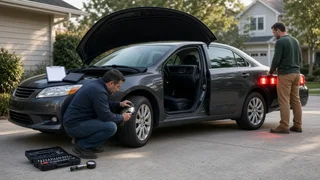
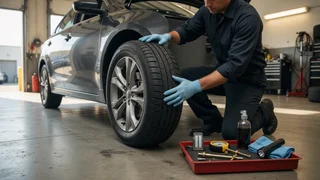
Tires: look for a tire that sits visibly lower than the others, cuts or bulges in the sidewall, embedded objects and uneven wear. A bulge in the sidewall is a reason not to drive on that tire. Tire pressure: check with a gauge when tires are cold. The correct pressure is printed on the placard usually found on the driver's door jamb, not the maximum figure molded into the tire sidewall. Many drivers check pressure weekly rather than daily, but a visual check each day is worthwhile. Under the vehicle: look at the ground where the car was parked for fresh drips or puddles. Color can hint at the source, though it is not a reliable diagnosis on its own; clear water under the front passenger area is often normal air-conditioning condensation. Lights and lenses: confirm lenses are intact and clean. A second person or a reflective surface helps when checking brake lights. Glass and mirrors: look for cracks or chips that block your view and make sure mirrors are secure and clean. Body and attachments: check for loose trim, a hanging exhaust, an unlatched hood or trunk, and anything stuck under the bumpers. Windshield wipers: look for torn or stiff blade rubber.
Inside the vehicle
Warning lights: when you start the vehicle, most dashboard lights illuminate briefly as a self-test and then go out. Any light that stays on, especially oil pressure, brake system, charging system or a flashing check-engine light, deserves attention before a long drive. Gauges: confirm the fuel level is adequate and, on vehicles with a temperature gauge, that it moves toward its normal range as the engine warms. Brakes: the pedal should feel firm, not soft or sinking. On the first stop, listen for grinding and feel for pulling to one side. Parking brake: confirm it holds and fully releases. Horn, wipers and washers: a quick test confirms they work. Seat belts and mirrors: belts should latch and retract; adjust mirrors before moving. Visibility: clear frost, fog, snow or debris from all windows and lights, not just a patch of the windshield.
Fluid checks: what is daily and what is not
Opening the hood every day is not necessary for most modern passenger cars, and some manufacturers recommend checking engine oil at regular intervals or at fuel stops rather than daily. A practical approach is to watch for leaks and warning lights daily and check fluid levels on a regular routine, or sooner if something changes.
Engine oil: check with the engine off and the vehicle on level ground, following the procedure in your owner's manual. Some vehicles use an electronic oil level display instead of a dipstick. Coolant: check the level at the overflow reservoir only when the engine is cool. Never open a hot radiator or pressurized coolant cap. Brake fluid: the reservoir usually has minimum and maximum marks. A falling level can indicate pad wear or a leak and is worth having inspected. Windshield washer fluid: easy to top up and important for visibility, particularly in winter. Power steering fluid: applies only to vehicles with hydraulic power steering; many newer vehicles use electric steering with no fluid to check.
Differences by vehicle type
The core walk-around applies to almost any road vehicle, but some items depend on the powertrain. Battery-electric vehicles have no engine oil, and many have no conventional transmission fluid to check, though they still have brake fluid, coolant for the battery and electronics, and washer fluid; a daily check of the state of charge and any charging-system alerts replaces the fuel check. Hybrids combine both sets of concerns. Diesel vehicles may have an additional exhaust fluid reservoir with its own warning. Trucks and SUVs used for towing benefit from checking the hitch, safety chains, trailer lights and trailer tires before each trip. Always defer to the owner's manual for your specific model year and powertrain.
When a finding means you should not drive
A visibly flat tire or a sidewall bulge; A soft or sinking brake pedal, or a red brake warning light that stays on; An oil pressure warning light; A flashing check-engine light, which on many vehicles signals a misfire that can damage emissions components; A temperature gauge in the hot zone or a coolant warning; A strong smell of fuel or a fresh fuel puddle; Brake lights or headlights that are not working when you need to drive at night or in poor visibility
Less urgent findings, such as a worn wiper blade, low washer fluid or a slowly losing tire, can usually be handled the same day or scheduled soon, but noting them prevents small issues from turning into roadside problems.
A compact printable version
DAILY VEHICLE CHECK; [ ] Tires: no flats, bulges or damage; [ ] Ground: no fresh leaks; [ ] Lights and lenses intact; [ ] Glass and mirrors clear and secure; [ ] Wipers in good condition; [ ] Dash warning lights go out after start; [ ] Fuel or charge level adequate; [ ] Brake pedal firm, parking brake works; [ ] Horn, wipers, washers work; [ ] Seat belts latch; REGULAR (e.g., weekly or at fuel stops); [ ] Tire pressure (cold, per door placard); [ ] Engine oil level; [ ] Coolant level (engine cool); [ ] Brake fluid level; [ ] Washer fluid
Bottom line
A daily inspection is a short, driver-performed check focused on safety-critical items that can change overnight: tires, lights, leaks, warning lights, brakes and visibility. Keep fluid-level checks on a regular routine, follow your manufacturer's schedule for actual maintenance, and treat any red warning light, brake problem or damaged tire as a reason to stop and get the vehicle inspected before driving.