Vehicle Inspection Checklist: What to Check Before a State Inspection
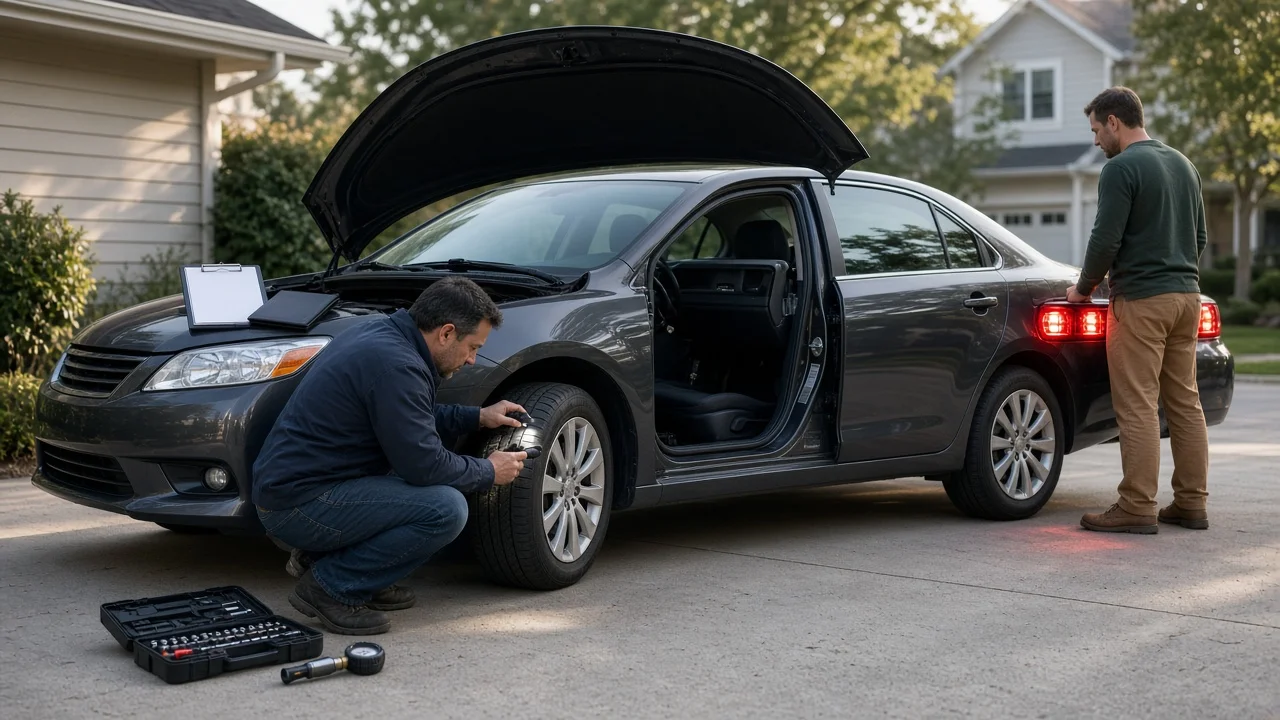
A vehicle inspection checklist is a list of the items an inspector is likely to examine during a mandatory roadworthiness or emissions check. You can use it to inspect your own car beforehand and fix obvious problems before the official appointment. In the US, the main qualification is that inspection rules are set at the state level, and sometimes at the county level. Some states require periodic safety inspections, some require only emissions testing, some require both, and some require neither for most private passenger vehicles. Treat the checklist below as a general preparation tool, and confirm the exact requirements with your state's motor vehicle or environmental agency.
What the checklist covers and what it does not
A self-inspection checklist helps you catch common, easy-to-spot faults such as a burned-out bulb, a cracked windshield or a dashboard warning light. It does not replace the official inspection, and it cannot tell you whether your vehicle meets your state's specific limits. For example, a checklist cannot confirm the minimum tire tread depth, the allowable windshield damage, the window tint limits or the emissions thresholds that apply where you live. Those values differ by state, and they were not available for this guide. Check them against your state's official inspection standards.
Safety inspection items
States that require safety inspections generally focus on systems that affect control, visibility and the ability of other road users to see you. The exact list and the pass or fail criteria depend on the state and on the vehicle type.
Lights: headlights on low and high beam, taillights, brake lights including any center high-mounted brake light, turn signals front and rear, hazard flashers, reverse lights and the license plate light; Horn: sounds clearly when pressed; Windshield and glass: no damage in the driver's line of sight that your state considers disqualifying, and windows tinted only within local limits; Wipers and washers: blades clear the glass without streaking, and the washer fluid sprays; Mirrors: present, secure and not broken; Tires: adequate tread, no visible cords, bulges or cuts, and wheels secured with all lug nuts present; Brakes: the pedal feels firm, the car does not pull to one side under braking, there is no grinding noise, and the parking brake holds the vehicle; Steering and suspension: no excessive play in the steering wheel and no clunking over bumps; Seat belts: present for each seating position, latch securely and retract properly; Exhaust system: no loud leaks, holes or loose components; Dashboard warning lights: note any that remain lit after the engine starts, especially brake, airbag or check-engine lights; Body and fittings: no loose panels or sharp protrusions, and doors open and close properly
Emissions inspection items
Where emissions testing applies, many programs test newer vehicles by connecting to the onboard diagnostics port, known as OBD-II, rather than measuring tailpipe gases directly. The system reports stored fault codes and whether the car's self-tests, called readiness monitors, have completed. Older vehicles and some programs may still use other test methods. Eligibility, exemptions and test methods vary by state and by area within a state.
Check-engine light: if it is on, have the cause diagnosed first, because an illuminated malfunction indicator commonly leads to a failed OBD-based test; Recent repairs or battery disconnection: clearing codes or disconnecting the battery can reset readiness monitors, and the car may need normal driving before the monitors report as ready; Gas cap: present, the correct type, and sealing properly; Visible smoke: blue, white or black smoke from the exhaust points to a problem worth addressing before testing; Modified emissions equipment: removed or altered components can cause a failure where they are checked
Documents to bring
Inspection stations usually need to identify the vehicle and its owner. Commonly requested items include the vehicle registration, proof of insurance and a driver's license, along with any inspection notice you received. The required documents and payment methods depend on the state and the station, so confirm them in advance. Fees were not available for this guide.
Pre-inspection versus state inspection
A pre-inspection is the check you or a mechanic carry out before the official appointment. A state inspection is the official test performed by a licensed station or a state-run facility, and it produces a pass or fail result. The pre-inspection exists to reduce the chance of a failure and a return visit. Doing your own check does not change the official criteria. It only helps you spot issues earlier.
Simple self-inspection form template
If you are looking for a checklist form you can print or edit, the plain-text template below can be pasted into a word processor or spreadsheet. In a spreadsheet, put each line in its own row and use separate columns for the item, the result and notes. Add or remove items to match your state's requirements.
VEHICLE SELF-INSPECTION FORM; Vehicle (year/make/model): ____; VIN: ____ Plate: ____; Odometer: __ Date checked: __; ITEM PASS FAIL NOTES; Headlights (low/high) [ ] [ ] ____; Taillights [ ] [ ] ____; Brake lights [ ] [ ] ____; Turn signals / hazards [ ] [ ] ____; Plate light [ ] [ ] ____; Horn [ ] [ ] ____; Windshield / glass [ ] [ ] ____; Wipers / washers [ ] [ ] ____; Mirrors [ ] [ ] ____; Tires / wheels [ ] [ ] ____; Brakes / parking brake [ ] [ ] ____; Steering / suspension [ ] [ ] ____; Seat belts [ ] [ ] ____; Exhaust (leaks/noise) [ ] [ ] ____; Warning lights off [ ] [ ] ____; Gas cap [ ] [ ] ____; DOCUMENTS; Registration [ ]; Proof of insurance [ ]; Driver's license [ ]; Inspection notice (if any) [ ]; Repairs needed before inspection:
Gaps to check for your state
This guide does not include state-specific details, because they were not available. Before your appointment, confirm whether your vehicle needs a safety inspection, an emissions test or both, as well as how often inspections are required, any exemptions based on vehicle age or type, the numeric limits for tires and glass, the fee, the documents required and the process for retesting after a failure. Your state's official inspection program is the authoritative source for all of these.