Why Does a Car Sound Louder With Windows Open?
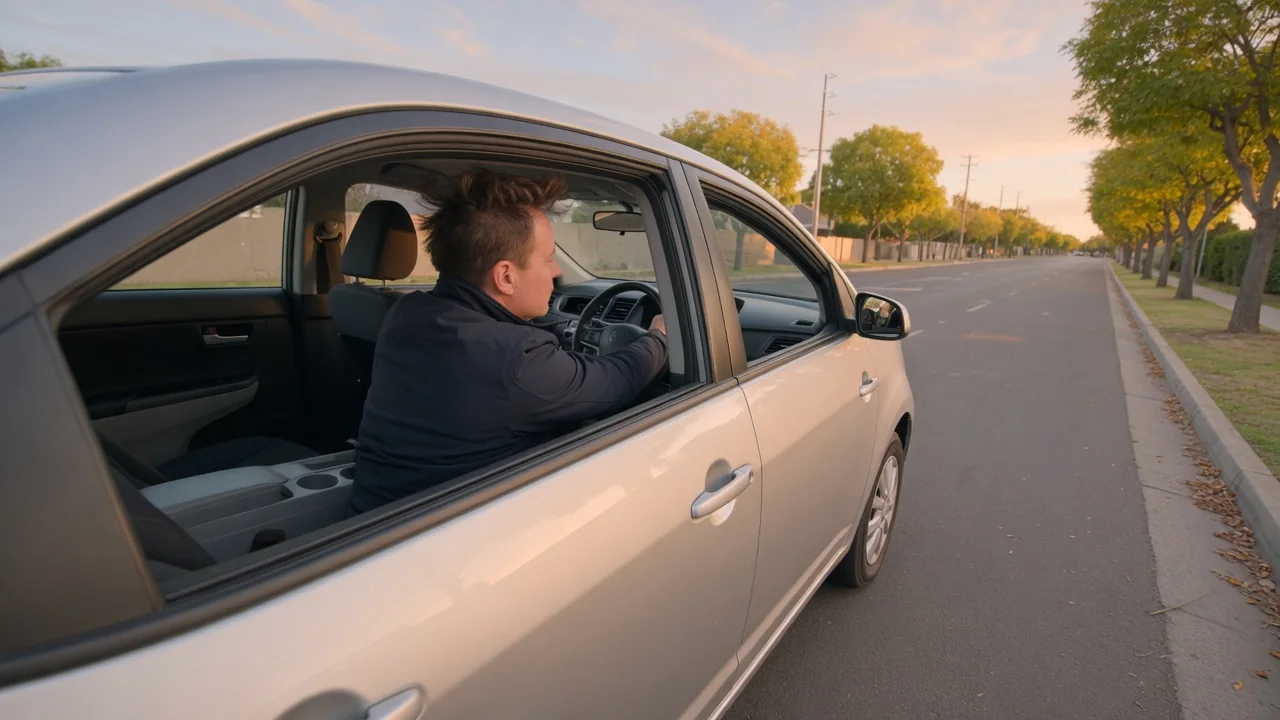
Many drivers wonder why a car sounds louder with windows open, even at modest speeds. The short answer is that glass and door seals form part of the cabin's sound barrier, and lowering a window removes that barrier while letting moving air interact directly with the interior. Airflow, tires, and the surroundings all contribute to what you hear.
Wind buffeting
Wind buffeting is the deep, pulsing thump that appears when one window is lowered at speed. Air rushing past the opening sheds small vortices along its edge, and those swirls repeatedly push into and pull out of the cabin. The interior behaves like the air inside a bottle when you blow across its neck, so the pressure pulses reinforce one another at a low frequency. You feel this as much as hear it, often as a pressure sensation in the ears rather than a conventional sound.
The effect is usually strongest with a single rear window open, because the opening sits farther back along the body where the airflow has more distance to build an unstable layer. Cracking a second window, especially on the opposite side, often breaks the pulsing by giving the pressure somewhere to escape. Body shape, mirror design, window size, and cabin volume all change the speed at which buffeting begins, so a boxy SUV and a low sedan can behave very differently under the same conditions.
Tire noise
Tires generate noise constantly as tread blocks strike the pavement, compress trapped air, and release it. With the windows closed, much of that sound is blocked by glass, door seals, and insulation in the floor and wheel wells, leaving mainly the lower-pitched hum that travels through the structure. Opening a window gives the airborne portion a direct path into the cabin, so the hiss and roar from the contact patches arrive with far less filtering, particularly from the tire nearest the open glass.
Road surface makes this easy to notice. Coarse chip seal or grooved concrete produces a sharp, grainy roar, while fresh smooth asphalt sounds much softer. Wet pavement adds a distinct spray and sizzle that is barely audible when sealed inside. Tread pattern, tire width, wear condition, and inflation all shape the sound, so two vehicles on the same road may differ noticeably. An aggressive all-terrain tread generally sounds more pronounced through an open window than a touring tire designed for quiet running.
Comfort settings
How you set the windows and ventilation changes the noise considerably. A window lowered only an inch or two can produce a whistle as air squeezes through the narrow gap, while a fully lowered window may be quieter in pitch but louder overall. Opening front windows together usually gives steadier airflow than opening one rear window alone. A sunroof behaves similarly, and many include a pop-up deflector at the leading edge intended to disturb the airflow and reduce low-frequency pulsing.
The climate system offers a quieter alternative when fresh air is the goal. Running the fan with the outside-air setting brings in ventilation through ducts designed to limit noise, although higher fan speeds add their own rush of air. Some vehicles include window-venting features or allow slight opening of all windows from the key fob, and the available options vary by make and trim. The owner's manual is the reliable place to confirm what a particular vehicle offers and how those features are intended to be used.
Everyday Use and Observations
In everyday driving, speed determines which sounds dominate. Around town, an open window mostly admits the surroundings: other vehicles, construction, sirens, and your own engine and exhaust reflecting back from nearby surfaces. Passing a parked car, a guardrail, or a tunnel wall produces a brief swell because hard surfaces bounce sound straight back at the opening. On the highway, airflow and tire roar rise sharply and tend to mask everything else, which is why conversation and audio become harder to follow.
Open windows also reveal sounds the cabin normally hides, which can be useful. A rhythmic scrape from a brake, a clicking while turning, a flapping underbody panel, or an exhaust leak may be far more obvious with the glass down. Driving slowly past a wall with the windows lowered is a common way to listen for such noises. Hearing more does not mean something is wrong, however, since normal mechanical sounds are simply less muffled. What matters is whether a noise is new or changing.
Limits and Next Steps
There are limits to what can be done about open-window noise, because much of it comes from basic physics rather than a defect. No adjustment removes buffeting entirely on a vehicle whose shape encourages it, though changing which windows are open usually helps. Aftermarket wind deflectors may alter the airflow, but results depend heavily on the vehicle and fit. Prolonged exposure to loud wind and road noise is tiring, so closing the windows at highway speeds is often the most practical choice for comfort.
A different situation arises when the cabin seems loud with the windows closed, or when one window whistles even though it is fully raised. Worn or displaced weatherstripping, a window that does not seat squarely in its channel, or a misaligned door can let air and sound leak through. Noting the speed, the location of the sound, and whether it changes with crosswinds gives a technician useful detail. Any new grinding, scraping, or knocking heard through an open window deserves a professional inspection rather than guesswork about the cause.