Why Does a Car Have a Telematics Module?
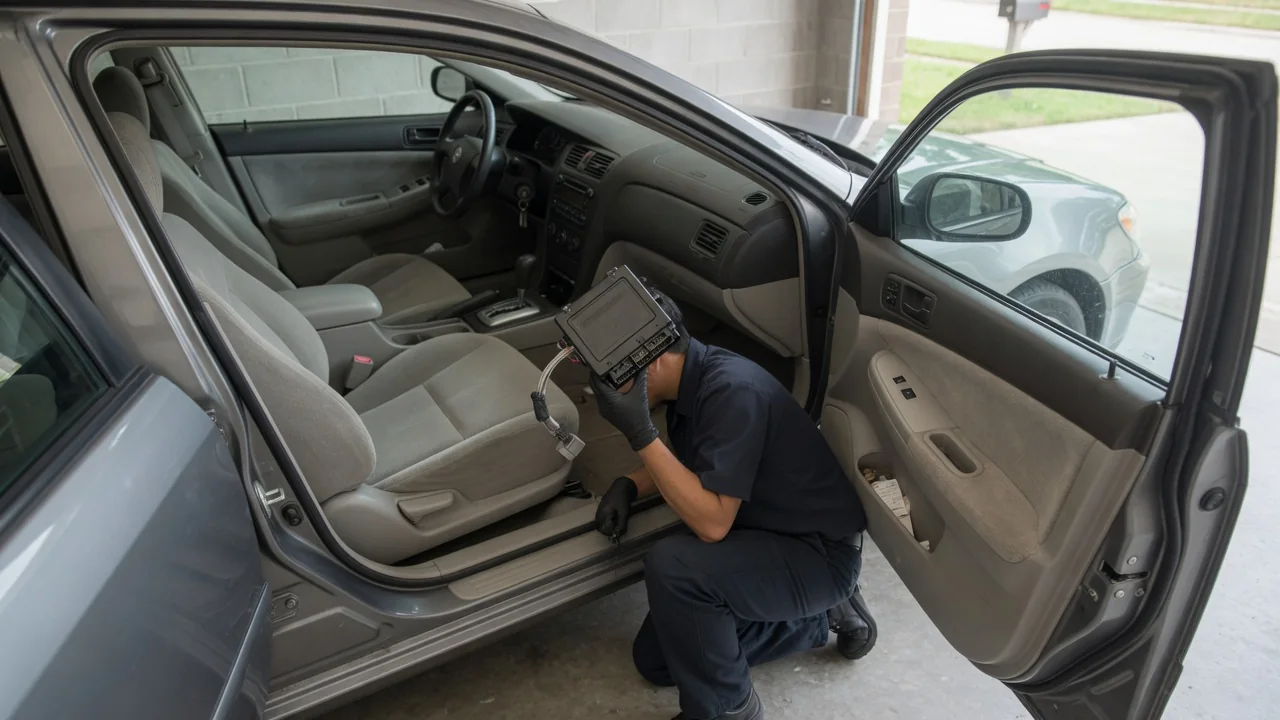
Drivers who ask why does a car have a telematics module are usually noticing that their vehicle talks to the outside world without a phone plugged in. The module is a dedicated communication unit that links the car's internal electronics to a wireless network, making connected services such as emergency calling, remote commands, and vehicle status reporting possible.
Network connection
A telematics module, often called a telematics control unit, combines a cellular modem, a satellite positioning receiver, and a processor in one sealed box. It carries its own subscriber identity, frequently an embedded SIM soldered to the board, so the car has a network identity independent of any occupant's phone. Antennas are commonly integrated into a roof fin, glass, or trim panel. Through that radio link, the module exchanges small packets of data with the manufacturer's servers, which then relay information to an owner's app or a call center.
Inside the vehicle, the module sits on the same data networks that connect the engine computer, body controller, and instrument cluster. That position lets it read things like odometer value, fuel or battery level, and door lock status, and in some designs pass along commands. Many units also include a small backup battery so an emergency call can still be placed if the main battery is disconnected in a collision. Hardware location, antenna layout, and supported cellular generations differ between makes and model years, so vehicle-specific documentation is the reliable reference.
Supported features
The most safety-critical function is automatic crash notification. When airbag or crash sensors register a significant impact, the module can open a voice call to a response center and transmit the vehicle's location, even if occupants cannot speak. A manual assistance button, typically on the overhead console or mirror, uses the same channel. Stolen vehicle location relies on the same positioning and cellular hardware, allowing the service provider to report where the car is once a theft has been properly verified.
Convenience features build on that foundation. Remote locking and unlocking, remote start or cabin preconditioning, charge scheduling on electrified vehicles, and locating a parked car all travel from an app through the manufacturer's servers to the module. Over-the-air software updates, maintenance reminders, and health reports that summarize warning lights or stored fault information depend on it too. Some vehicles also use it to supply an in-cabin Wi-Fi hotspot or live traffic data for navigation. Which of these a particular car supports depends on its equipment level, market, and software version.
Account control
Having the hardware installed does not mean every service is active. Connected features are normally tied to an owner account that is paired with the vehicle identification number, often through a confirmation step performed inside the car to prove physical access. Until that enrollment is completed, the module may only support basic or emergency functions. Some services are included for a trial period and then require a paid plan, so an app feature that disappears may reflect a lapsed subscription instead of a hardware fault.
Account settings also govern what data leaves the car. Many manufacturers provide privacy menus in the infotainment screen or app where location sharing, driving data collection, and third-party data use can be limited or switched off, although the available choices vary widely. When a vehicle changes hands, the previous owner's account should be removed and the system reset so the old profile no longer has remote access. Buyers of used cars are wise to confirm this with the dealer or the brand's customer support before relying on the services.
Everyday Use and Observations
In daily driving, the module mostly works unnoticed. Visible signs include a signal strength or connectivity icon on the display, an indicator light near the assistance button, and app status that refreshes shortly after the car is parked. Remote commands usually take several seconds to complete because the request travels through a server and a cellular network before the car responds. A delay in an underground garage or a rural valley is typically a coverage issue, much like a phone losing reception.
The module also stays partly awake when the car is off so it can listen for remote requests. Designs generally manage this by stepping into deeper sleep states after a period of inactivity, which is why a car left parked for an extended time may stop answering app commands until it is driven again. Frequent remote polling can add to the load on the battery between drives. If a vehicle that sits for long stretches shows battery weakness, the telematics unit is one of several possible contributors worth having checked, not an automatic culprit.
Limits and Next Steps
Connected services depend on things outside the car. Coverage gaps, server outages, and the retirement of older cellular network generations can all interrupt features, and some older vehicles have lost functions when the networks their modems used were shut down. Whether an upgrade path exists is decided by the manufacturer. Warning messages about an emergency call system or a communication fault code pointing at the telematics unit are evidence to interpret; the cause could be an antenna, wiring, the backup battery, software, or the account itself.
A sensible first step when features stop working is to check subscription status, app login, and connectivity settings, then try the car in an open area with good reception. If a warning persists, a shop with the proper scan equipment can read manufacturer-specific data and confirm what the module is reporting. Disconnecting or removing the unit to stop data sharing is not advisable, because it can disable emergency calling and affect other systems. Privacy concerns are better addressed through the account settings or the manufacturer's customer support.