Lost Communication With Glow Plug Control Module: Diagnosis
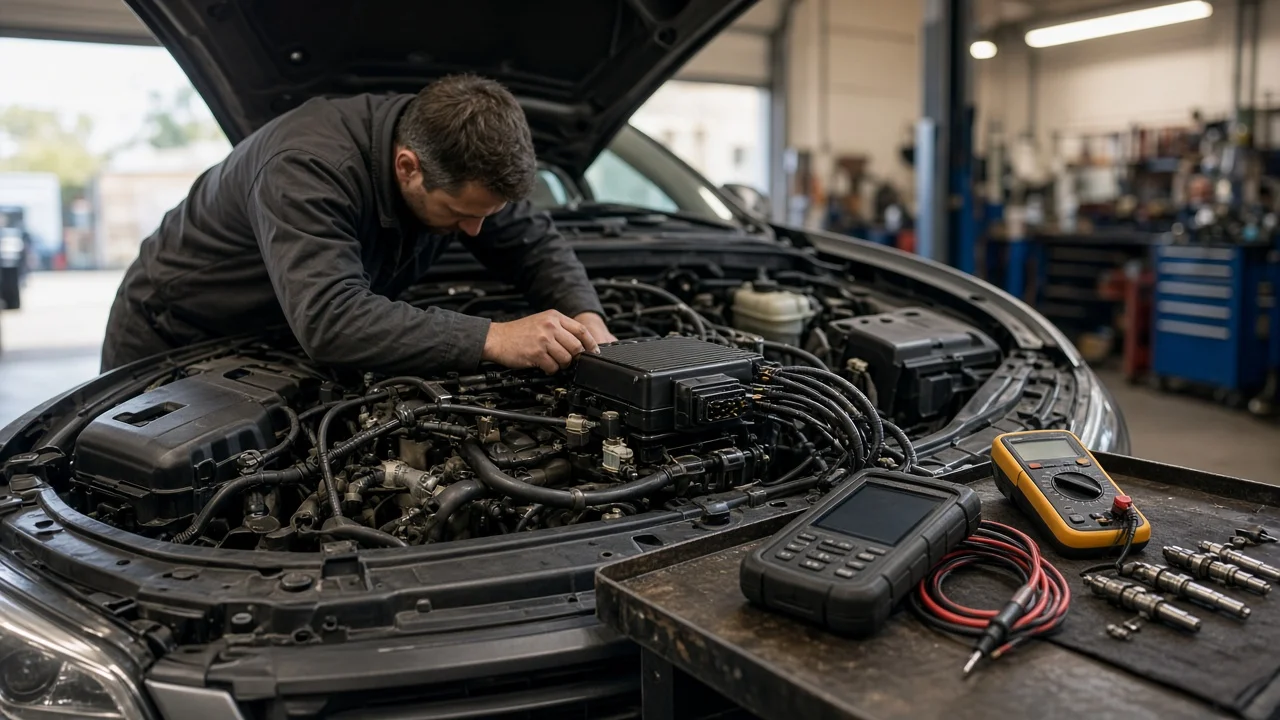
A lost communication fault with the glow plug control module, commonly stored as U0106, means the engine computer stopped receiving network messages from the module that manages glow plug heating on a diesel engine. The code describes a missing message, not automatically a dead module. A sound diagnosis checks power, ground and data wiring before any part is replaced, and it keeps cold-start problems from the fuel system separate from the communication fault itself.
Establish the symptoms
Start by recording when the fault appears. Note whether it sets only on cold mornings, on every key cycle, after rain or a pressure wash, after battery or starter work, or after an accessory such as a remote starter or lighting was installed. Watch the glow plug indicator: does it stay off, flash, or behave normally? Note extended cranking, white smoke or a rough idle for the first minute after a cold start, and whether warm restarts are normal. Write down any other network codes stored at the same time, because several U-codes together point toward shared wiring rather than one module.
Confirm the engine configuration and fuel type. Glow plugs are used on diesel engines, so if this code appears on a gasoline vehicle, check the definition for your exact make, model and year, since manufacturer-specific definitions can differ from the generic one. Also record fuel-related details that can mimic a glow plug problem: a recent fuel filter change, running the tank low, winter versus summer diesel, any fuel smell, or recently added additives.
Distinguish plausible causes
The most common cause is loss of power or ground to the module: a blown fuse or fusible link, a failed relay, or a corroded ground connection. This is supported when the module shows no supply voltage at its connector or when the code appeared together with a complete loss of glow plug operation. A weak battery is a related cause. Glow plugs draw heavy current, and a battery that sags badly during cranking can drop module voltage low enough for it to reset and fall off the network. That cause is more likely when the fault sets mainly during cold cranking and the battery tests weak.
Network wiring and connector faults are next. On some trucks the module sits in a location exposed to water, road salt and vibration, so corroded pins, water intrusion or chafed data wires are common findings. An intermittent code that follows wet weather or rough roads, or multiple communication codes at once, supports a wiring cause. A failed module is likely only after power, ground and the network have been verified good at the module connector. Software or configuration issues are possible on some vehicles and are confirmed through manufacturer service information.
Fuel-side problems do not set a communication code, but they cause similar hard starting and can exist alongside it. Low fuel pressure from a weak lift fuel pump, a clogged or gelled fuel filter, air entering the supply side, or a leaking injector can all lengthen cranking. If the communication fault is repaired and hard starting continues, those become the stronger suspects.
Checks in a useful order
Owners can safely begin with observations. Have the battery and charging system tested. With the ignition off, inspect the glow plug module, its connector and the visible harness for corrosion, green deposits, melted insulation, loose grounds or rubbed-through wiring. Check the related fuses using the owner's manual fuse chart. If you have a scan tool that reads all modules, save every stored code and its freeze frame data before clearing anything, then note whether the communication code returns immediately or only under certain conditions.
The next tests need a multimeter, wiring diagrams and specifications. A technician measures voltage drop on the module power and ground circuits under load rather than relying on a no-load reading. Network integrity is checked at the data pins; on many high-speed CAN networks, resistance across the two data lines with power off reads roughly 60 ohms, but the correct value and pin locations come from service information for your vehicle. An advanced scan tool can confirm whether the module responds at all. Glow plug resistance and current draw are compared against specification.
Fuel system checks need extra care. Diesel common-rail systems operate at extremely high pressure, and escaping fuel can penetrate skin. Never loosen high-pressure lines or injectors with the engine running or shortly after shutdown, and never feel for a leak with your hand. A leak check for owners is visual only, with the engine off, looking for wet lines or fittings. Comparing desired and actual rail pressure on a scan tool is a safe data check; mechanical gauge testing and any depressurization should follow the manufacturer procedure and are best left to a qualified technician.
Interpret the findings
Missing power or ground at the module connector points to an upstream circuit fault, and the module itself is not yet proven bad. A fuse that blows again after replacement indicates a short that must be located first, possibly in the glow plug circuit itself. If power, ground and network all test good but the module still does not respond, the module becomes the main suspect; before replacing it, confirm the connector pins are clean and tight, and check whether the replacement requires programming or configuration.
An intermittent code that tracks moisture usually means connector sealing or harness damage, and replacing the module would not cure it. If the code is resolved but cold starts remain slow, test the glow plugs, then review fuel data: rail pressure during cranking compared with specification, fuel filter condition and supply pressure. Fuel additives such as anti-gel treatments can help prevent winter gelling, but improved starting after an additive does not prove a fault was repaired and is no substitute for replacing a failed filter, pump or injector.
Urgency and next action
In mild weather the engine may start and run normally, but cold starts can become difficult or impossible, and repeated long cranking strains the starter and battery. Stop driving and do not keep cranking if you notice a burning smell, hot or melted wiring near the module or glow plugs, a fuse that blows repeatedly, smoke from under the hood, fuel odor or visible fuel wetness, or stalling. No fixed safe distance can be promised with this fault, so plan the repair promptly.
Give the repair shop the full code list from all modules with freeze frame data, the conditions when the fault appears, battery test results, any recent wiring work or accessory installations, fuel filter history and the fuel currently in the tank. Ask that power, ground and network wiring be verified before the module is replaced, and confirm whether programming is needed for a new unit.