What Is a Telematics Network Connection?
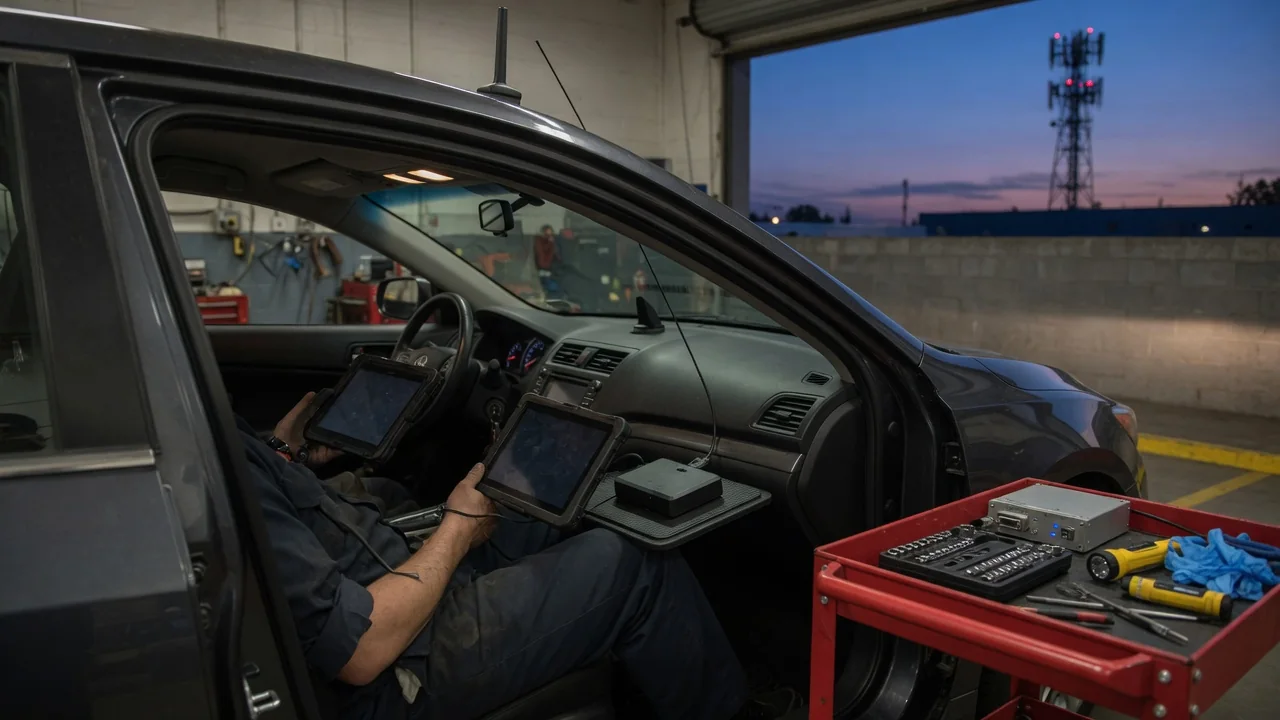
A telematics network connection is the data link that lets a vehicle exchange information with remote servers over a cellular network. This link supports features such as remote lock and unlock, location services, automatic crash notification and over-the-air software updates. A car telematics data connection has three parts: the cellular hardware in the vehicle, the cloud services on the other end, and the behavior of the system when the link is unavailable.
Cellular module
Most connected vehicles carry a dedicated telematics control unit, often called a TCU or telematics module. It works much like the radio portion of a smartphone. It contains a cellular modem, a subscriber identity in the form of a physical SIM or an embedded SIM, and its own processor and memory. It usually connects to external antennas on the vehicle body, such as a roof fin or antennas behind trim panels. Many modules also include a satellite positioning receiver so they can report location. The module's location and packaging vary by manufacturer and model.
The module is connected to the vehicle's internal networks, typically through a central gateway that controls which messages it can see and send. Through this link, the telematics unit can read data such as fuel or charge level, odometer readings, tire pressure warnings or diagnostic trouble codes. It can also pass authorized commands, such as a door lock request, to other control units. The gateway serves as a security boundary that limits what a remote connection can reach inside the car.
The connection runs over public cellular networks, the same infrastructure that phones use. Each module is built for particular network generations and frequency bands, and the carrier agreement is usually arranged by the automaker rather than the owner. Some vehicles also offer an in-car Wi-Fi hotspot through the same hardware, which may be billed separately from the core telematics service.
Cloud services
On the other end of the link is a back-end platform run by the automaker or by a service provider on its behalf. The vehicle authenticates to these servers, typically with credentials and certificates stored in the module. It then exchanges small messages with them, including status reports, location updates, alerts and requests. Owner apps and web portals usually do not communicate with the car directly. They send a request to the cloud service, which forwards it to the vehicle and returns the response.
This design explains how most connected features behave. A remote start or climate request from a phone app goes to the server, waits until the vehicle is reachable, and is then delivered over the cellular link. Vehicle health reports, maintenance reminders and recall-related notices can be generated from data the car uploaded earlier. Over-the-air updates follow a similar path. The server makes a software package available, the module downloads it, and the vehicle installs it under conditions set by the manufacturer, which often include being parked.
Safety functions may use the same connection with a higher priority. Automatic crash notification and manual emergency or roadside assistance calls can open a voice or data session with a response center. In some regions, regulations require new vehicles to support an automatic emergency call system. Elsewhere, these services are part of a manufacturer's connected services package. Feature availability and subscription requirements depend on the brand, model, market and model year.
Offline limits
A telematics connection depends on cellular coverage at the vehicle's location. Underground garages, remote rural roads, tunnels and buildings with heavy concrete or metal construction can block or weaken the signal. When the link drops, app commands cannot reach the car, and the app may show the last known location and status instead of current conditions. Many systems store events locally and upload them after the connection returns, but this buffering behavior varies by implementation.
Power management is another constraint. A parked vehicle cannot keep its modem fully active indefinitely without draining the 12-volt battery. For this reason, telematics units commonly switch to lower-power states after a period of inactivity. In those states the car may respond more slowly to remote requests, or it may stop accepting them until it is driven again. The thresholds and timing differ between vehicles. If they are documented, they usually appear in the owner's manual or connected services documentation.
Connectivity can also end for reasons unrelated to signal strength. A subscription or trial period may expire, service may be deactivated after a change of ownership, or a carrier may retire the network generation the module was designed for. In the last case, hardware without a compatible upgrade path can lose its remote features entirely. Basic driving functions are generally designed to work without the telematics link, so the car itself continues to operate.
Practical implications and limits
Remote features are conveniences that depend on several components working together: the module, the antenna, the carrier network, the subscription, the vehicle's power state and the manufacturer's servers. When an app command fails, start with three checks: whether the car is parked in an area with poor reception, whether it has been unused for a long period, and whether the service account is still active. These checks usually find the cause faster than assuming a vehicle fault. A server-side outage can also affect many cars at once, regardless of the condition of any individual vehicle.
When buying a used vehicle, confirm which connected services are available to a new owner. Also check whether the previous owner's account has been removed and whether the module supports networks that still operate in your area. A dealer or the manufacturer's connected services support can answer these questions, because capabilities vary widely across brands and model years. Removing the previous account is also a privacy matter, since the account holder can typically see the car's location and send commands to it.
Owners concerned about data sharing can usually review privacy settings in the vehicle menu or the companion app, although the available controls differ by manufacturer. Some data collection may be tied to safety or legal requirements and cannot be turned off. Aftermarket telematics devices, such as plug-in units used by insurers or fleet operators, use a separate connection with their own provider and rules. Their behavior may not match the factory system.