Why Do Wheels Have Different Spoke Shapes?
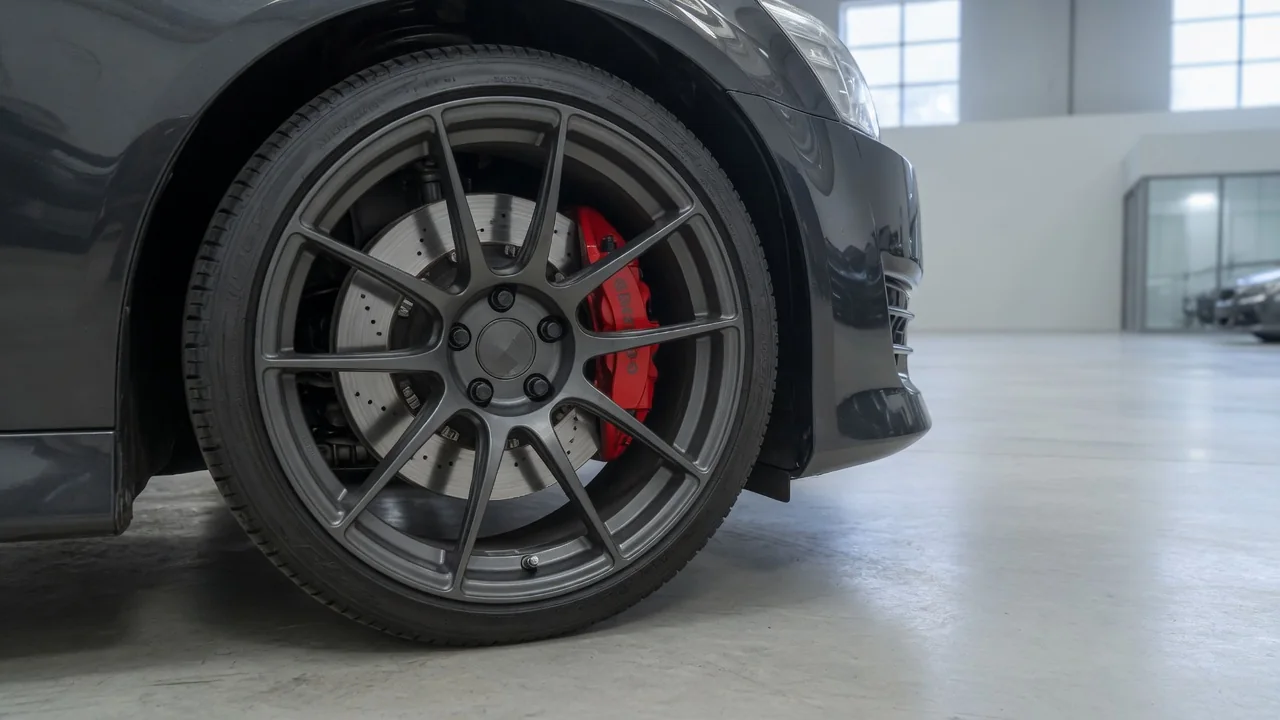
Look at any parking lot and you will see wheels with five thick spokes, ten slender ones, split Y-shaped arms, mesh patterns, and nearly solid faces. These differences are not random. So why do wheels have different spoke shapes? Wheel spoke design has to carry the vehicle's weight and driving forces from the rim to the hub, let air reach and leave the brakes, and give the car a recognizable look. Each spoke shape is a compromise among those jobs, along with weight, cost, and manufacturing limits.
Load paths: how spokes carry forces to the hub
A car wheel connects the tire and rim to the hub, and every force the tire experiences has to travel through the spokes. That includes the vertical load from the vehicle's weight, cornering forces that push sideways on the tire, and torque from acceleration and braking that tries to twist the rim relative to the hub. Unlike the tensioned wire spokes of a bicycle, the spokes on typical cast or forged automotive wheels work mainly in bending and compression, so their cross-section and the way they join the rim and hub matter a great deal.
Because the wheel rotates, each spoke sees changing loads with every revolution: it is loaded most heavily as it passes over the contact patch, then relieved as it moves away. Designers manage this by choosing how many spokes to use and how they are shaped. Fewer, wider spokes concentrate material in a few strong members, while more numerous, slimmer spokes divide the work among many paths and shorten the unsupported rim sections between them. Split or Y-shaped spokes are one way to get some of both: a single strong root near the hub branches into two arms that support the rim at more points.
The transitions are where shape matters most. Stress tends to concentrate at sharp corners, so spokes usually blend into the hub and rim with generous curves, and many are deeper front to back than they are wide, which stiffens them against the bending loads that dominate in hard cornering. Material can be removed from areas that carry little stress, such as pockets behind the spoke face, to save weight without weakening the main load path. Spoke layout is also commonly coordinated with the lug pattern, for example five spokes on a five-lug hub, so that forces flow evenly into the mounting surface.
Brake cooling: why openings between spokes matter
Braking turns the car's motion into heat in the rotors and pads, and that heat has to go somewhere. Much of it leaves through the rotor's own surfaces and internal vents into the surrounding air, but the wheel sits directly over the brake assembly, so its open area affects how easily hot air can escape and cooler air can reach the rotor and caliper. Large openings between spokes generally allow more air exchange than a nearly closed face, and they also leave room for larger brake components behind the wheel.
Spoke shape can influence airflow as well as the size of the gaps. Some wheels use spokes that are angled or swept in one direction, somewhat like fan blades, which is intended to help move air through the wheel as it spins. Such designs are often directional, meaning a given wheel is made for one side of the car. However, the real effect of any particular shape depends on the whole vehicle, including bodywork, brake ducts and the underbody, so an open-looking wheel does not automatically mean cooler brakes on every car.
There is also a trade-off with aerodynamics. Open spokes stir up turbulent air as they rotate, which can add drag. That is why some wheels intended for efficiency use flatter faces, smaller openings or covers, accepting less airflow to the brakes in exchange for smoother air around the wheel. Whether that compromise makes sense depends on how hard the brakes are expected to work in the vehicle's intended use.
Styling: shape as identity and visual proportion
Once structural and cooling requirements are met, designers still have considerable freedom, and much of the variety on the road comes from styling. Spoke design is one of the most visible ways manufacturers distinguish trim levels and give a vehicle character. Thick five-spoke designs tend to read as simple and sporty, multi-spoke and mesh patterns suggest a more detailed or classic look, and flat, closed faces often signal a focus on efficiency. Directional or swept spokes can make a wheel appear to be in motion even when the car is parked.
Styling also affects perceived size and stance. Spokes that run all the way to the outer edge can make a wheel look larger, while a deep lip or recessed center changes how the wheel appears to sit within the fender. Finishes such as machined faces, painted pockets or two-tone treatments draw attention to the spoke shape itself. These choices still interact with engineering: a spoke that looks slender from the front may be deep behind the face to retain strength, and a decorative feature can add weight or create corners that are harder to clean.
Practical implications and limits
For owners, the key takeaway is that spoke shape alone does not reveal how strong, light or well-cooled a wheel is. Material, manufacturing method, rim width, offset and load rating usually matter more than whether a wheel has five spokes or fifteen. When choosing replacement or aftermarket wheels, it is more useful to confirm the correct bolt pattern, center bore, offset, load rating and brake clearance for the specific vehicle than to judge strength by appearance.
Shape does have everyday consequences. Wheels with many thin spokes or intricate mesh can take longer to clean and may collect brake dust in tight corners. Directional wheels need to stay on their intended side when tires are rotated or wheels are swapped. Very open designs leave brake components on display, which some owners like and others do not, while closed designs can hide calipers and rotors that would otherwise be easy to glance at through the gaps.
General principles also have limits. How a particular wheel behaves on a particular car depends on factors that vary between vehicles, such as weight, suspension, brake size and driving conditions. If brake fade, cracking or vibration is a concern, the owner's manual, the wheel manufacturer's specifications or a qualified technician are better guides than spoke shape. Damage such as a bent spoke or a crack near where a spoke meets the hub or rim deserves prompt inspection, because those are the areas where loads are concentrated.