Why Do Some Cars Have Vents Ahead of the Front Wheels?
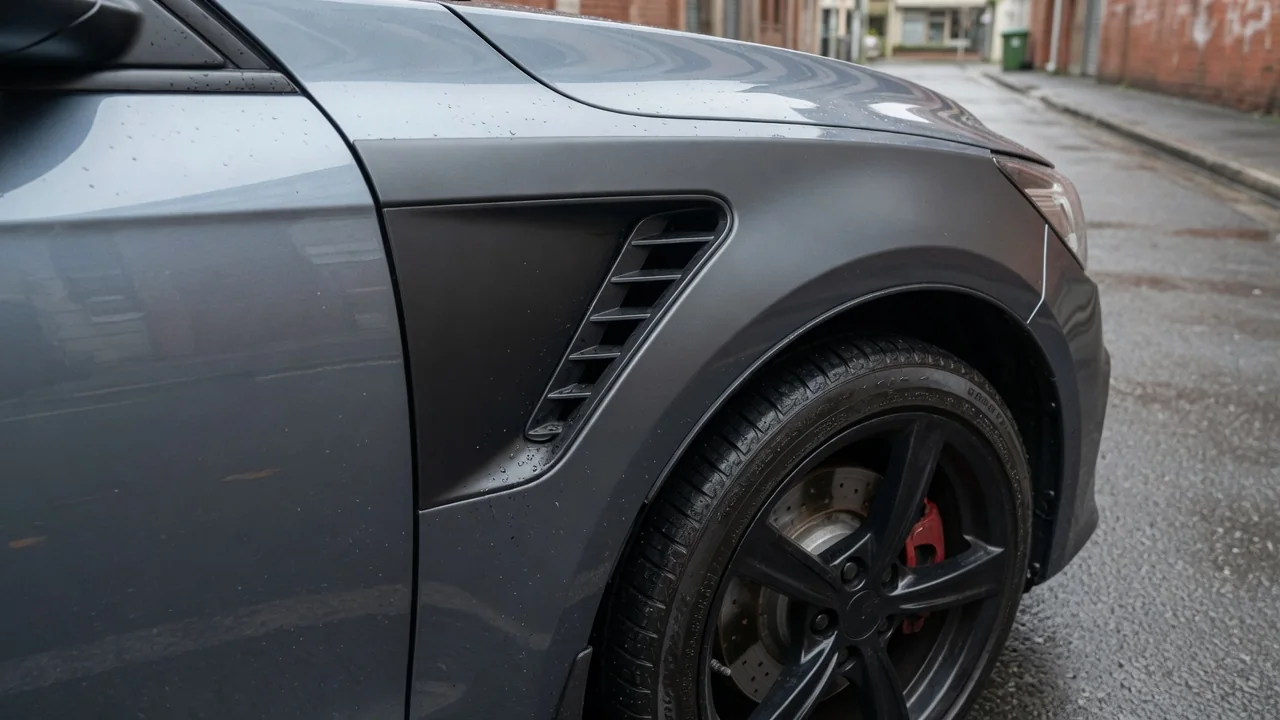
Look closely at the front bumper of many modern cars and you will find slim openings near the outer corners, just forward of the tires. If you have wondered why do some cars have vents ahead of the front wheels, the answer usually comes down to two jobs: managing airflow around the spinning wheels and feeding cooling air to hot components.
Possible functions
The most common purpose for these openings on current road cars is the air curtain. A rotating front wheel sitting in an open wheel arch is one of the messiest parts of a vehicle's aerodynamics, churning air and pushing a turbulent wake down the body side. A narrow vent in the bumper corner takes high-pressure air from the nose and releases it as a thin, fast sheet across the outer face of the wheel, helping the surrounding flow stay attached and reducing drag.
The second possibility is cooling. Brakes turn motion into heat, and a duct routed from the bumper toward the rotor and caliper can carry that heat away under repeated hard stops. On some vehicles the corner opening instead feeds a heat exchanger tucked behind the bumper, such as an intercooler, an auxiliary radiator, or an oil cooler. A third category serves no airflow purpose at all, because some openings are styling features backed by solid plastic and exist only to make the front end look more aggressive.
Flow path
With an air curtain, the path is short and deliberately shaped. Air enters a tall, narrow slot in the bumper face, travels through a duct that narrows to speed the flow up, and exits through a slit in the front of the wheel arch liner. The outlet is aimed so the air skims the outer sidewall and wheel face instead of filling the arch. You can often see that exit slot by turning the steering to full lock and looking at the forward edge of the liner.
A brake cooling path looks different. The inlet tends to be larger, and the ducting runs inboard, toward the center of the wheel, sometimes ending at a deflector on the suspension arm or a shaped backing plate that directs air into the rotor's center. Where the opening serves a cooler, the air passes through a finned core and then needs somewhere to go, typically out through the wheel arch liner or underneath the car. Without a low-pressure exit, air stalls and the intake does very little.
Design variation
Manufacturers approach the same corner of the bumper in different ways, and the differences reflect priorities. Economy-minded sedans, hybrids, and electric vehicles tend to favor air curtains because lower drag helps fuel consumption or driving range, and their brakes rarely need extra airflow in normal use. Performance models are more likely to devote that space to brake ducts or additional coolers, accepting a small drag penalty in exchange for thermal capacity during spirited driving or track sessions.
Trim levels within one model line can differ too. A base version may carry a blanked-off panel in the same spot where a sport variant has a working duct, and a facelift can change a functional opening into a decorative one or the reverse. Some cars also pair the front inlet with an outlet vent in the fender behind the wheel, which lets pressurized air escape the arch and can reduce front-end lift. Because of this variation, the function of any particular vent has to be confirmed on the vehicle itself.
Everyday Use and Observations
Telling a working vent from a cosmetic one takes only a flashlight. Shine it into the opening and look for daylight, a duct wall, or the fins of a cooler. A solid textured panel a short distance behind the grille pattern means the feature is decorative. Then check the wheel arch from the tire side for a matching slot or duct end. An opening that leads to a narrow slit by the tire's outer edge points to an air curtain, while one aimed at the hub points to brake cooling.
In daily driving, these passages collect whatever the road throws at them. Leaves, mud, road salt, snow, and insects can pack into a duct or clog the face of a cooler, quietly reducing its effectiveness. A gentle rinse during washing usually keeps things clear. It is also worth noticing whether the liner and duct pieces are seated properly after any bumper work or a brush with a curb, since a dislodged duct can rub a tire, rattle at speed, or simply stop directing air where it was intended.
Limits and Next Steps
It helps to keep expectations realistic. An air curtain makes a modest contribution to overall efficiency, one of many small refinements that add up, and a driver will not feel it from behind the wheel. Likewise, a brake duct matters mainly under sustained heavy braking, such as long mountain descents or track use, and does little during an ordinary commute. Blocking or removing these parts rarely causes an immediate problem, but it does undo engineering the manufacturer validated in the wind tunnel and in thermal testing.
Owners who want to know exactly what their vents do should start with the owner's manual or the manufacturer's description of that model and trim, then confirm by inspection. Anyone considering aftermarket ducts, vent deletes, or a different bumper should think about where the air will exit and whether tire clearance and cooler airflow are preserved. If brake fade, a burning smell, or rising temperatures appear, the vents are only one thing to check, and a qualified technician should evaluate the braking or cooling system as a whole.