Why Do Turn Signals Flash Faster When a Bulb Fails?
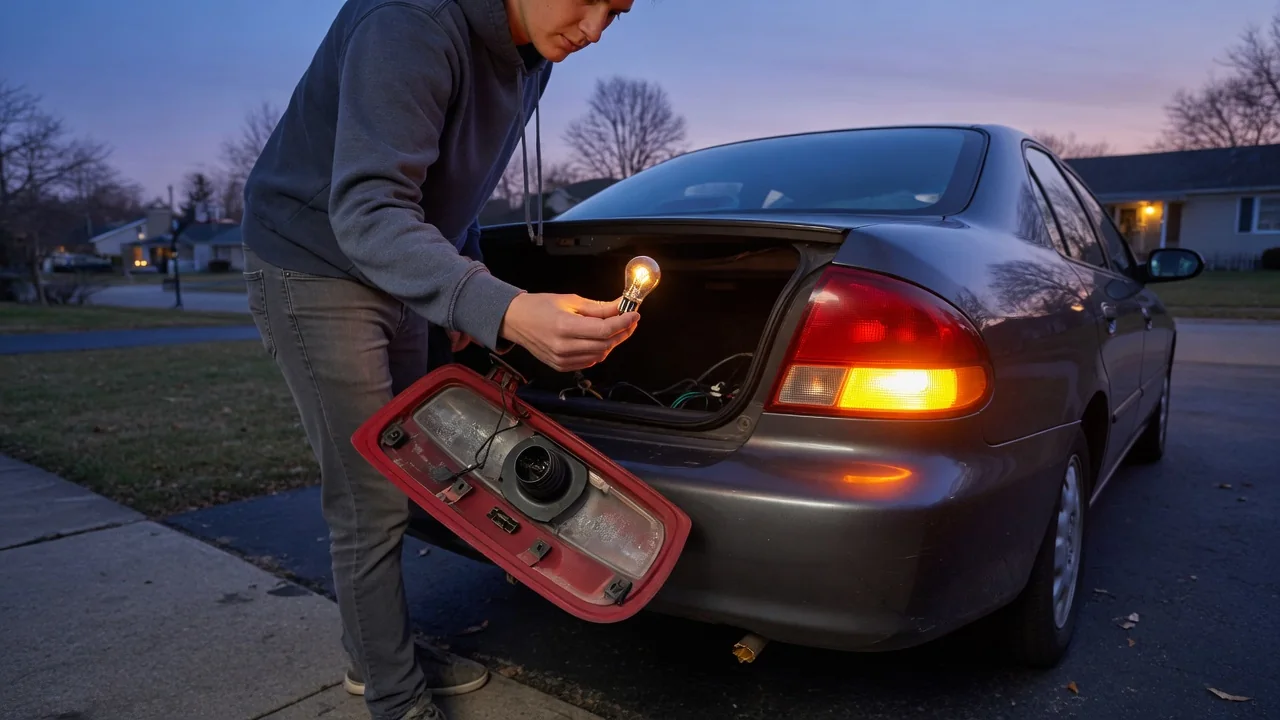
A turn signal that suddenly blinks at double speed is usually not a random glitch. On many vehicles, the question of why do turn signals flash faster when a bulb fails has a deliberate answer: the system notices that less electrical current is flowing on one side and changes the flash rate to alert the driver. The details depend on how the vehicle monitors its lamps.
Flasher monitoring
A traditional flasher unit sits in series with the signal lamps, so all the current feeding the front and rear bulbs on one side passes through it. Electronic flasher relays measure that current, often across a small sensing resistor, and compare it with the value expected for a full set of working bulbs. When one filament burns out, the current drops noticeably, and the relay responds by roughly doubling its blink rate. This rapid blinking, often called hyperflash, is an intentional warning rather than a malfunction of the relay itself.
Many newer vehicles have no separate flasher relay at all. A body control module switches the lamps through solid-state drivers and watches the current on each circuit, sometimes lamp by lamp. When the reading falls below its programmed threshold, the module may speed up the indicator in the instrument cluster, display a bulb-out message, or store a fault code. Older thermal flashers behave differently again, because their timing depends on heat from the current, so a failed bulb might slow the flashing or leave the remaining lamp lit steadily.
Bulb check
The quickest confirmation is a walk around the vehicle. With the ignition on and one signal selected, compare the front, rear, and any side repeater or mirror lamps on that side. The hazard switch can help, although on some vehicles the hazards run through a separate circuit and flash normally even with a bulb out. A fast-flashing left signal with a normal right signal points toward the left side, where one lamp will usually be dark or noticeably dim.
A lamp that looks dead is not always a failed bulb. Dual-filament bulbs can lose the signal filament while the parking light filament still glows, so the lamp appears to work until the signal is switched on. A darkened or cloudy glass envelope, a broken filament, or a loose bulb in its socket are common clues. Corroded contacts, a melted socket, or a poor ground can reduce current just as an open filament does, and the monitoring circuit cannot tell those causes apart.
Repair
When the bulb truly has failed, fitting a replacement of the type specified in the owner's manual normally restores the regular rhythm immediately, since the circuit current returns to the expected level. Matching the specification matters because a bulb with a different wattage draws a different current, and that alone can keep the rate fast or trigger a warning. Access varies widely: some lamps open from the trunk or behind a small panel, while others require removing the lamp assembly or wheel-well liner.
LED conversions deserve particular attention. An LED bulb draws a fraction of the current of an incandescent one, so a monitoring system built around filament bulbs may read a healthy LED as a failure and hyperflash. Common remedies include an LED-compatible flasher relay, load resistors that draw extra current, or replacement bulbs with built-in resistance or CAN bus compatibility. Load resistors convert that current into heat and can get very hot, so their placement matters, and module-controlled vehicles may need a vehicle-specific solution instead.
Everyday Use and Observations
Drivers usually notice the change through the dashboard first: the arrow blinks faster and the clicking sound quickens to match. On vehicles where the click is a synthesized sound from the cluster rather than a physical relay, the tone still follows the commanded rate. Because the exterior lamp cannot be seen from the driver's seat, this change in tempo is often the only immediate hint that following traffic is no longer receiving a clear signal from one corner of the vehicle.
Patterns over time are informative. A signal that flashes fast only on cold mornings, after rain, or over bumps suggests an intermittent connection rather than a filament that has broken cleanly. Towing adds another variable, since trailer lamps add load and a failed trailer bulb or a poor connector can alter the behavior on vehicles that monitor the trailer circuit. Vehicles built with factory LED signals may never hyperflash at all, reporting faults through a message or warning light instead.
Limits and Next Steps
The fast flash narrows the problem to a side, not to a part. If a new, correct bulb does not restore the normal rate, the cause may lie in the socket, wiring, ground, connector, flasher relay, or control module, and a measurement of voltage and ground quality at the socket is more useful than swapping more parts. Any stored fault code should be treated the same way: as a pointer to a circuit that needs testing, with manufacturer-specific codes interpreted using information for that exact vehicle.
Factory LED lamp assemblies bring their own limits. Many are sealed units in which individual diodes cannot be replaced, so a partial failure can mean replacing the assembly, and some modules shut the circuit down after detecting a fault until it is reset or the ignition is cycled. Where the cause is not obvious, or where access involves bumper or body panel removal, a qualified technician with wiring diagrams and a scan tool is the sensible next step. Until then, a non-working signal is a safety and legal concern worth resolving promptly.