Turn Signal Not Working With a Good Bulb: What to Check Next
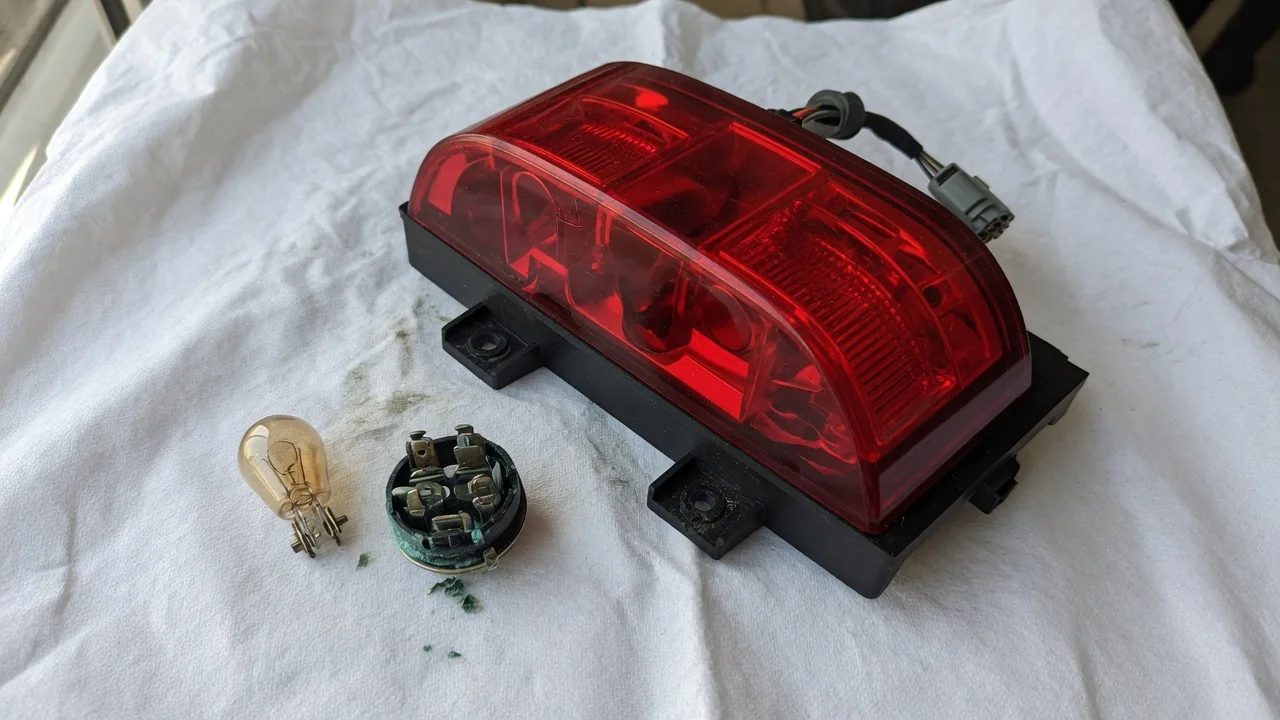
If your turn signal isn't working but the bulb is good, or it still won't light with a new bulb, the fault is somewhere else in the circuit. A blinker needs the correct bulb, a clean socket, power, a solid ground and a working switch and flasher control. This guide starts at the bulb and works outward so you can find the cause before buying more parts.
What a Good Bulb Rules Out and What It Doesn't
A bulb that tests good or looks intact proves only one thing: the bulb itself can light. It doesn't tell you whether voltage is reaching the socket, whether the ground path back to the body is complete, or whether the switch and flasher are sending a pulse at all. If you moved the bulb to another socket and it lit, you've confirmed that the filament or LED works. You haven't confirmed that it matches the base, contact layout or circuit design of the socket where it failed.
A visual check has limits too. A filament can crack at a weld point or separate only when it's warm, so it looks whole in your hand but fails under vibration or current. Testing the bulb in a known-good position is more convincing than squinting at the glass. Once the bulb is truly ruled out, work outward one step at a time: socket and fit first, then the symptom pattern, then fuses and flasher control, and finally the switch, ground and wiring that connect everything.
New Bulb Still Not Lighting: Fit, Type and Socket Contact
When a turn signal won't work with a new bulb, start by checking the bulb type. The owner's manual or a bulb chart lists the correct part, and bulbs that look alike can differ in base style, single or dual filament, or pin offset. A dual-filament bulb in a single-function socket, or the reverse, may not light or may light the wrong function. Seating matters too. A bulb twisted only partway in, or installed backwards in a socket that allows it, may never touch both contacts.
With the ignition and lights off, look into the socket. Green or white residue, rusty contacts, melted plastic, flattened or bent spring terminals, and moisture inside the lens all point to poor contact rather than a bad bulb. Aftermarket LED bulbs draw much less current than factory incandescent bulbs, so on some vehicles they flash fast, flicker or stay dark. Old sockets get brittle from heat, so don't pry or force them. A cracked socket turns a simple fix into a wiring repair.
Reading the Symptom Pattern Before Replacing More Parts
Where the failure shows up tells you a lot. If only one corner is dead, such as a rear signal out while the front works, focus on that lamp's bulb, socket, connector and ground. If a whole side is out, look at something that side shares, like the switch contacts for that direction or the feed leaving the flasher. If both sides are dead, a fuse, flasher relay or control module is more likely. Hyperflash, a rapid blink on one side, often points to an open or high-resistance lamp on that side, though this varies by vehicle design.
Other behaviors narrow it down further. A signal that stays lit without blinking suggests the flasher control isn't cycling or is seeing an unexpected load. One that doesn't light at all suggests missing power or ground. A dim, flickering or on-and-off signal often traces back to a loose contact or a corroded connection. The hazard lights make a useful comparison. If the hazards work but the turn signal doesn't, the bulbs and much of the wiring are working, which makes the switch or its control path more likely. Symptoms like these narrow the possibilities, but they don't confirm which part has failed.
Fuses, Flasher Relays and Electronic Control Modules
Turn signal circuits differ from vehicle to vehicle. Older designs often use a fuse and a separate thermal or electronic flasher relay. Some combine the hazard and turn functions in one unit. Many newer vehicles let a body control module time the flashes and drive the lamps directly. Instead of pulling fuses at random, use the owner's manual or the diagram on the fuse box cover to find the turn signal fuse. Replace it only with a fuse of the same amperage rating.
A fuse that blows again right after you replace it means there's a short circuit somewhere, often a pinched wire or a damaged socket touching ground. A larger fuse removes that protection and can let the wiring overheat, so the short has to be found and fixed. On vehicles where a body control module runs the exterior lighting, the module may store fault codes for a lamp circuit. Those codes and what they mean depend on the manufacturer. Treat them as clues to check against vehicle-specific information, not as proof that a part has failed.
Turn Signal Switch, Ground Connections and Wiring Damage
The multifunction switch on the steering column has separate contacts for left and right turns. When those contacts wear, one direction can fail while the hazards still work, since the hazards often use a different path. Grounds matter just as much. Many lamp housings ground through a dedicated wire or a point on the body. Corrosion or a loose fastener there can make a lamp dim, dead or act strangely even with a perfectly good bulb. It might glow faintly when another light, such as the brake lamp, is on.
Without probing anything, you can look for chafed or cracked wiring where the harness bends at a trunk hinge, liftgate or tailgate. Also look for loose connectors, connectors with green corrosion inside, and wiring disturbed during earlier bumper or collision repairs. Trailer wiring converters and aftermarket accessories tapped into the lighting circuit can also cause faults or overload a module output. Note what you find, but leave live-circuit testing, splicing and steering column disassembly to someone with the right tools and training. The column may also hold airbag components.
Driving Safety and When to Get Professional Testing
A turn signal that doesn't work takes away one of the main ways other drivers can tell what you're about to do, especially when you change lanes or turn in traffic. A dead signal may also break local equipment rules or fail an inspection. That makes this a repair to schedule promptly rather than put off. Until it's fixed, use hand signals where they're legal and practical, leave extra space, and make lane changes carefully, since drivers around you may get no warning at all.
Get professional testing when a fuse keeps blowing, when the switch or a body control module is the likely cause, when the work would involve the steering column near airbag parts, or when the fault comes and goes and won't show up on demand. A technician can measure voltage and ground at the socket under load, check the switch output, and read module data and lighting fault codes with suitable scan equipment. That turns a guess about the circuit into a confirmed diagnosis.