Turn Signal Not Working? How to Narrow Down the Cause
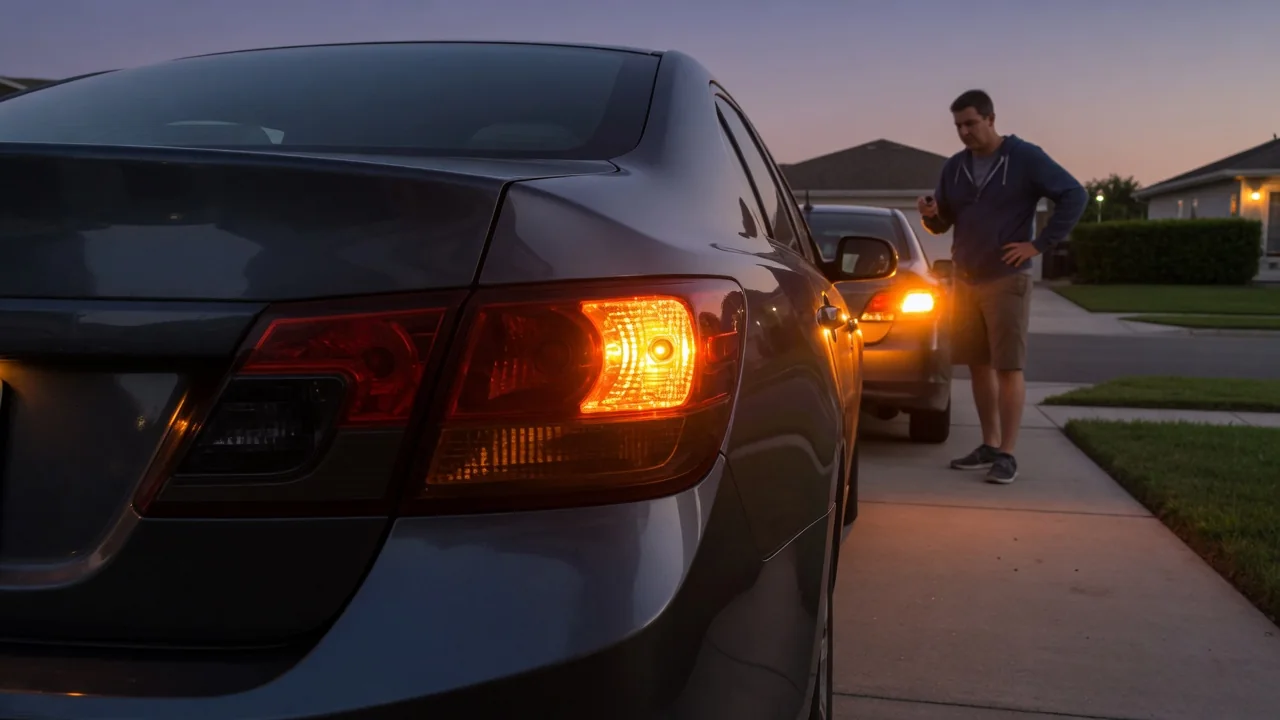
When a turn signal is not working, the way it fails tells you a lot. A left or right turn signal that flashes fast, stays lit, or goes completely dark points toward different parts of the circuit, from bulbs and sockets to the flasher relay, multifunction switch, or body control module. Here's how to read those clues, check what you safely can, and decide when a fix needs proper testing.
Start With the Pattern: What Your Turn Signal Is Actually Doing
Start by noting exactly what happens when you move the lever. No flash at all, rapid hyperflash, a steady light, a dashboard indicator that never blinks, or one dark corner each suggest a different area of the system. With the vehicle parked, parking brake set, and ignition on, switch on each signal and walk around the vehicle. You can also ask a helper to watch the front, rear, side marker, and mirror repeater lamps while you work the lever.
On many vehicles, rapid flashing on one side means a lamp there isn't drawing the current the flasher or module expects, often because a bulb has burned out, though not every design behaves this way. Also note whether the fault is constant or intermittent, and whether it shows up over bumps, in cold or wet weather, or only when the headlights are on. That last pattern can hint at a weak ground connection. These patterns narrow the search, but none of them confirms a failed part.
When Only the Left, Right, or Driver Side Turn Signal Fails
When the turn signal fails on one side only, whether driver side or passenger side, the cause usually sits on that side rather than in a part both sides share. That makes a bulb, socket, ground, or connector the first suspect. Check every lamp on the failed side, including the front, rear, side marker, and mirror repeater. One dead lamp can change how the whole side flashes, which can make the problem look bigger than it really is.
A mirror turn signal, like the side mirror signal on a Jetta, has its own lamp and wiring that run through the mirror and door, so confirm the setup for your exact vehicle before buying parts. Look for green corrosion in the bulb socket, moisture inside the lens, or a loose connector, but don't probe live circuits without the proper tools and knowledge. If the fault is still there after you've checked the bulb and socket, the next step is circuit testing by a technician.
Hazards Work but Turn Signals Don't, or Both Are Dead
If the turn signals don't work but the hazards do, the problem is often in a part only the turn signals use, such as the turn signal switch, the lever, or its circuit on many vehicles. Because the multifunction switch often also runs the wipers, horn, or headlights, losing the turn signals and wipers together, or the horn as well, can point toward that switch, its connector, or a shared fuse.
When the turn signals and hazard lights are both dead, a shared part such as a fuse, flasher, or control module becomes more likely, depending on the design. If the radio quits at the same time, that can also point to a shared fuse. Find fuse locations in the owner's manual or on the fuse box cover instead of guessing. A missing dash indicator can suggest an outside lamp fault, but it doesn't always match the exterior lamps. On systems run by a body control module, diagnosis may need a scan tool.
New Bulb Still Not Working: LEDs, Aftermarket Lights, and Shared Circuits
A turn signal that still won't work after you change the bulb is frustrating but common. The new bulb may be the wrong type, may sit poorly in the socket, or may touch corroded contacts, and a bad ground or harness fault further back can keep any bulb dark. Switching to LED turn signals can cause hyperflash or no flash on some vehicles because LEDs draw less current. Depending on the design, the fix might be an LED-compatible flasher, an LED load resistor, or a module setting.
Aftermarket headlight or tail light assemblies, including brands like AlphaRex or VLand, may need specific wiring or adapters, so check the light maker's fitment guidance for your vehicle. When a headlight or brake light fails at the same time as the turn signal, suspect a shared ground, a dual-function lamp, or a combined circuit. A DIYer can safely look over the bulb, fuse, and connections. Anything beyond that visual check is better handled with proper electrical testing.
Harley-Davidson Motorcycle Turn Signal Problems
Motorcycle signal systems work differently from cars and vary by Harley model and year. Whether you ride a Sportster or a touring bike, check the service manual for your exact Harley-Davidson before deciding what failed. If the left or right signal is out, look for a dead lamp on that side, a loose connector, wiring chafed near the handlebars or rear fender, or a blown fuse. The same general approach works on scooters like a Vespa.
If the turn signal indicator on the instrument cluster stops working, treat it as a separate symptom from dark outside lamps, because its cause depends on the model. Aftermarket LED signals and added accessories can change how the signals flash, and whether they're compatible varies by bike. Self-canceling signals, security systems, and module-controlled signals call for a dealer or a qualified motorcycle technician with the right diagnostic equipment and wiring information.
Heavy Trucks, Classic Vehicles, and Specific Models
Commercial trucks such as the Freightliner Cascadia, the Ford F-650, and the Peterbilt 379, 389, or 579 can use complex lighting circuits, multiplexed controls, and trailer connections, so the truck's documentation should guide the diagnosis. When pulling a trailer, note where the signal stops. If the tractor lamps work but the trailer stays dark, inspect the trailer connector and its pins. If testing confirms the signal reaches the connector, the fault is probably on the trailer.
On older or high-mileage vehicles, such as a Jeep CJ7, BMW E36, C5 Corvette, Chevy S10, Pontiac Grand Am or G6, PT Cruiser, Saturn, or a Mercedes W123, W124, W212, or ML350, worn wiring, grounds, sockets, and switches are general places to look, not known defects. For a Toyota 4Runner or any other model, confirm the year and trim first, since components change between generations. Forums help, but check what a symptom means for your exact vehicle.
Driving With a Broken Turn Signal and When to Get It Checked
If your turn signal isn't working, drive as little as you can, use hand signals where they're legal and safe, and get the fault fixed soon. Other drivers count on those lamps to see your turns coming. A broken signal lamp can also get you pulled over or fail an inspection, and the rules vary by state. Get a professional diagnosis if several lighting systems fail, you smell burning, connectors look melted, fuses keep blowing, or warning messages appear.
Never bypass a fuse, jump wires, or install an oversized fuse. These shortcuts can overheat the wiring harness and start a fire. Drivers can safely watch the flash pattern, walk around the vehicle, replace a bulb with the correct type, check the labeled fuse, and look over sockets and connectors for corrosion. Measuring voltage, tracing grounds, diagnosing a switch, or reading body control module data is a job for a qualified technician with proper electrical testing tools.